These types of clouds worksheets introduce the main types of clouds for kids, so children can name what they see in the sky and connect it to the weather. This set covers the ten basic cloud types used by the U.S. National Weather Service, from wispy cirrus to towering cumulonimbus, with a chart, a matching page, a cut-and-sort by height, a quiz and a journal for real cloud watching. Every illustration is drawn for this set, and answer keys are included. The sheets explain the types of clouds for kids in simple words, with a picture of each one.
Quick answer: Clouds are named by how high they form and how they look. High clouds (above about 20,000 ft) are cirrus, cirrocumulus and cirrostratus; middle clouds are altocumulus and altostratus; low clouds are stratus, stratocumulus, cumulus and nimbostratus; and cumulonimbus storm clouds tower from low to high. This page has 7 free types of clouds worksheets (PDF) with answer keys.
Types of clouds for kids: ready-to-print worksheets
A few of the PDFs on this page. The full list is under Ready-to-print worksheets, and the maker above can print any page in color or black and white.
Types of Clouds ChartAll ten cloud types on one page.PDFCloud MatchPicture to name, with a key.PDFHigh, Middle or Low?Cut and sort by height.PDFCloud QuizFill in the blanks with a word bank.PDF
Types of clouds with pictures: the ten basic cloud types
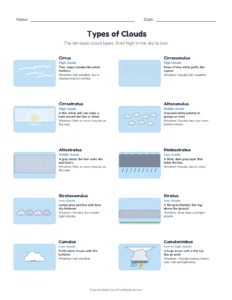
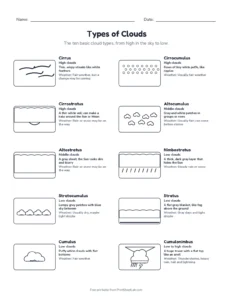
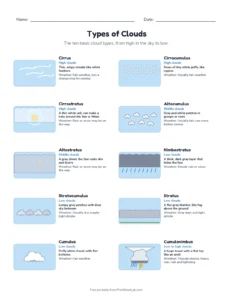
These are the same descriptions printed on the chart worksheet. The weather column is what each cloud often means, not a promise: clouds are clues, and forecasters use many other measurements too.
Cloud
Level
What it looks like
Weather it often means
Cirrus
High
Thin, wispy streaks like white feathers
Fair weather, but a change may be coming
Cirrocumulus
High
Rows of tiny white puffs, like ripples
Usually fair weather
Cirrostratus
High
A thin white veil; can make a halo around the Sun or Moon
Rain or snow may be on the way
Altocumulus
Middle
Gray and white patches in groups or rows
Usually fair; can come before storms
Altostratus
Middle
A gray sheet; the Sun looks dim and blurry
Rain or snow may be on the way
Nimbostratus
Low
A thick, dark gray layer that hides the Sun
Steady rain or snow
Stratocumulus
Low
Lumpy gray patches with blue sky between
Usually dry, maybe light drizzle
Stratus
Low
A flat gray blanket, like fog above the ground
Gray days and light drizzle
Cumulus
Low
Puffy white clouds with flat bottoms
Fair weather
Cumulonimbus
Low to high
A huge tower with a flat top like an anvil
Thunderstorms, heavy rain, hail and lightning
The 4 main types of clouds
In 1802 the English amateur scientist Luke Howard gave clouds Latin names, and his four root words are still the easiest place for kids to start. Every one of the ten basic types is built from them:
Root word
Meaning
Example clouds
Cirrus
curl of hair
cirrus, cirrocumulus, cirrostratus
Cumulus
heap or pile
cumulus, stratocumulus, altocumulus
Stratus
layer or sheet
stratus, altostratus, nimbostratus
Nimbus
rain cloud
nimbostratus, cumulonimbus
So cumulonimbus is a heaped rain cloud, and nimbostratus is a rain-bringing layer. Ask children to name a cloud from its parts before they check the chart.
High, middle and low clouds
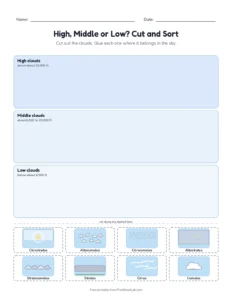
Meteorologists sort clouds by the height of the cloud base. The cut-and-sort worksheet uses the U.S. National Weather Service bands below; other agencies draw the lines a little differently, so treat the heights as approximate:
Level
Height of the cloud base
Cloud types
Name clue
High
above about 20,000 ft (6 km)
Cirrus, Cirrocumulus, Cirrostratus
cirro- means curl of hair
Middle
about 6,500 to 20,000 ft (2 to 6 km)
Altocumulus, Altostratus
alto- means high (higher than low clouds)
Low
below about 6,500 ft (2 km)
Nimbostratus, Stratocumulus, Stratus, Cumulus
strato- means layer; cumulo- means heap
Low to high
base low, top can pass 40,000 ft
Cumulonimbus
nimbus means rain cloud
The name parts are a handy memory trick. Cirro clouds are high and thin, alto clouds sit in the middle, strato clouds spread in layers, cumulo clouds pile up in heaps, and anything with nimbo or nimbus brings rain or snow.
Teaching types of clouds for kids with the worksheets
Start with the chart. Read it together and look out of the window. Which cloud is closest to today’s sky?
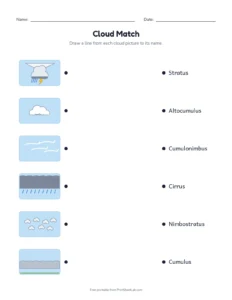
Match and sort. The matching page builds the names; the cut-and-sort page builds the idea of height.
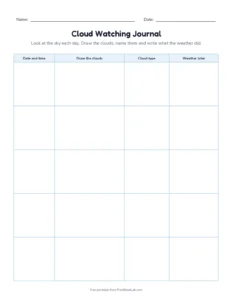
Watch the sky for a week. The journal asks children to draw the clouds, name them and write what the weather did later, so they can test the “weather it often means” column for themselves.
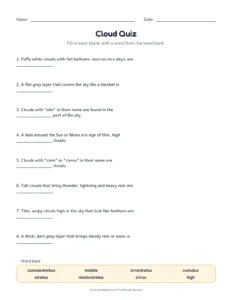
Finish with the quiz. It mixes names, levels and the halo clue for cirrostratus.
Use and share observations of local weather to describe patterns: the cloud watching journal
Grade 3
3-ESS2-1
Describe typical weather conditions: linking cloud types to the weather they bring
Take the sheets outside on a cloudy day: spotting the real types of clouds for kids in the sky is the best way to remember the names.
Frequently asked questions
7 quick answers
What are the main types of clouds?
The ten basic types are cirrus, cirrocumulus, cirrostratus (high); altocumulus, altostratus (middle); stratus, stratocumulus, cumulus, nimbostratus (low); and cumulonimbus, which towers from low to high.
Which clouds bring rain?
Nimbostratus brings steady rain or snow, and cumulonimbus brings thunderstorms, heavy rain and sometimes hail. Stratus and stratocumulus can give light drizzle.
What clouds mean good weather?
Small, puffy cumulus clouds and high, wispy cirrus usually come with fair weather, although thickening cirrus can mean a change is on the way.
What is the highest type of cloud?
Cirrus, cirrocumulus and cirrostratus form highest, above about 20,000 feet. A cumulonimbus top can reach even higher, but its base starts low.
Are these cloud worksheets free?
Yes. Open any sheet in the Ready-to-print list, choose US Letter or A4, and print or save the PDF. No sign-up is needed.
What are the 4 types of clouds kids learn first?
In 1802 Luke Howard named them cirrus (curl of hair), cumulus (heap), stratus (layer) and nimbus (rain cloud). All ten basic cloud types are built from these four root words, so cumulonimbus is a heaped rain cloud.
What is on the cloud types chart?
All ten basic cloud types on one page, with each cloud's level, what it looks like and the weather it often brings. Read it together, then look out of the window and decide which cloud is closest to today's sky.
We hope you're enjoying Print Sheet Lab! Need a different option, noticed something missing, or have an idea for a new tool or calculator?
Whether it's a small improvement, a technical issue or something customized for your business, we'd love to hear from you.
✓ Existing tool improvements and bug fixes – Free
✓ Custom calculators, tools and websites – Affordable development charges
We aim to respond within 24 hours.
How Can We Help You?
Tell us what you're looking for. Whether you need an improvement to an existing tool, want to report an issue, or have an idea for something new, we're here to help.
✓
Thank you for sharing your request!
We've successfully received your message. Our team will review it and aim to respond within 24 hours.
We'll contact you at your provided email address with an update.