Free learning games for kids that teach real skills
These learning games for kids turn practice into play for kindergarten to grade 5. Pick a skill, such as the 7 times table, sight words or telling time, then play it as a balloon pop, a memory match, a car race, a true-or-false sprint, a word scramble or a sorting game. Every game runs in the browser on phones, tablets and computers, with no sign-up and no ads inside the game.
Rounds last a minute or two, the right answer appears after every mistake, and best scores are kept on the device, so children can try to beat yesterday’s score. When a round is done, most games link to a matching printable worksheet for practice on paper.
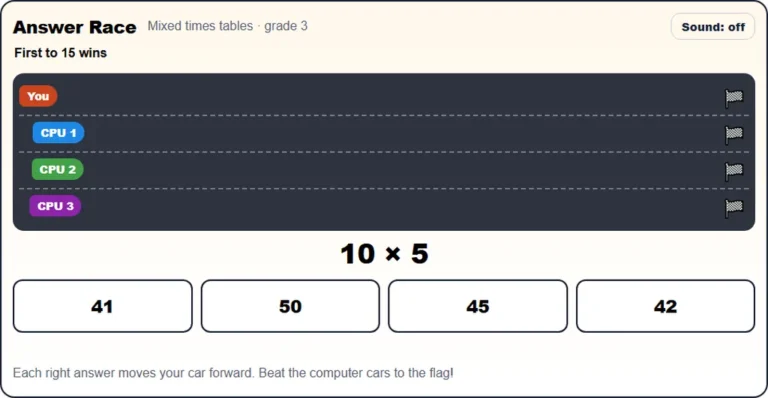
In short: learning games for kids are short online activities that practise one school skill at a time, such as math facts, spelling or telling time, with instant feedback and a score to beat. They work best in short bursts of five to ten minutes, alongside reading together and paper practice.
Popular games to start with
New here? These six educational games for kids cover the skills families practise most.
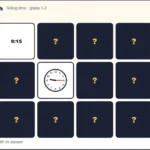
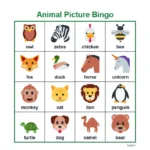
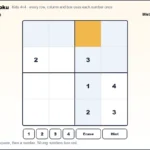
Learning games for kids by subject
All of our free educational games, grouped by subject, from math games for kids to reading games for kids, science, typing and strategy. Each game has its own page with tips for parents and teachers and the grade the skill is usually taught in.
Addition and subtraction
Times tables and division
Number sense, money and time
Reading and spelling
Word guess (hangman)
Science and social studies
Brain games and strategy
Picture bingo
Math games for kids, grade by grade
Math facts need to become automatic, so that children can spend their thinking on the harder parts of a problem. Short, frequent games are one of the easiest ways to get there. Use this table to find math games for kids at the right level.
| Grade | Skills to practise | Games to play |
|---|---|---|
| Kindergarten | Adding and subtracting within 10, making 10 | Addition within 10, number bonds to 10 |
| 1st grade | Facts within 20, doubles, tens and ones | Addition within 20, doubles, tens and ones |
| 2nd grade | Two-digit sums, coins, time to 5 minutes, skip counting | Two-digit addition, counting coins, telling time |
| 3rd grade | Times tables to 10, division facts, rounding, fractions | 5 times table, division facts, rounding |
| 4th and 5th grade | All tables to 12, mixed facts, comparing fractions | Mixed times tables, 12 times table, comparing fractions |
Why short educational games work
Good educational games for kids share a few features, and ours are built around them. Each round asks children to recall an answer rather than just recognise it, which is what builds memory. Feedback is instant, so a wrong answer is corrected straight away instead of practised. Rounds are short, so there is time to play again, and a best score gives a reason to. Most importantly, each game practises one clear skill, so it is easy to see progress.
These free educational games are not meant to replace a teacher, a book or paper practice. They are a warm-up, a reward or a quick daily habit. Five to ten minutes is enough, and stopping while it is still fun makes children keen to come back.
A 15-minute play and print routine
- Warm up (2 min). Play one round of a game your child already finds easy.
- New skill (5 min). Play the game for this week’s skill and note the score.
- Paper (5 min). Print the matching worksheet and do half a page.
- Check (2 min). Mark it together with the answer key.
- Beat it (1 min). One last round to beat the first score, then stop.
Play together: bingo, tambola and quizzes
Some games are more fun with other people. Picture bingo reads each call aloud, so children who cannot read yet can still play, and a host can share one link so each player sees their own card on a phone. The quizzes cover flags, capitals and general knowledge with a timer and streaks, and any quiz can be turned into a paper version. For family get-togethers and kitty parties, head to the party games for online tambola, Bollywood bingo and 75-ball bingo.
Using the games in class
Teachers use these learning games for kids on an interactive whiteboard as a warm-up, on tablets as a math or literacy station, and as a reward for early finishers. A round takes only a minute or two, nothing needs installing and there are no accounts to set up. The typing games are useful before computer-based tests, and the picture bingo games work well with a whole class of non-readers. The sight word, rhyming and spelling games double as reading games for kids in literacy centers.
Frequently asked questions
8 quick answers
Are these learning games for kids free?
Yes. All of our learning games for kids are free to play, with no account and no ads inside the game. Signing in is optional and just keeps a history of games played.
What ages are the games for?
Mostly ages 5 to 11, from kindergarten to grade 5. Each game page shows the grade the skill is usually taught in, and the sudoku, typing and strategy games suit older children and adults too.
Do the games work on phones and tablets?
Yes. Every game runs in the browser on phones, tablets, Chromebooks and computers, with touch, mouse or keyboard.
What are good math games for kids in kindergarten?
Addition within 10, number bonds to 10 and greater than, less than are good starting points. Short rounds with pictures and instant feedback suit five-year-olds best.
How can my child learn the times tables faster?
Learn one table at a time, starting with 2, 5 and 10, and play for a few minutes every day. Move on when a table feels easy, then use the mixed times tables game to keep the older ones fresh.
Can I use the games in class?
Yes. They work well on an interactive whiteboard or on tablets, and a round takes only a few minutes.
Is my child’s data collected?
No personal details are needed to play. Best scores are kept on your own device, not on our servers.
Are there printable versions of the games?
Yes. Most games link to a matching worksheet, and the quizzes and bingo games can be printed with answer keys or cards.