Addition and subtraction worksheets work best when students see the two operations as partners. These free printable math addition and subtraction worksheets are sorted by grade, from facts within 10 in kindergarten to three-digit numbers in grade 3, and every PDF has an answer key. Use the maker above for mixed addition and subtraction, or pick a ready sheet below.
Quick answer: Addition puts groups together and subtraction takes a part away or finds the difference, and the two are linked: 7 + 6 = 13, so 13 − 6 = 7. This page collects free addition and subtraction worksheets (PDF) with answer keys for kindergarten through grade 3, plus a maker for mixed practice. Updated October 2026.
Ready-to-print samples
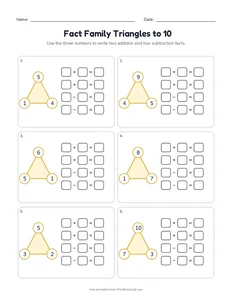
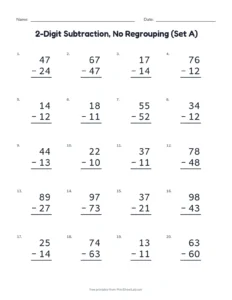
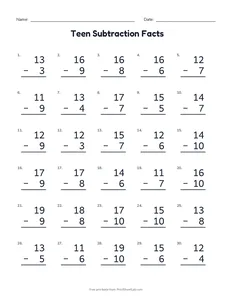
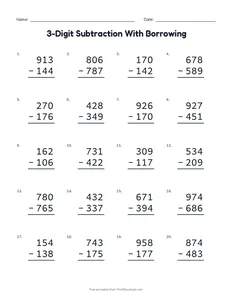
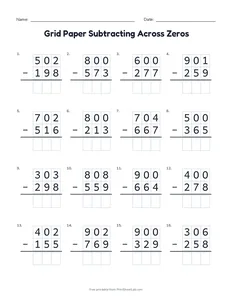
A few of the free PDFs from the lists below. Each has an answer key, and the full set for each grade is further down the page.
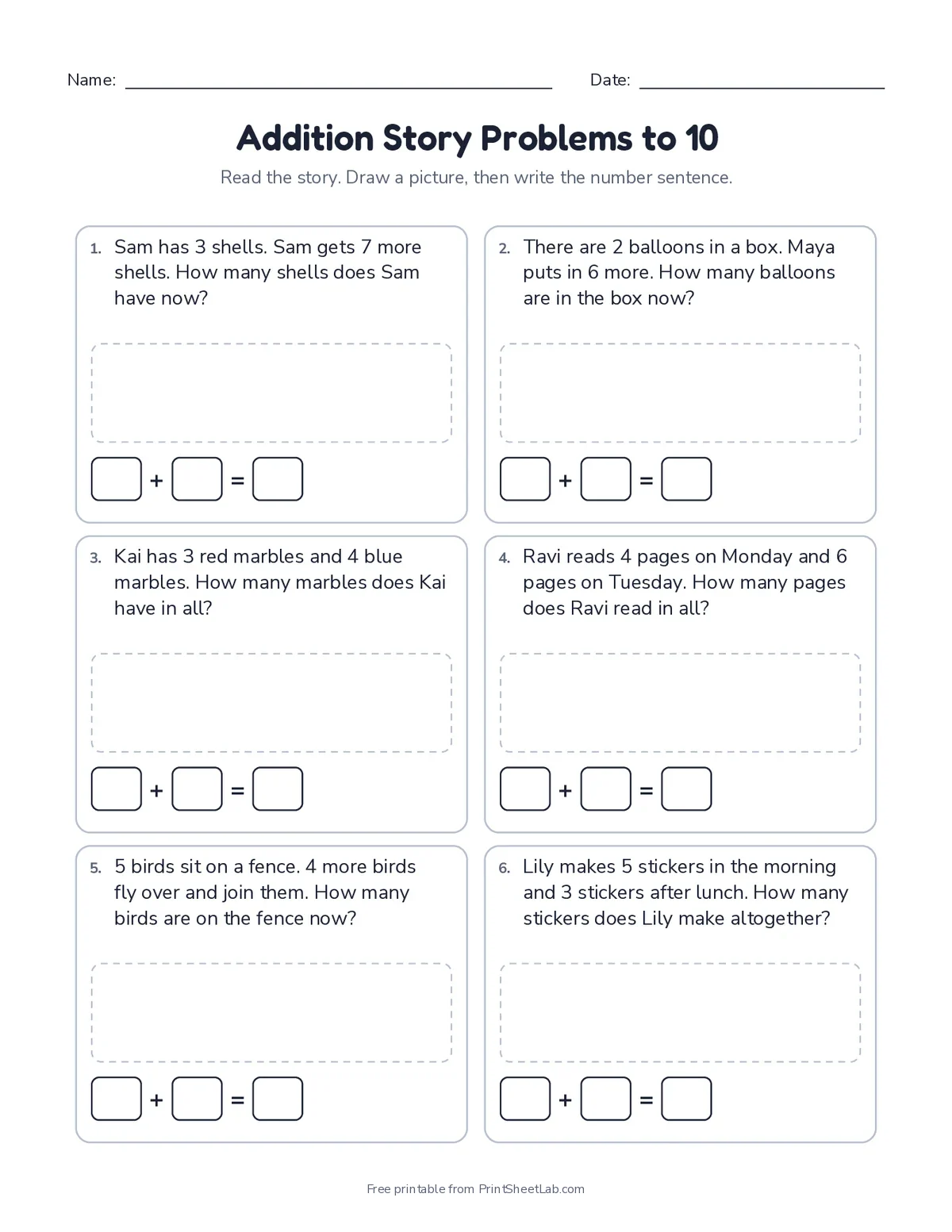
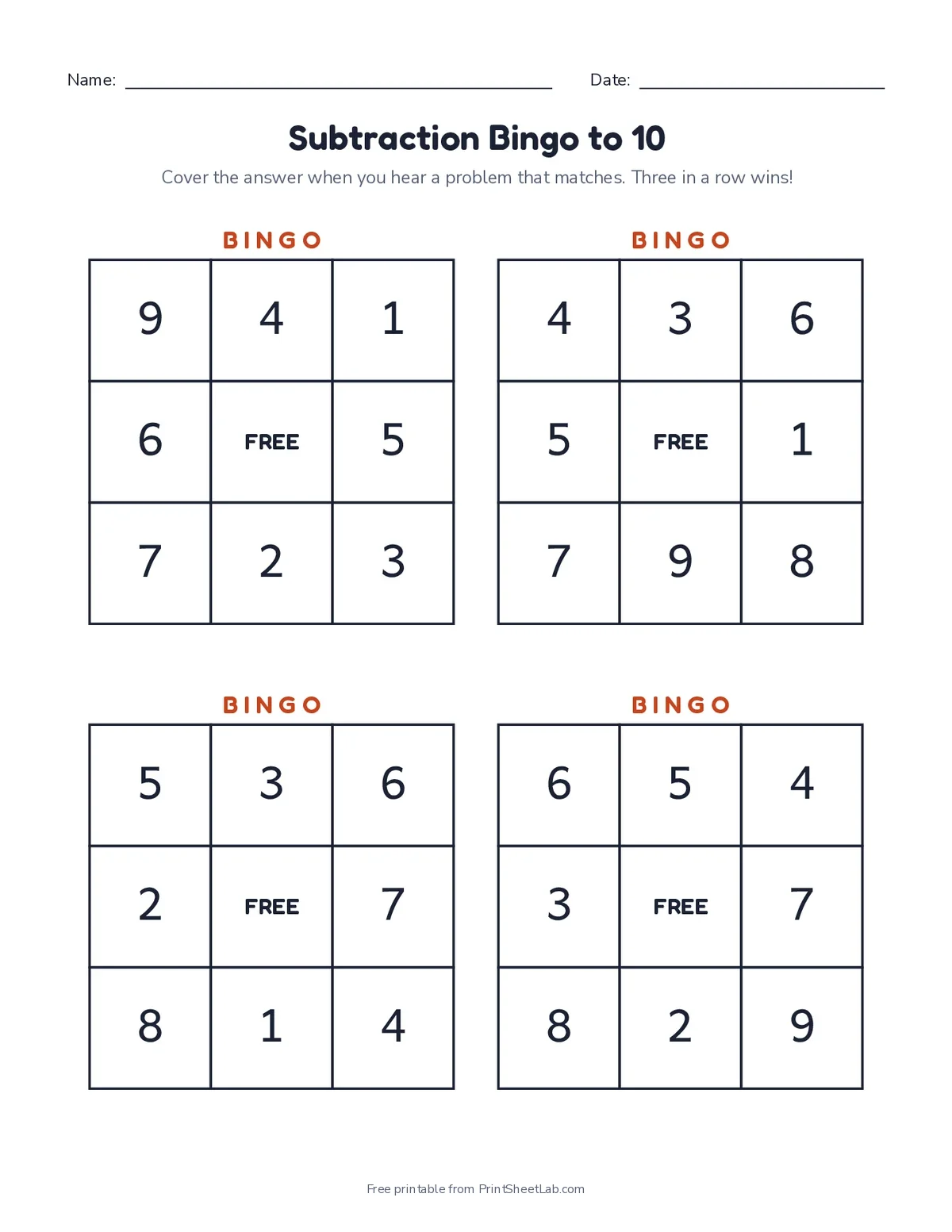
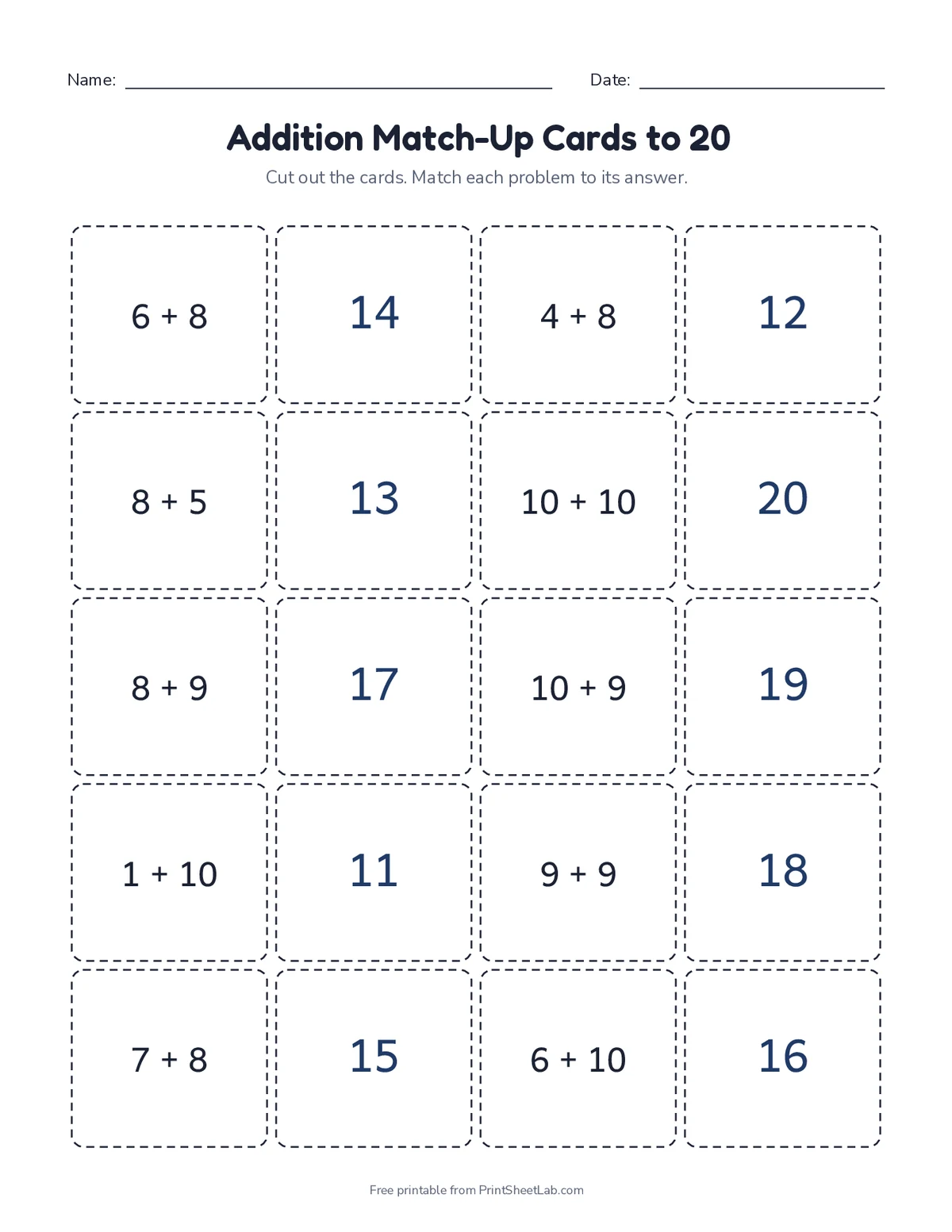
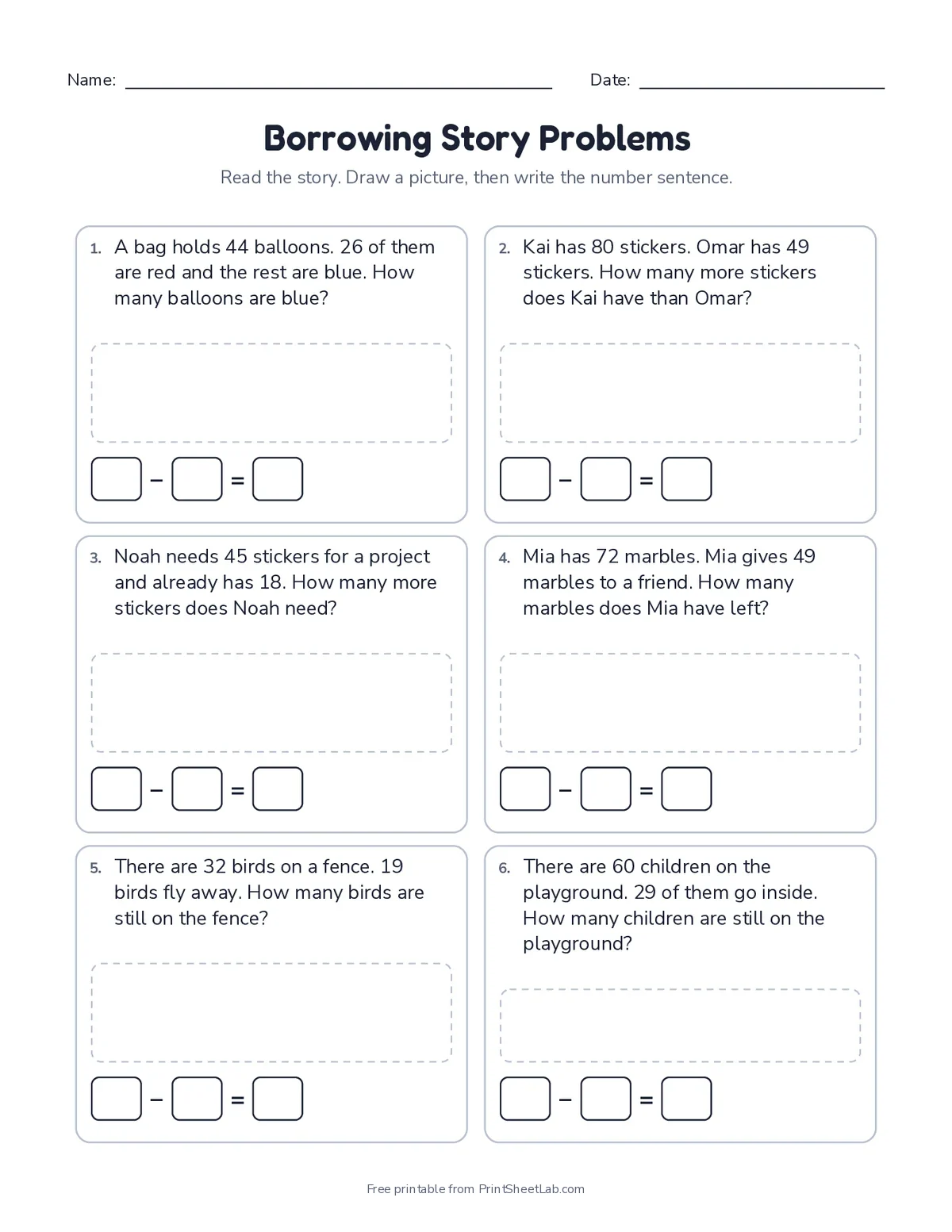
Addition and subtraction go together: fact families
A fact family is a set of related facts that use the same three numbers. Learning them together halves the amount to memorize, because every addition fact gives two subtraction facts:
| Numbers | Addition facts | Subtraction facts |
|---|---|---|
| 3, 4, 7 | 3 + 4 = 7 and 4 + 3 = 7 | 7 − 3 = 4 and 7 − 4 = 3 |
| 5, 8, 13 | 5 + 8 = 13 and 8 + 5 = 13 | 13 − 5 = 8 and 13 − 8 = 5 |
| 6, 9, 15 | 6 + 9 = 15 and 9 + 6 = 15 | 15 − 6 = 9 and 15 − 9 = 6 |
| 7, 7, 14 | 7 + 7 = 14 | 14 − 7 = 7 |
| 12, 5, 17 | 12 + 5 = 17 and 5 + 12 = 17 | 17 − 12 = 5 and 17 − 5 = 12 |
| 9, 8, 17 | 9 + 8 = 17 and 8 + 9 = 17 | 17 − 9 = 8 and 17 − 8 = 9 |
Addition and subtraction worksheets for kindergarten
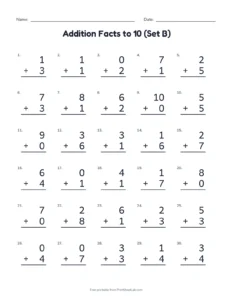
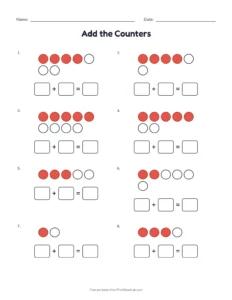
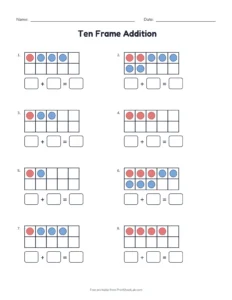
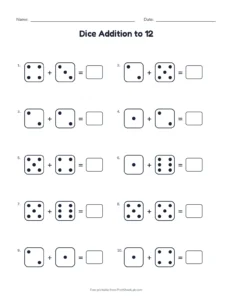
Kindergarten students add and subtract within 5 and then within 10 using objects, drawings and fingers. Start here for the smallest numbers.
35 free addition and subtraction worksheets for kindergarten across 2 topics, each with an answer key.
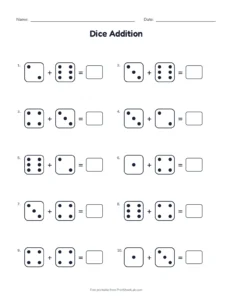
Addition worksheets for kindergarten
All addition worksheets →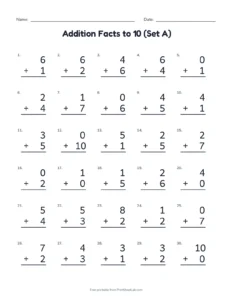

Subtraction worksheets for kindergarten
All subtraction worksheets →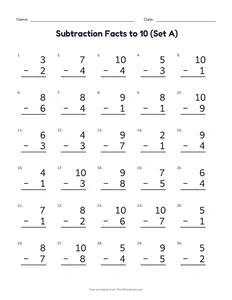
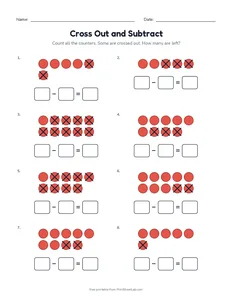
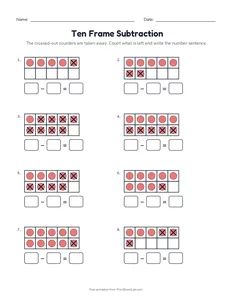
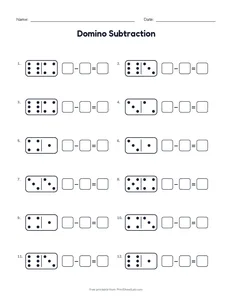
Addition and subtraction worksheets for 1st grade
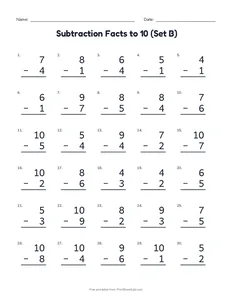
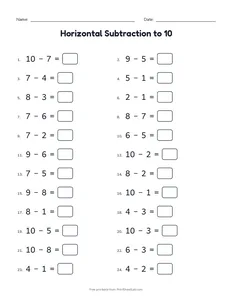
First graders work within 20, using strategies like making ten and doubles, and meet the idea of a missing number.
95 free addition and subtraction worksheets for grade 1 across 2 topics, each with an answer key.
Addition worksheets for grade 1
All addition worksheets →Subtraction worksheets for grade 1
All subtraction worksheets →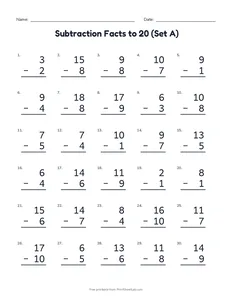
Addition and subtraction worksheets for 2nd grade
Second graders add and subtract within 100, including regrouping, and solve one- and two-step word problems.
99 free addition and subtraction worksheets for grade 2 across 2 topics, each with an answer key.
Addition worksheets for grade 2
All addition worksheets →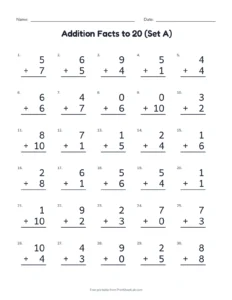
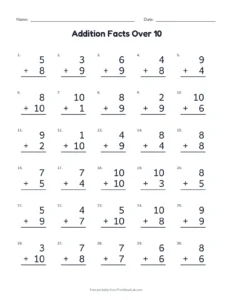
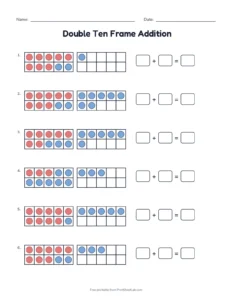
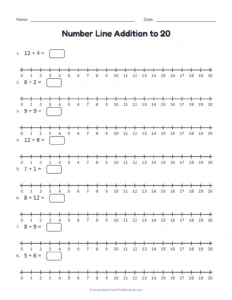
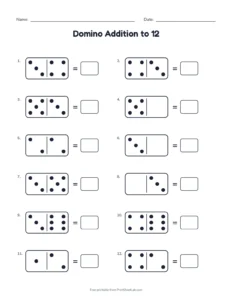
Subtraction worksheets for grade 2
All subtraction worksheets →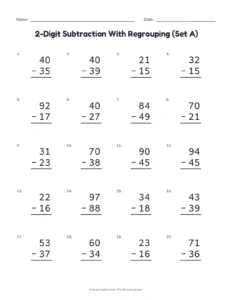
Addition and subtraction worksheets for 3rd grade
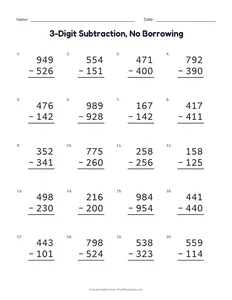
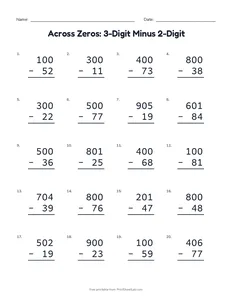
Third graders add and subtract within 1,000 and use the operations in multi-step word problems.
34 free addition and subtraction worksheets for grade 3 across 2 topics, each with an answer key.
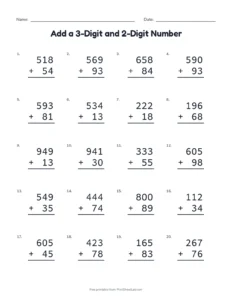
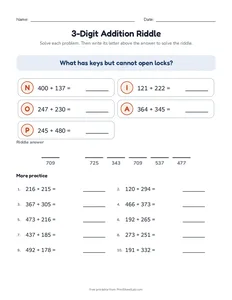
Addition worksheets for grade 3
All addition worksheets →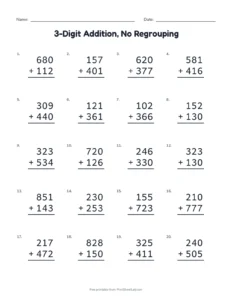
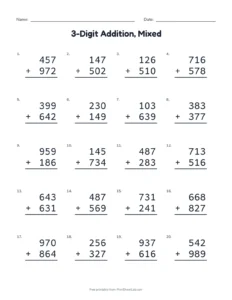
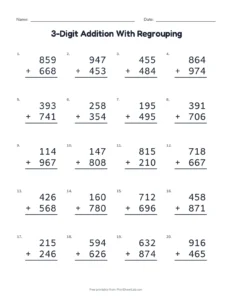
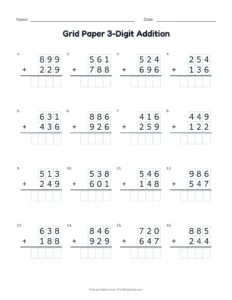
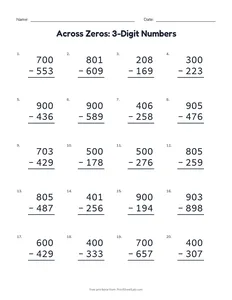
Subtraction worksheets for grade 3
All subtraction worksheets →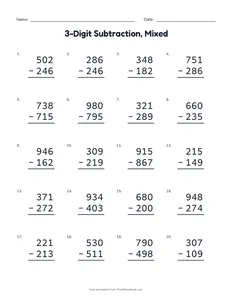
Addition and subtraction facts: strategies that work
Memorizing facts goes faster when students have a strategy for each kind of problem. These six cover almost every fact to 20:
| Strategy | How it works | Example |
|---|---|---|
| Count on | Start at the larger number and count up | 4 + 3: say 4, then 5, 6, 7 |
| Make 10 | Fill a ten, then add the rest | 8 + 5: 8 + 2 = 10, then 10 + 3 = 13 |
| Doubles and near doubles | Use a known double, then adjust by 1 | 6 + 7: 6 + 6 = 12, so 13 |
| Count back | Start at the larger number and count down | 9 − 2: say 9, then 8, 7 |
| Think addition | Use the matching addition fact | 13 − 6: 6 + 7 = 13, so 7 |
| Use a number line | Jump forward to add and back to subtract | 15 − 8: back 8 from 15 to 7 |
Addition table, 1 to 10
An addition table shows every sum from 1 + 1 to 10 + 10. Students can use it to find patterns, such as the diagonal of doubles, and to check an addition fact. Reading the table backward gives the matching subtraction fact: find 13 in the row for 6, and the column is 7, so 13 − 6 = 7.
| 1 | 2 | 3 | 4 | 5 | 6 | 7 | 8 | 9 | 10 | |
|---|---|---|---|---|---|---|---|---|---|---|
| 1 | 2 | 3 | 4 | 5 | 6 | 7 | 8 | 9 | 10 | 11 |
| 2 | 3 | 4 | 5 | 6 | 7 | 8 | 9 | 10 | 11 | 12 |
| 3 | 4 | 5 | 6 | 7 | 8 | 9 | 10 | 11 | 12 | 13 |
| 4 | 5 | 6 | 7 | 8 | 9 | 10 | 11 | 12 | 13 | 14 |
| 5 | 6 | 7 | 8 | 9 | 10 | 11 | 12 | 13 | 14 | 15 |
| 6 | 7 | 8 | 9 | 10 | 11 | 12 | 13 | 14 | 15 | 16 |
| 7 | 8 | 9 | 10 | 11 | 12 | 13 | 14 | 15 | 16 | 17 |
| 8 | 9 | 10 | 11 | 12 | 13 | 14 | 15 | 16 | 17 | 18 |
| 9 | 10 | 11 | 12 | 13 | 14 | 15 | 16 | 17 | 18 | 19 |
| 10 | 11 | 12 | 13 | 14 | 15 | 16 | 17 | 18 | 19 | 20 |
Addition and subtraction with regrouping
When the ones add to 10 or more, carry a ten. When the top ones digit is smaller, borrow a ten. Each row shows the steps for the ones and then for the tens:
| Problem | Ones | Tens | Answer |
|---|---|---|---|
| 47 + 38 | 7 + 8 = 15 ones, so write 5 and carry 1 | 4 + 3 + 1 = 8 tens | 85 |
| 65 + 29 | 5 + 9 = 14 ones, so write 4 and carry 1 | 6 + 2 + 1 = 9 tens | 94 |
| 52 − 27 | Borrow: 12 − 7 = 5 ones | 5 − 2 − 1 = 2 tens | 25 |
| 83 − 46 | Borrow: 13 − 6 = 7 ones | 8 − 4 − 1 = 3 tens | 37 |
| 74 − 31 | 4 − 1 = 3 ones | 7 − 3 = 4 tens | 43 |
Addition and subtraction word problems
Word problems come in a few standard shapes, and recognizing them is the main skill. The same two operations solve all of these:
| Story type | Example | Number sentence | Answer |
|---|---|---|---|
| Add to (result unknown) | Mia has 8 stickers and gets 5 more. How many now? | 8 + 5 = ? | 13 |
| Take from (result unknown) | There are 15 apples. 6 are eaten. How many are left? | 15 − 6 = ? | 9 |
| Put together | 7 red and 6 blue balloons. How many in all? | 7 + 6 = ? | 13 |
| Compare | Sam has 14 cards and Lee has 9. How many more does Sam have? | 14 − 9 = ? | 5 |
| Missing addend | Jo has 9 coins and needs 15. How many more? | 9 + ? = 15 | 6 |
| Change unknown | A bus has 20 riders. Some get off and 12 stay. How many got off? | 20 − ? = 12 | 8 |
Try ten addition and subtraction problems
Use this set as a warm-up or a quick check. The last two are missing number problems.
| # | Problem | Answer |
|---|---|---|
| 1 | 7 + 6 | 13 |
| 2 | 15 − 8 | 7 |
| 3 | 9 + 9 | 18 |
| 4 | 13 − 4 | 9 |
| 5 | 38 + 25 | 63 |
| 6 | 72 − 29 | 43 |
| 7 | 46 + 37 | 83 |
| 8 | 90 − 54 | 36 |
| 9 | __ + 8 = 15 | 7 |
| 10 | 20 − __ = 12 | 8 |
Mixed addition and subtraction worksheets and practice
This page is also searched as addition and subtraction worksheet, mixed addition and subtraction worksheets, addition and subtraction practice and add and subtract worksheets. Mixed practice is useful once students can do each operation alone, because it makes them read the sign before they start. Choose Mixed + and − in the maker above to build your own addition and subtraction worksheets, or use the grade sections on this page.
Addition and subtraction vocabulary
Students answer questions faster when they know the words. These are the terms used on the worksheets and answer keys:
| Word | Meaning | Example |
|---|---|---|
| Addend | A number being added | 3 and 4 in 3 + 4 |
| Sum | The answer to an addition | 7 |
| Minuend | The number you start with in a subtraction | 13 in 13 − 6 |
| Subtrahend | The number being taken away | 6 in 13 − 6 |
| Difference | The answer to a subtraction | 7 |
| Fact family | Addition and subtraction facts using the same three numbers | 6, 7, 13 |
| Regroup | Trade between place values when carrying or borrowing | 10 ones = 1 ten |
Common Core standards for addition and subtraction
These worksheets practice the Common Core operations and algebraic thinking standards and the number and operations in base ten standards from kindergarten to grade 3:
| Grade | Standard | What students do |
|---|---|---|
| Kindergarten | K.OA.A.5 | Fluently add and subtract within 5 |
| Grade 1 | 1.OA.C.6 | Add and subtract within 20 using strategies such as making ten |
| Grade 1 | 1.OA.B.4 | Understand subtraction as an unknown-addend problem |
| Grade 2 | 2.OA.B.2 | Fluently add and subtract within 20 from memory |
| Grade 2 | 2.NBT.B.5 | Add and subtract within 100 using place value |
| Grade 3 | 3.NBT.A.2 | Fluently add and subtract within 1,000 |
Common mistakes in addition and subtraction
| Mistake | Example | Fix |
|---|---|---|
| Subtracting the smaller digit from the larger | 52 − 27 = 35 | Borrow when the top ones digit is smaller: 52 − 27 = 25 |
| Forgetting to carry | 47 + 38 = 75 | Carry the ten: 47 + 38 = 85 |
| Not lining up place value | 305 + 42 written with the 4 under the 5 | Line up ones under ones and tens under tens: 347 |
| Adding when the problem says “left” | There are 12 and 5 are left: 17 | Left means subtract: 12 − 5 = 7 |
| Forgetting to reduce the tens after borrowing | 83 − 46: 8 − 4 = 4 tens | After borrowing, use 7 tens: 7 − 4 = 3 tens, so 37 |
Real-life addition and subtraction
Children meet both operations every day. These examples work well for talking about why the skill matters:
| Situation | Operation | Answer |
|---|---|---|
| You have $15 and spend $8 at a store. How much is left? | 15 − 8 | $7 |
| A class collects 24 cans on Monday and 19 on Tuesday | 24 + 19 | 43 cans |
| A recipe needs 3 eggs and you have 12. How many are left over? | 12 − 3 | 9 eggs |
| A bus holds 40 people and 27 are on it. How many seats are empty? | 40 − 27 | 13 seats |
| You read 18 pages today and 25 yesterday | 18 + 25 | 43 pages |
How to use these addition and subtraction worksheets
Use the addition and subtraction worksheets for your child’s grade, but do not be afraid to step down a grade for a few days if facts are shaky. Fluency with facts to 20 pays off every year after. Work through addition first, then subtraction, then mixed addition and subtraction worksheets, so that students have a reason to read each sign.
Short, regular sessions beat long ones. Ten minutes a day with the addition and subtraction worksheets is enough, and the answer key lets children check their own work. When a student gets a problem wrong, ask them to explain it with a number line or objects before showing the answer.
A weekly plan for addition and subtraction
| Day | Focus | Suggested block |
|---|---|---|
| Monday | Addition facts | 15 min |
| Tuesday | Subtraction facts | 15 min |
| Wednesday | Mixed addition and subtraction | 15 min |
| Thursday | Word problems and fact families | 15 min |
| Weekly total | Four short sessions | 60 min |
Frequently asked questions
5 quick answers
Where can I download free addition and subtraction worksheets?
Open any worksheet in the grade sections on this page, choose US Letter or A4, then print or save the PDF. They are free, with answer keys, and no account is needed.
How do you teach addition and subtraction together?
Use fact families. Teach that 7 + 6 = 13 also means 13 − 6 = 7 and 13 − 7 = 6, so students learn four facts from one set of numbers.
What grade learns addition and subtraction?
Kindergarten starts within 5 and 10, grade 1 works within 20, grade 2 works within 100, and grade 3 works within 1,000.
What are the easiest addition and subtraction strategies?
Counting on, making ten, doubles and thinking addition for subtraction are the most useful early strategies.
How do you make mixed addition and subtraction worksheets?
Choose Mixed + and − in the maker at the top of this page, set the number of digits and the number of problems, and print.
More math practice
- Addition worksheets hub.
- Subtraction worksheets hub.
- Multiplication worksheets for the next skill.
- Kindergarten math worksheets for a first look at numbers.