Chhath Puja is celebrated to thank Surya, the Sun God, for life, light and the harvest, and to pray to Chhathi Maiya for the health and long life of children and the family. In 2026 it runs from Friday 13 to Monday 16 November, six days after Diwali. This guide explains why Chhath Puja is celebrated, the stories behind it and how families keep the four days.
This guide explains why Chhath Puja is celebrated in simple words: the meaning behind the festival, the stories people tell about it, what happens on each of the four days and why the rituals are done the way they are. It ends with a short Chhath Puja essay that students can use as a model.
Coming up next: Diwali, Bhai Dooj, Children's Day, Chhath Puja and Guru Nanak Jayanti
Diwali (Sunday 8 November)
Bhai Dooj (Wednesday 11 November)
- Bhai Dooj quiz and games
- Bhai Dooj drawing and coloring pages
- Bhai Dooj wishes
- Bhai Dooj rangoli designs
Children's Day (Saturday 14 November)
- Children's Day quiz
- Children's Day drawing and coloring pages
- Children's Day worksheets
- Children's Day speech
Chhath Puja (Sunday 15 November)
Guru Nanak Jayanti (Tuesday 24 November)
Why Chhath Puja is celebrated: the short answer
| Reason | What it means |
|---|---|
| Thanking the Sun | The Sun gives light, warmth and the energy that makes crops grow. Chhath is a thank-you to Surya. |
| Praying for children and family | Chhathi Maiya is believed to protect children. Parents, especially mothers, keep the fast for their children’s health and long life. |
| Celebrating the harvest | Chhath comes after the rice harvest, so the offerings are new crops, fruit and sweets made at home. |
| Wishes and gratitude | Many people keep the fast to ask for a wish, or to say thank you after a wish has come true. |
| Respect for nature | The prayers are made standing in a river or pond, using natural things such as bamboo baskets, sugarcane and clay lamps. |
Who are Surya and Chhathi Maiya?
Surya is the Sun God, worshipped in India since the time of the Rigveda, one of the oldest Hindu texts. In Chhath, he is worshipped as he is: the real sun in the sky, at sunset and at sunrise.
Chhathi Maiya (Chhathi Mata) is the goddess of the festival. She is often described as the sister of Surya and is believed to protect children and bless them with good health. Some traditions link her with Shashthi Devi, the goddess of the sixth day, which is why the festival falls on the sixth day (shashthi) after the new moon in Kartik. The name “Chhath” itself means “sixth”, from the Sanskrit word shashthi.
Chhath Puja story: the legends that explain why Chhath Puja is celebrated
There is no single story of Chhath. Families in different places tell different legends, and all of them are told as stories of faith rather than history.
Sita’s Chhath in Munger
According to a tradition in Bihar, Sita kept the Chhath fast after she and Ram returned to Ayodhya. People in Munger believe she performed it there, and the Sitacharan temple, on a rock in the Ganga at Munger, is a famous Chhath site linked to this story.
Karna, the son of Surya
In stories linked to the Mahabharata, Karna, the son of Surya and Kunti, prayed to the Sun every day standing in water. Standing waist-deep in water to offer arghya, which is done at every Chhath ghat today, is often traced back to him.
Draupadi and the Pandavas
Another story says Draupadi kept the Chhath fast when the Pandavas were in trouble after losing their kingdom, and that her prayers helped them win it back.
The king and the blessing of Shashthi
A story told in many homes is about a king and queen who were sad because their child did not survive. The goddess Shashthi appeared, blessed them and brought joy back to the family, and asked people to worship her on this day. This is why Chhath is closely linked with prayers for children.
How to celebrate Chhath Puja: the four days
| Day | Name | 2026 date | What happens and why |
|---|---|---|---|
| 1 | Nahay Khay | Friday 13 November | The vrati (person keeping the fast) bathes, often in a river, and eats one pure meal, usually rice, chana dal and lauki (bottle gourd), cooked without onion or garlic. It begins the festival with a clean body and mind. |
| 2 | Kharna | Saturday 14 November | A fast all day without water, ending after sunset with kheer made with jaggery, roti and fruit, offered first and then shared as prasad. After Kharna, the main fast of about 36 hours begins. |
| 3 | Sandhya Arghya | Sunday 15 November | Families carry soops (bamboo baskets) of thekua, fruit and sugarcane to the ghat. The vrati stands in the water and offers arghya to the setting sun, while women sing Chhath songs. |
| 4 | Usha Arghya | Monday 16 November | Before dawn everyone returns to the ghat to offer arghya to the rising sun. The vrati then breaks the fast and prasad is shared. |
Why is the setting sun worshipped in Chhath?
Most prayers to the Sun are made at sunrise. Chhath is special because the evening offering, to the setting sun, is one of its two main rituals. People explain it this way: the sun that sets is thanked for the day that has passed, and the sun that rises is welcomed for the day to come. It is a reminder to be grateful at the end of the day, not only at the start.
Why Chhath Puja is celebrated differently from other festivals
- No idol and no priest are needed. The Sun is worshipped directly, and the vrati performs the rituals herself or himself.
- It is one of the strictest fasts. After Kharna, the vrati usually goes about 36 hours without food or water until the morning arghya.
- Everything is simple and natural. Bamboo soops, clay diyas, sugarcane, seasonal fruit and home-made thekua are used rather than shop-bought decorations.
- Everyone joins in. Neighbours clean the ghats together, and people of every background help, carry baskets and share prasad.
- Men keep the fast too. Although most vratis are women, men also keep the Chhath fast in many families.
Chhath Puja history: how the festival spread
Chhath Puja history is told mostly through the legends above: Sita performing Chhath at Munger, where the Sitacharan temple stands on a rock in the Ganges, and Karna offering water to the Sun. These stories are why Chhath Puja is celebrated with such devotion in Bihar, Jharkhand, eastern Uttar Pradesh and the Terai of Nepal.
As families moved for work, they carried the festival with them. Today big crowds gather at ghats in Delhi, Mumbai, Kolkata, Kathmandu and Janakpur, and people from these regions also celebrate Chhath in countries such as the United States, the United Kingdom, Canada, Australia, Singapore, Mauritius and the UAE, often at a lake or a beach.
When children ask why Chhath Puja is celebrated so far from Bihar, the short answer is the same everywhere: to thank the Sun for life and to pray to Chhathi Maiya for the family.
Where is Chhath Puja celebrated?
Chhath is the biggest festival of Bihar and is also celebrated widely in Jharkhand, eastern Uttar Pradesh and the Terai region of Nepal. Families from these regions now celebrate it in Delhi, Mumbai, Kolkata and abroad, at rivers, lakes and even specially built ponds. The Sun Temple at Deo in Bihar is one of the most famous Chhath places.
Essay on why Chhath Puja is celebrated, for students (about 200 words)
Students can use this short essay on Chhath Puja as a model and add one memory of their own.
Chhath Puja is a festival of the Sun God, Surya, and the goddess Chhathi Maiya. It is celebrated mainly in Bihar, Jharkhand, eastern Uttar Pradesh and Nepal, six days after Diwali. People celebrate it to thank the Sun for light, life and a good harvest, and to pray for the health of their children and family.
The festival lasts four days. On the first day, Nahay Khay, the person keeping the fast bathes and eats one simple meal. On the second day, Kharna, they fast all day and eat kheer and roti in the evening. On the third day, families go to a river or pond, and the fasting person stands in the water to offer arghya to the setting sun. On the last morning, they offer arghya to the rising sun and then break the fast.
Thekua, fruit and sugarcane are carried in bamboo baskets called soop. Women sing beautiful Chhath songs at the ghat. Chhath teaches us patience, cleanliness and thankfulness to nature. It is my favourite festival because the whole family comes together at the ghat.
Need a shorter version? Copy any ten sentences from the table and lists above as “10 lines on Chhath Puja”, or test what children remember with our Chhath Puja quiz.
Story pictures to color
Children remember the Chhath Puja story better when they color it. Our free Chhath Puja coloring pages show the arghya, the soop of offerings and the ghat, the same scenes described above.
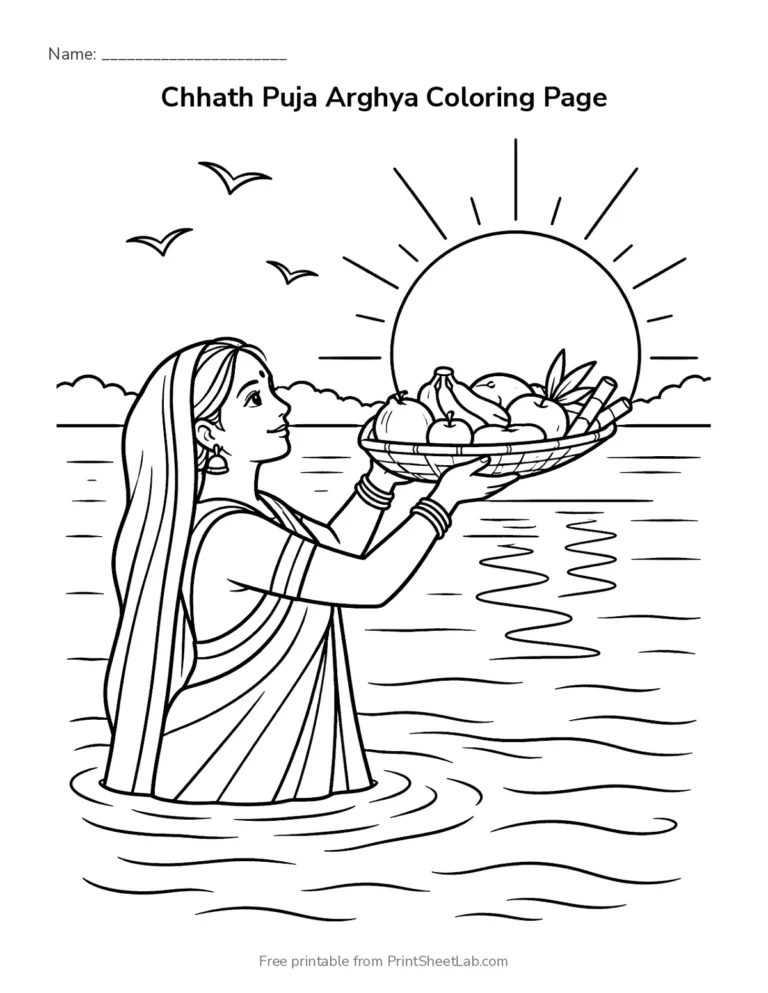
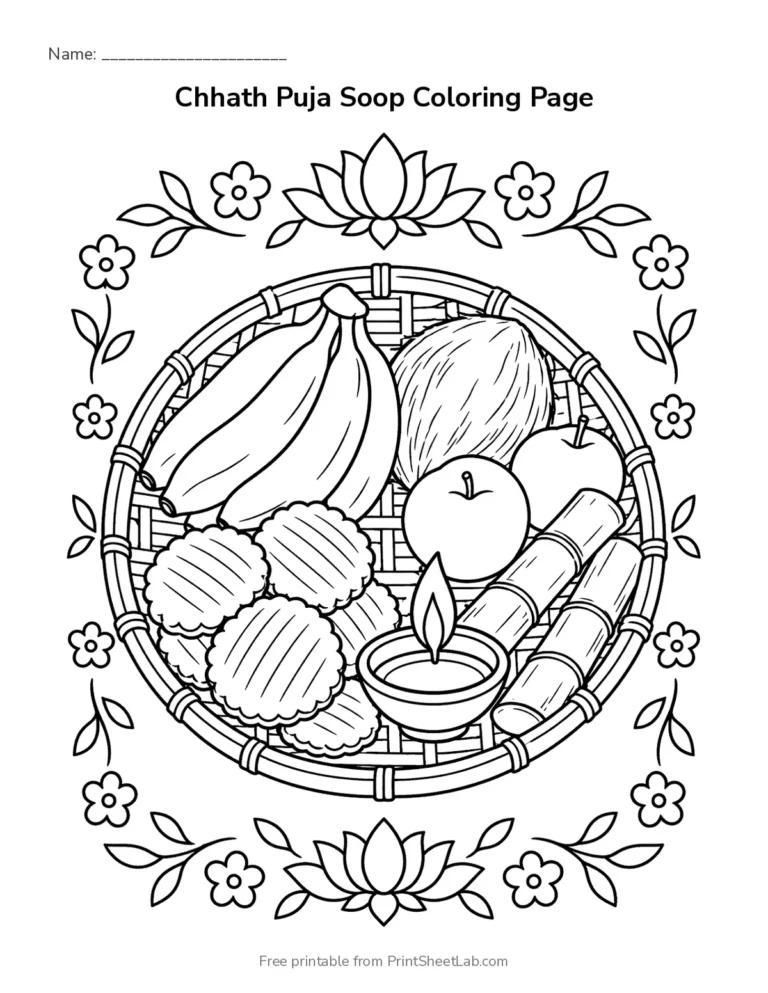
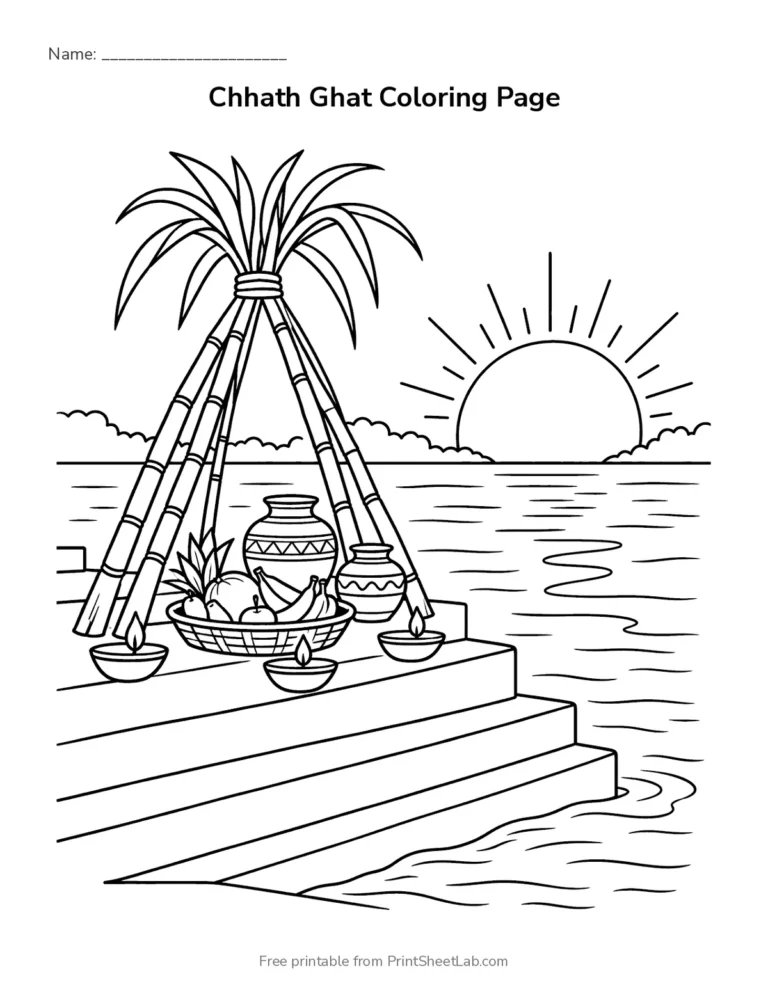
Use these three pictures to explain how to celebrate Chhath Puja: the soop is prepared, the family goes to the ghat, and the arghya is offered to the sun.
Knowing why Chhath Puja is celebrated helps children enjoy the festival with more meaning, whether they watch the arghya at a river or at home.
Related guides and printables
- Chhath Puja quiz with 25 questions and answers
- Chhath Puja drawing and coloring pages
- Chhath Puja wishes in English and Hindi
- Bhai Dooj quiz
- Hindu festivals 2027 calendar
- India GK quiz
Sources
- Chhath Puja 2026 dates: Drik Panchang, Chhath Puja date and time (Sunday 15 November 2026, New Delhi), with the four days from 13 to 16 November
- Chhath (Wikipedia), with its cited sources, for the legends of Sita, Karna and Draupadi, Sitacharan temple in Munger and where the festival is celebrated
- Surya (Wikipedia), for the Sun God
Frequently asked questions
10 quick answers
Why is Chhath Puja celebrated?
To thank Surya, the Sun God, for life, light and the harvest, and to pray to Chhathi Maiya for the health and long life of children and the family. Many people also keep the fast for a special wish or to give thanks after a wish comes true.
When is Chhath Puja in 2026?
From Friday 13 November (Nahay Khay) to Monday 16 November (Usha Arghya). The evening offering, Sandhya Arghya, is on Sunday 15 November. Check your local panchang, as a few calendars list each day one day later.
What is the story of Chhath Puja?
Several legends are told: Sita keeping the fast in Munger after returning to Ayodhya, Karna praying to his father Surya while standing in water, Draupadi keeping the fast for the Pandavas, and a king and queen blessed with a child by the goddess Shashthi.
Who is Chhathi Maiya?
The goddess of Chhath, often described as the sister of Surya. She is believed to protect children and give them good health and long life.
Why do people stand in water during Chhath?
The arghya is offered while standing in a river or pond, facing the sun. The custom is often traced to Karna, who prayed to the Sun standing in water, and it also shows respect for rivers and water.
How long is the Chhath fast?
After the Kharna meal on the second evening, the vrati usually fasts for about 36 hours without food or water, until the arghya to the rising sun on the fourth morning.
How do you write an essay on Chhath Puja?
Start with why Chhath Puja is celebrated (to thank the Sun and pray to Chhathi Maiya), describe the four days, add one legend from the Chhath Puja story, and end with what the festival teaches: discipline, gratitude and care for rivers. The 200-word essay above follows this plan.
What is the history of Chhath Puja?
Chhath Puja history is linked to legends from the Ramayana and the Mahabharata, such as Sita at Munger and Karna, son of Surya. The festival grew in Bihar and nearby regions and is now celebrated wherever families from those regions live.
Why is Chhath Puja celebrated six days after Diwali?
Chhath falls on the sixth day (Shashthi) of the bright half of the month of Kartik, which comes six days after the Diwali new moon. That timing is part of why Chhath Puja is celebrated as a thanksgiving after the autumn harvest.
How do you celebrate Chhath Puja if you live far from a river?
Families abroad or in big cities often use a lake, a beach, a pond made on a rooftop or a tub at home. Where you offer arghya matters less than the spirit: the fast, the clean offerings and the arghya to the setting and rising sun. Telling children the Chhath Puja story while you prepare the soop keeps the meaning alive.
Did you like this?
Last updated: