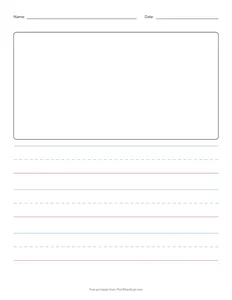
Free reading and writing worksheets for preschool to grade 5
Our reading and writing worksheets follow the order children actually learn to read: hearing the sounds in words, knowing the letters, blending sounds into words, reading smoothly and understanding what the words mean, then putting their own ideas on paper. All of it is free, in Letter and A4 sizes, and many sets open in a maker so you can type your child’s name, this week’s spelling list or your own word bank.
Use this page as a map. Find the skill your child is working on, print one page, and come back for the next step when it feels easy. These free reading worksheets suit home practice, homeschool lessons, literacy centers and quick morning work.
In short: reading and writing worksheets are printable practice pages for early literacy: letter recognition, phonics, sight words, spelling, grammar, vocabulary, reading comprehension and handwriting. The most useful ones are short, focus on one skill at a time and come with an answer key, so an adult can check the work in a minute.
Reading and writing worksheets by skill
Twelve skill areas, from a child’s very first letter to writing a whole story. Within each skill, the sheets start simple and get gradually harder.
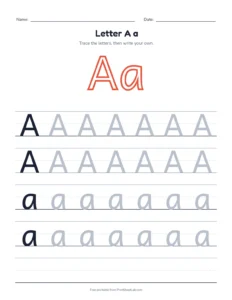
Alphabet worksheets
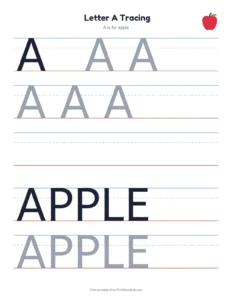
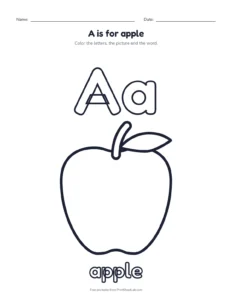
Letter of the week pages, uppercase and lowercase matching, missing letters and ABC order.
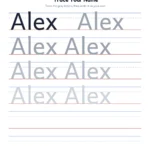
Name tracing
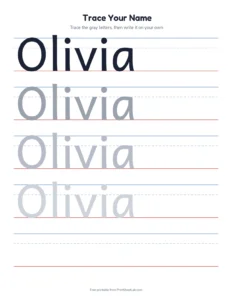
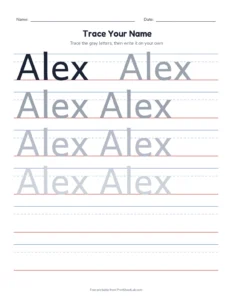
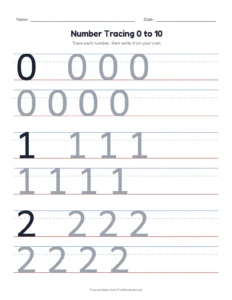
Type any name and print it to trace in print or cursive, in the style your school uses.
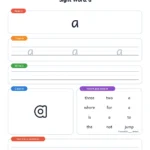
Sight words
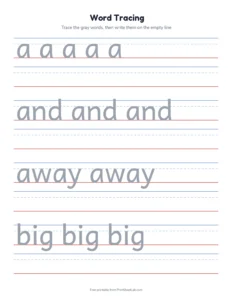
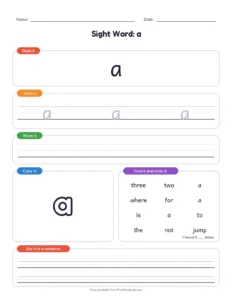
All 220 Dolch sight words plus 95 nouns, with a word of the day page, flash cards and bingo.
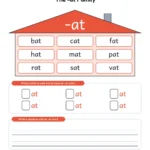
Word families
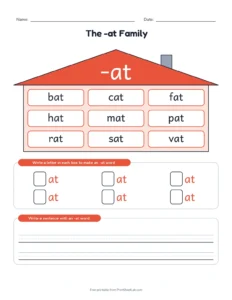
CVC words one family at a time: word houses, word wheels, sorts and roll and read games.
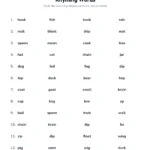
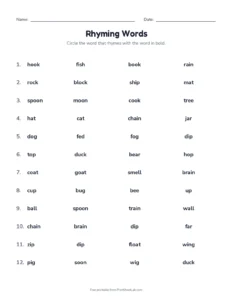
Rhyming words
Circle, match and write words that rhyme, a key step in hearing the sounds inside words.
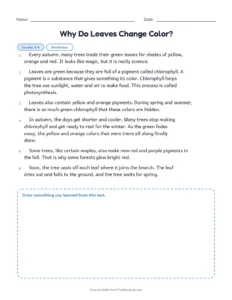
Reading comprehension
Short fiction and nonfiction passages with questions, answer keys and graphic organizers.
The five building blocks of reading
Research on how children learn to read, most famously the US National Reading Panel report published in 2000, points to five skills that work together. A child who finds reading hard is usually missing one of them, so it helps to know which pages practise which skill.
| Building block | What it means | Worksheets that help |
|---|---|---|
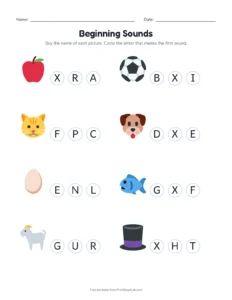
| Phonemic awareness | Hearing and playing with the separate sounds in spoken words | Rhyming words, beginning sounds on the alphabet pages |
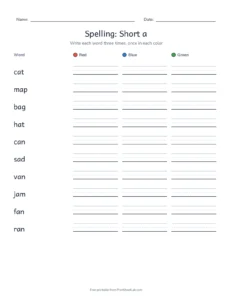
| Phonics | Matching sounds to letters and blending them into words | Word families, spelling |
| Fluency | Reading smoothly, at a comfortable pace and with expression | Sight words, rereading short passages aloud |
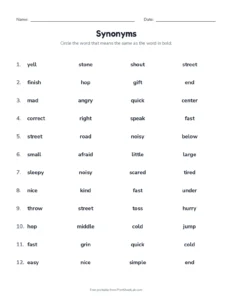
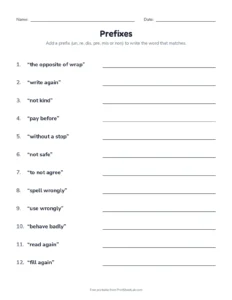
| Vocabulary | Knowing what words mean and how they relate to each other | Synonyms and antonyms, prefixes and suffixes |
| Comprehension | Understanding and remembering what was read | Comprehension passages, graphic organizers |
Writing grows alongside all five. Spelling a word is phonics in reverse, and writing a sentence about a story is one of the best ways to check that it was understood.
Free reading worksheets by age and grade
Treat the ages as a rough guide. Children learn to read at different speeds, and it is perfectly normal for one five-year-old to be tracing letters while a classmate reads short books. The grade goals below follow the Common Core English Language Arts standards.
| Age and grade | Typical reading and writing goals | Start here |
|---|---|---|
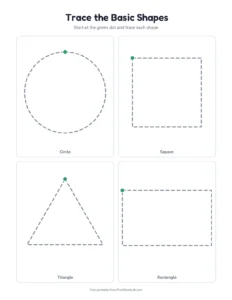
| Preschool (3 to 4) | Recognise letters, hear rhymes, hold a pencil, trace lines and shapes | Alphabet, letter tracing |
| Kindergarten (5 to 6) | Letter sounds, first sight words, CVC words, writing their own name | Name tracing, word families |
| 1st grade (6 to 7) | Blending and reading short words, more sight words, simple sentences | Sight words, 1st and 2nd grade passages |
| 2nd grade (7 to 8) | Longer words, spelling patterns, capital letters and punctuation | Spelling, grammar |
| 3rd grade (8 to 9) | Reading for meaning, prefixes and suffixes, paragraphs, first cursive | 3rd and 4th grade passages, cursive |
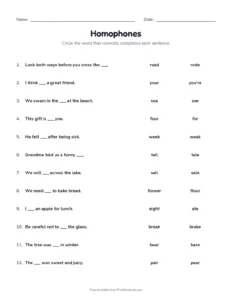
| 4th and 5th grade (9 to 11) | Nonfiction, inference, figurative language, writing several paragraphs | 5th and 6th grade passages, homophones |
Writing worksheets for kids: from first marks to full stories
Handwriting and composition develop in stages, and skipping a stage usually shows up later as tired hands or letters that are hard to read. Our writing worksheets for kids follow that path:
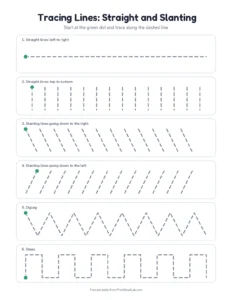
- Pre-writing strokes: lines, curves and zigzags on the preschool pages build pencil control before letters.
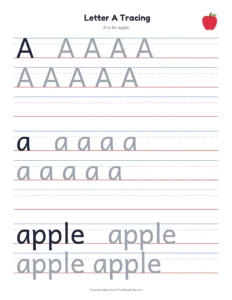
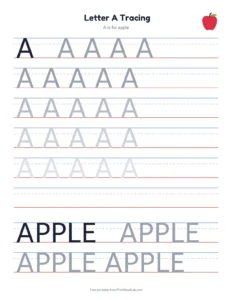
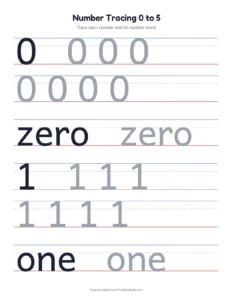
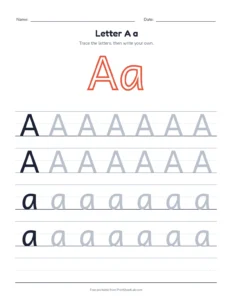
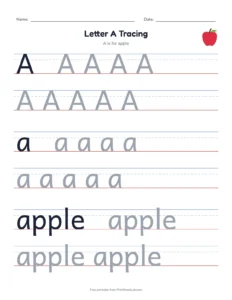
- Print letters: letter tracing on three-line handwriting paper, with a start dot and arrows.
- Their name and first words: name tracing, then copying sight words and word family words.
- Sentences: a capital letter, finger spaces and a full stop. The grammar pages practise all three.
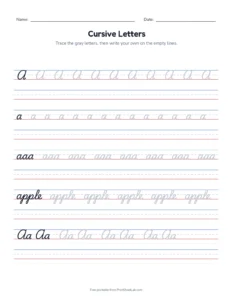
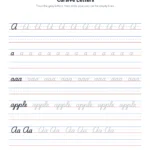
- Cursive: joined letters, then words and sentences, usually from grade 2 or 3.
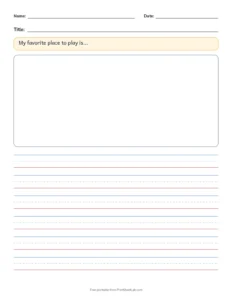
- Stories and letters: story paper, comic strips and story planners help children plan before they write.
For free writing, print handwriting paper for kindergarten or lined paper with a line height that suits your child’s letter size. Good writing worksheets for kids leave plenty of space: big letters come before small, neat ones.
How to use ELA worksheets at home
- Keep it short. One page, about ten minutes. Stop while your child still wants more.
- Read the instructions together. Even confident readers skip words in instructions, and reading them aloud avoids frustration.
- Say the sounds. On phonics and spelling pages, ask your child to say each sound as they write the letter.
- Check straight away. Use the answer key while the work is fresh and redo only the items that were wrong.
- Finish with a real book. Worksheets practise the skill; a story gives it a reason. Read together for ten minutes afterwards.
For teachers: literacy centers and weekly spelling
Teachers use these ELA worksheets for literacy centers, morning work, homework and small intervention groups. Because many sets are makers, you can type the class spelling list once and print rainbow writing, word shapes and a practice test from the same words, or build sight word flash cards and bingo cards for a small group. Add the word search maker for a Friday puzzle with the week’s words, and the flash card maker for any word list. The printable license explains classroom use.
Play first, then print
When worksheets need a break, the learning games practise the same words on screen: the sight words game, the rhyming words game, spelling games for grade 1 to grade 5, spelling hangman and typing games for kids. Children can play for five minutes and then print the matching worksheet to take to the table.
Frequently asked questions
8 quick answers
What are the best reading and writing worksheets for beginners?
For children who are just starting, begin with alphabet and letter tracing pages, then name tracing and the first Dolch sight words. These reading and writing worksheets build letter knowledge and pencil control together, which is what early reading rests on.
At what age should children start tracing letters?
Many children enjoy tracing from around age 3 or 4, once they can hold a crayon or chunky pencil. Start with large letters and short sessions, and aim for fun rather than perfect letters.
What is the difference between sight words and phonics?
Phonics teaches children to sound out words by matching letters to sounds, as in c-a-t. Sight words are common words such as the, said and was that children learn to recognise instantly, because many of them are hard to sound out. Children need both, and most early reading programs teach them side by side.
How many sight words should a kindergartener know?
It depends on the school, but many kindergarten classes aim for the 40 words on the Dolch pre-primer list and often some of the 52 primer words by the end of the year. Ask your child’s teacher, and use the sight word checklist to track progress.
Can I use my own word lists?
Yes. The spelling worksheet generator and the sight word maker both accept your own words, and the tracing makers accept any name or sentence.
Are these free reading worksheets really free?
Yes. Our free reading worksheets and writing pages cost nothing and need no login, whether you print one copy for home or thirty for a class.
Which reading pages have answer keys?
Yes, wherever there is a right answer: comprehension questions, grammar, vocabulary and spelling scrambles have a key on the last page. Tracing and free writing pages have no key, because there is nothing to mark.
Will these English worksheets for kids work outside the US?
Yes. Every page prints on US Letter or A4, and the spelling, sight word and tracing makers accept any words you type, so you can match UK, Australian or Indian spelling lists. That makes them useful English worksheets for kids learning English as an additional language too.