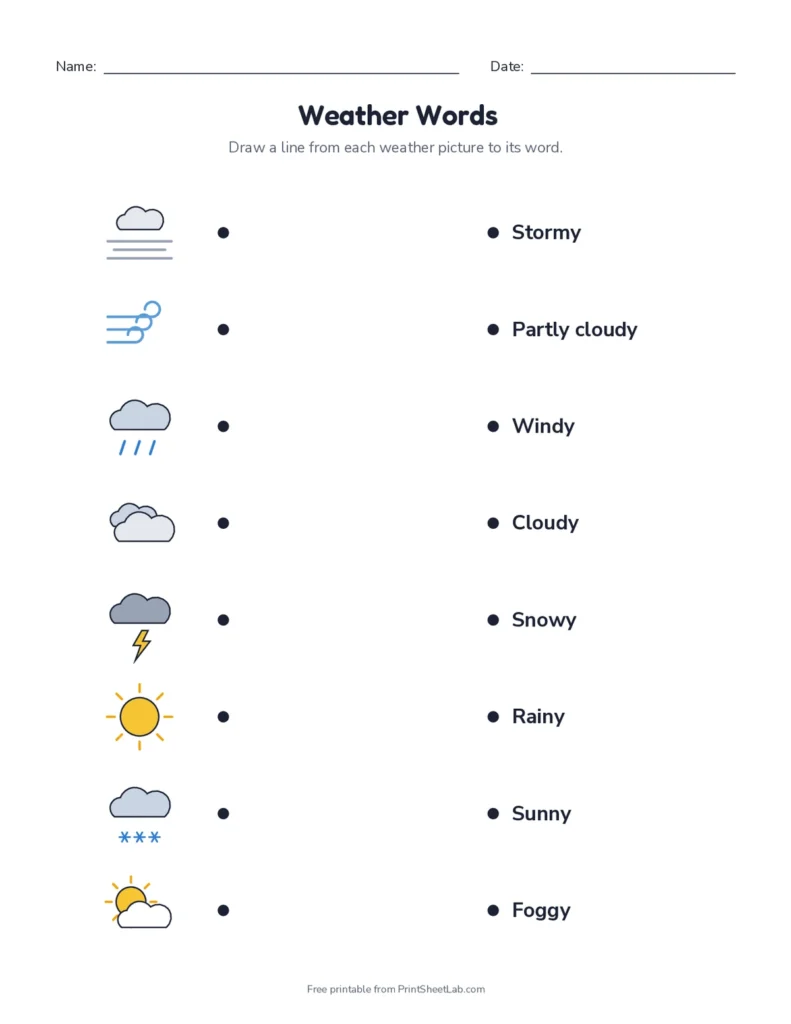
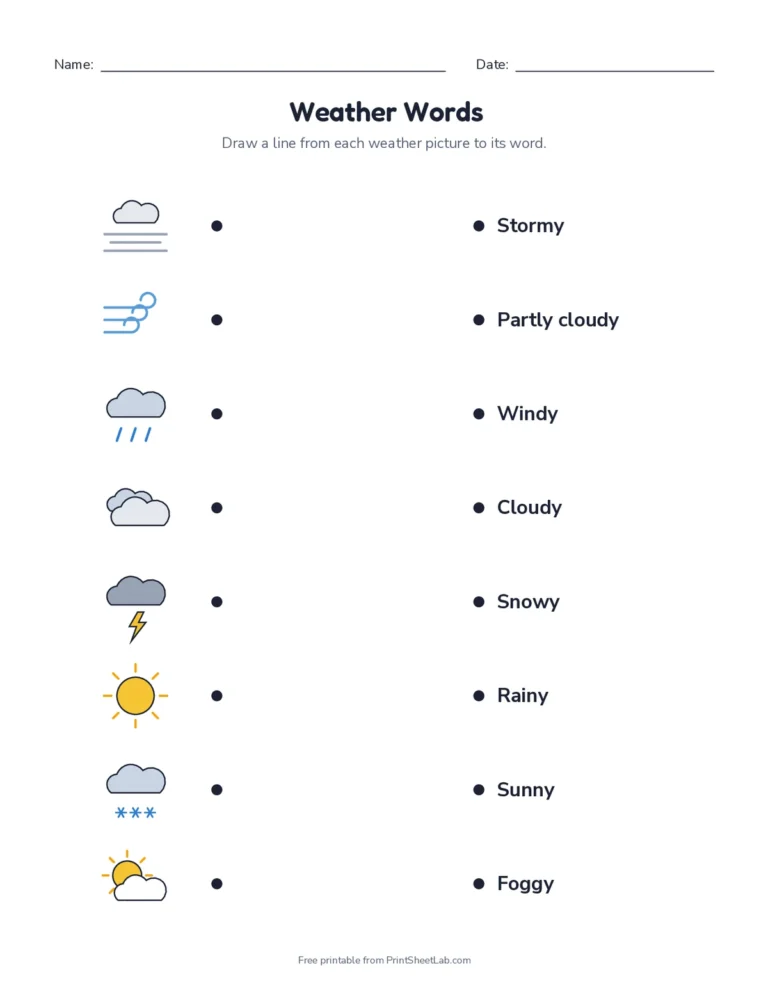
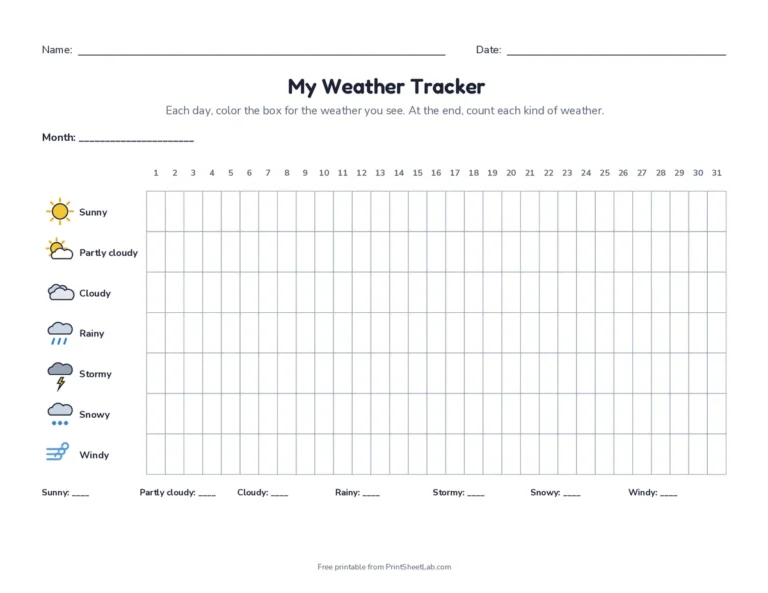
Free weather worksheets for kids: a monthly weather tracker, a simple weather chart for kids with clear weather symbols, a weather words matching page and a daily weather journal with space to draw and write. Perfect for morning meeting, calendar time and science units from preschool to 3rd grade.
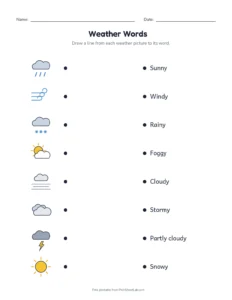
A weather words matching page from the weather worksheets generator above.
Ready-to-print weather worksheets (PDF)
The full set of weather worksheets prints as one PDF. To print only the tracker or the journal, or to switch to black and white, choose Customize.
Weather packTracker, matching, journal.PDFCustomizeWeather trackerColor a box each day.PDFCustomize
Weather words for kids
Weather
What it means
Sunny
The sky is clear and the Sun is shining.
Partly cloudy
Some clouds, with sunshine in between.
Cloudy
Clouds cover most of the sky.
Rainy
Water drops fall from the clouds.
Stormy
Heavy rain, strong wind, and often thunder and lightning.
Snowy
Ice crystals fall as snowflakes when it is very cold.
Windy
Moving air you can feel and see pushing trees and kites.
Foggy
A cloud close to the ground that makes it hard to see far.
A weather chart for kids: reading the symbols
Every weather chart for kids uses simple pictures so even non-readers can record the day. Our pages give each kind of weather in the table above its own clear picture, in the same style as the symbols on TV and phone weather maps, so children soon start recognizing them in real forecasts too. Point at the symbol, say the word, then color it in.
Four main kinds of clouds
Cloud
What it looks like
What weather it brings
Cumulus
Puffy, white, like cotton balls
Usually fair weather
Stratus
A flat gray blanket across the sky
Dull days, drizzle or fog
Cirrus
Thin, wispy streaks very high up
Fair now, sometimes a change on the way
Cumulonimbus
Huge towers, dark at the bottom
Thunderstorms, heavy rain, sometimes hail
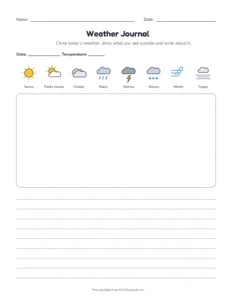
Go cloud spotting with the weather journal and draw the clouds you see. For the full family of cloud names, see the list of cloud types on Wikipedia.
Weather activities to go with the worksheets
Make a rain gauge: cut the top off a clear plastic bottle, mark centimeters with a ruler, and check it after each rainy day. Record the amount in the weather journal.
Make a wind sock: tape crepe paper streamers to a paper tube and hang it outside. Which way is the wind blowing today?
Read a thermometer: check an outdoor thermometer at the same time each day and add the temperature to the chart.
Dress for the weather: before going out, look at the chart and decide together what to wear.
Guess, then check: each morning, predict today’s weather, then compare with what really happened.
Weather worksheets by season
Use the monthly chart all year and compare months. Spring brings rain and changeable days, summer brings sun and sometimes storms, fall brings wind and falling leaves, and winter brings cold, frost and, in many places, snow. After a few months, children can see the pattern for themselves on their completed weather worksheets, which turns a daily routine into real data about the seasons.
Weather worksheets for morning meeting
Many classrooms start the day with a weather helper. Give one child the job each morning: look out of the window, report the weather to the class, and color today’s box on the big class chart while everyone else colors their own copy. Add a quick question such as “Do we need a coat today?” or “Is it warmer or colder than yesterday?” At the end of the week, count the sunny and rainy days together. These five-minute routines build vocabulary, counting and observation skills, and the weather worksheets give every child a record to take home.
Staying safe in stormy weather
Teach children the National Weather Service rule: “When thunder roars, go indoors.” If you can hear thunder, lightning is close enough to be dangerous, so head inside and wait until the storm has passed. The NWS lightning safety pages have more tips for families and schools.
How to use the weather tracker
Write the month at the top.
Each day, look outside and color the box for today’s weather under the date.
At the end of the month, count the boxes for each kind of weather and write the totals.
Talk about it: Which weather happened most? Was it what you expected for this season?
Older children can turn the totals into a bar graph on graph paper.
Practice it as a game
Free online games for the same skill: balloon pop, memory match, races and more. No sign-up.
Yes. All three weather worksheets are free, so you can print a fresh set every month for your family or classroom.
What age are they for?
The matching page and tracker suit preschool to 1st grade, and the journal works well up to 3rd grade.
What should a weather chart for kids include?
Days of the month across the top, simple weather symbols down the side, and a place to count the totals. Our weather tracker has all three, plus room to write the month.
How do I teach weather to preschoolers?
Keep it daily and short: look outside, name the weather, color one box on the tracker and talk about what to wear. Add the weather words page once they know the symbols.
Can I use the tracker every month?
Yes. It has 31 day columns, so it works for any month. Just print a new copy each month.