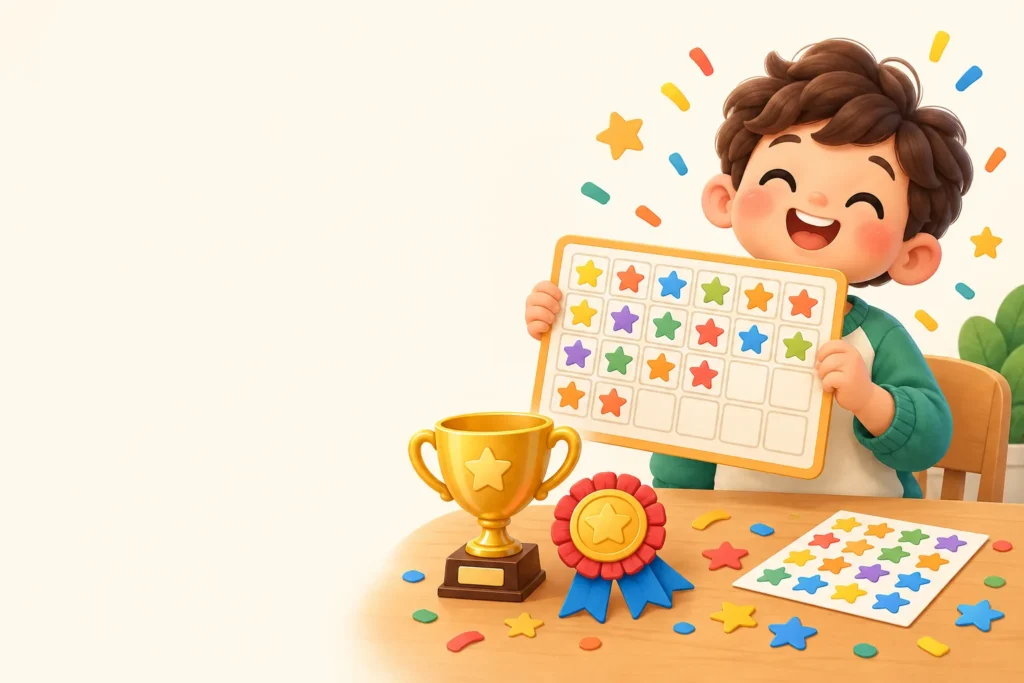
Make a free reward chart printable in seconds. Type your child’s name, the goal (reading, potty training, homework, trying new foods) and the reward, then pick 10 to 30 spaces shaped like stars, hearts, flowers or circles. This printable reward chart doubles as a sticker chart: add a sticker or color a space each time the goal is met. It is a simple, positive reward chart for kids from toddlers to tweens, in bright colors or black and white to save ink.
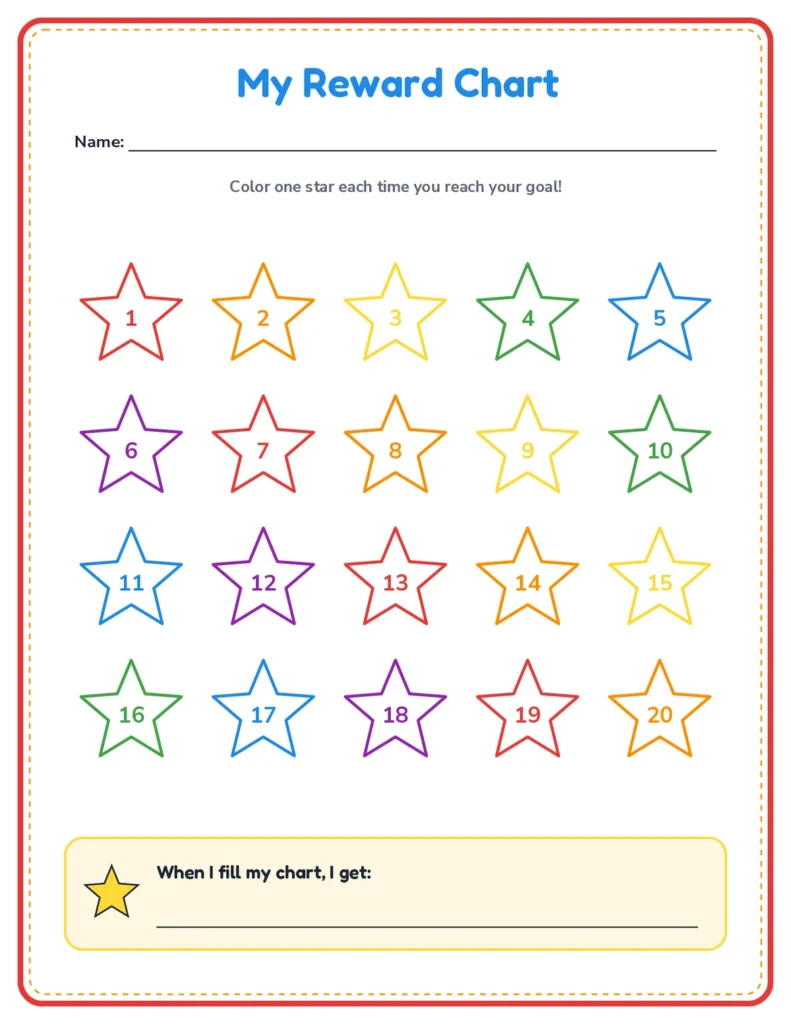
Try the online sticker chart
Tap a star to add a sticker. Your chart is saved in this browser, so you can come back tomorrow and keep going.
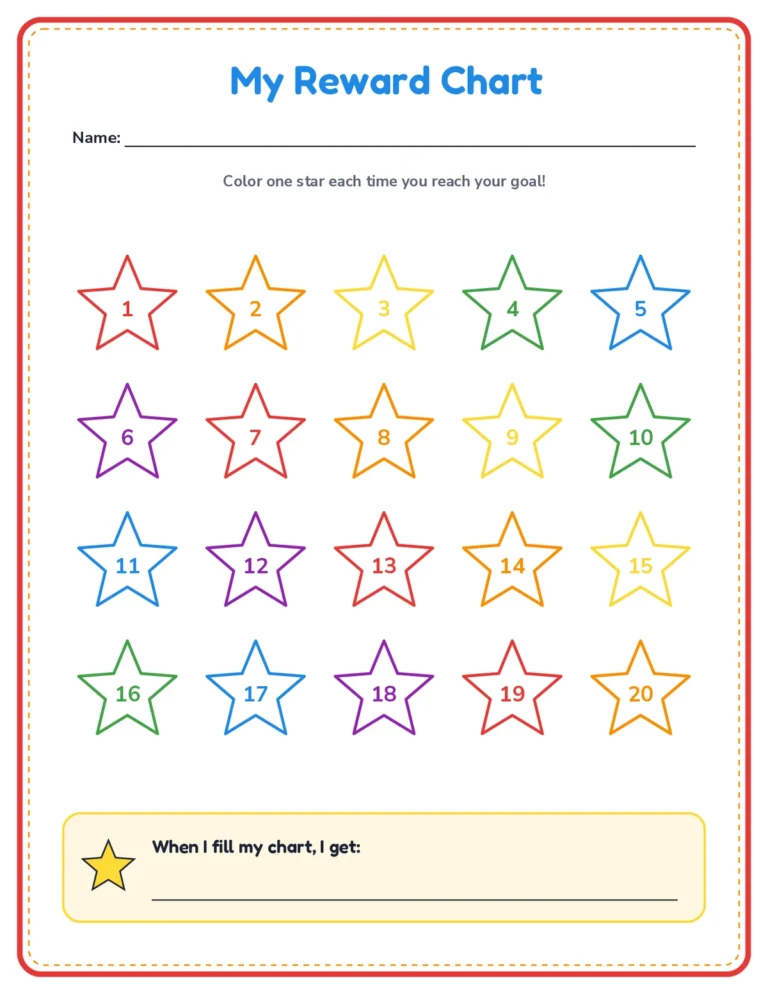
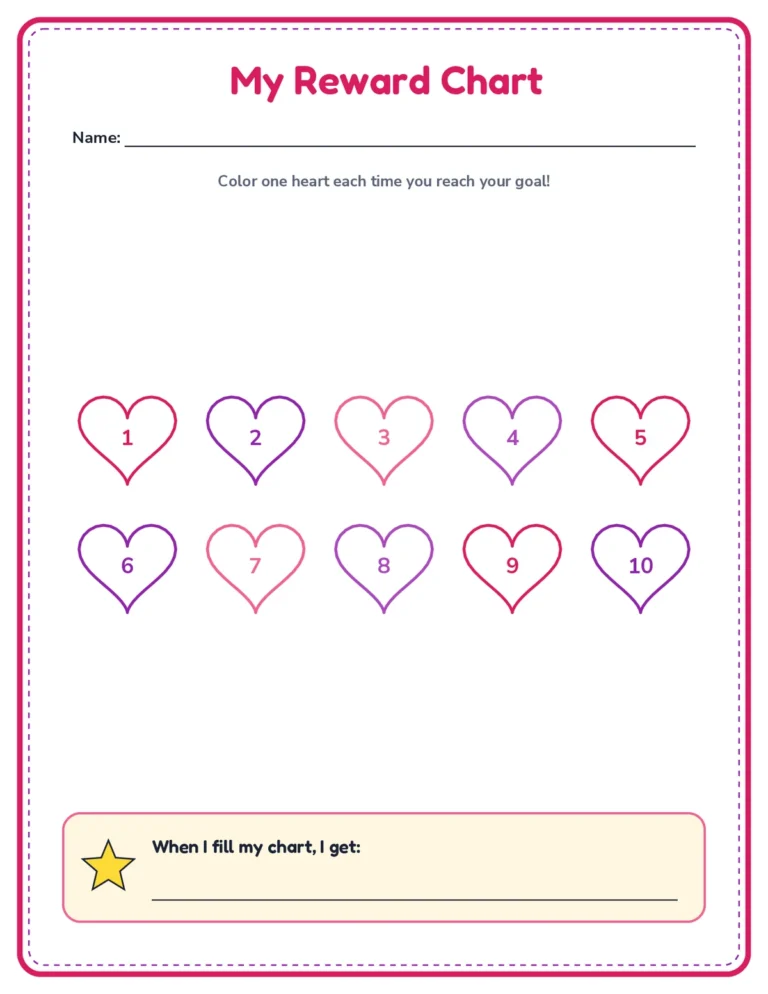
Ready-to-print reward chart printable PDFs
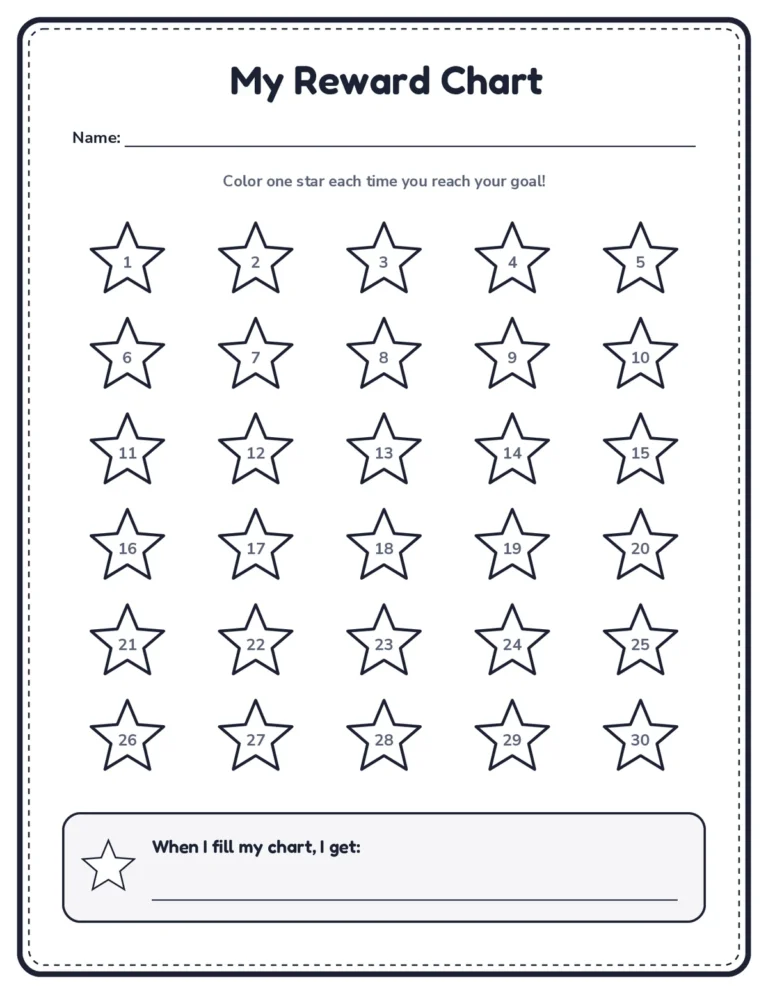
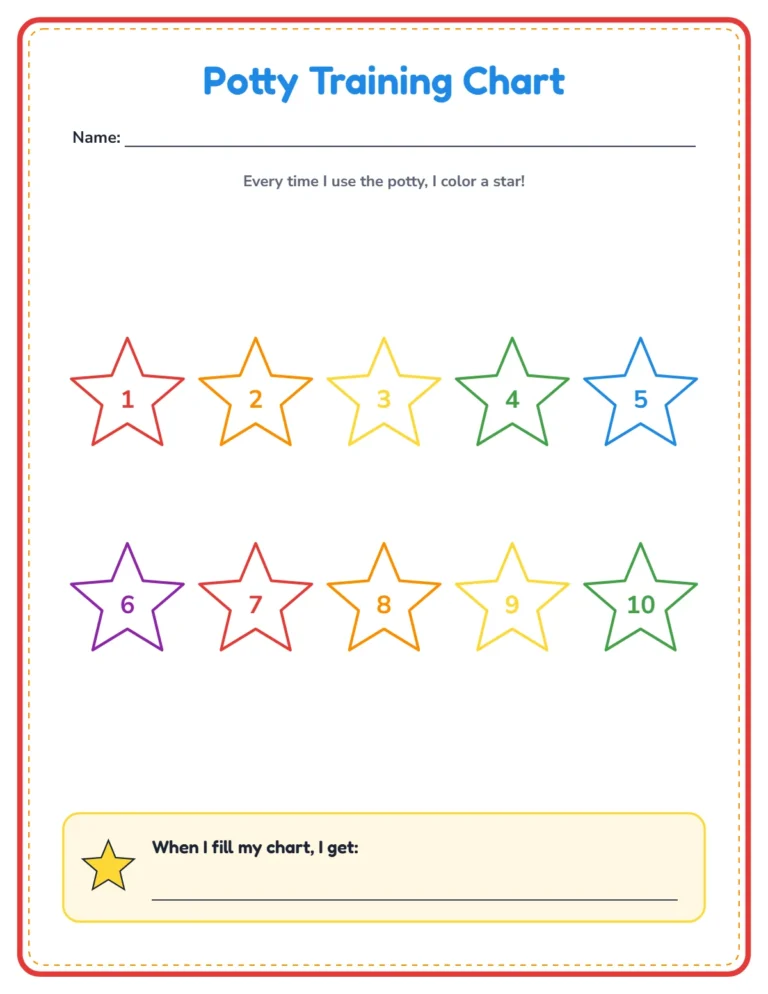
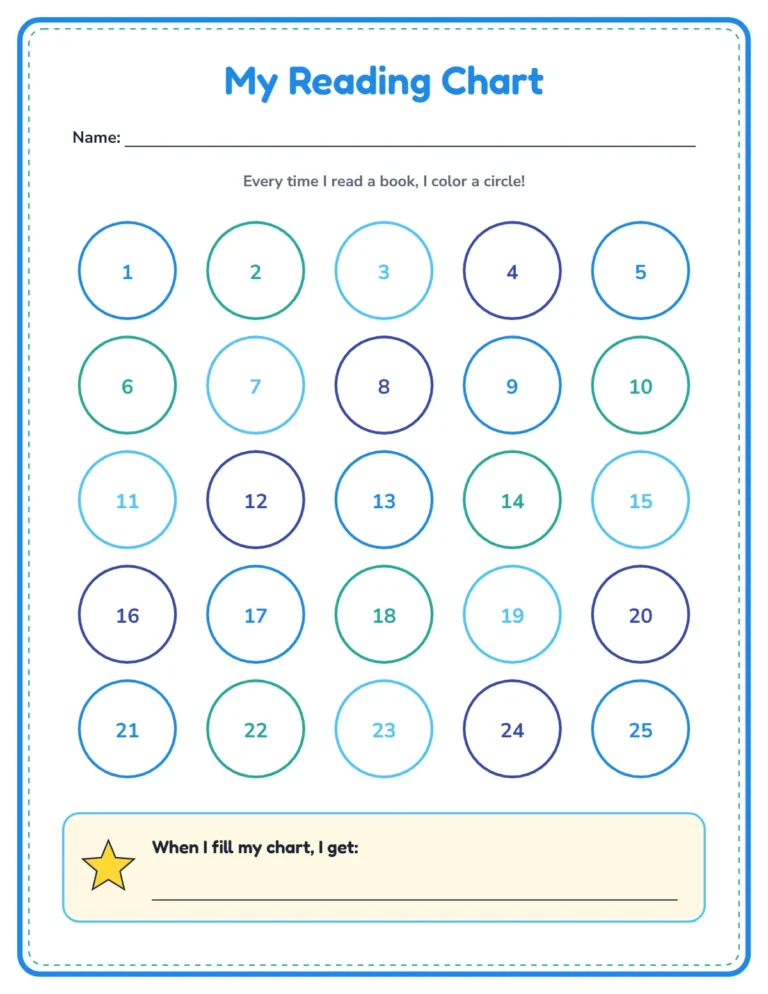
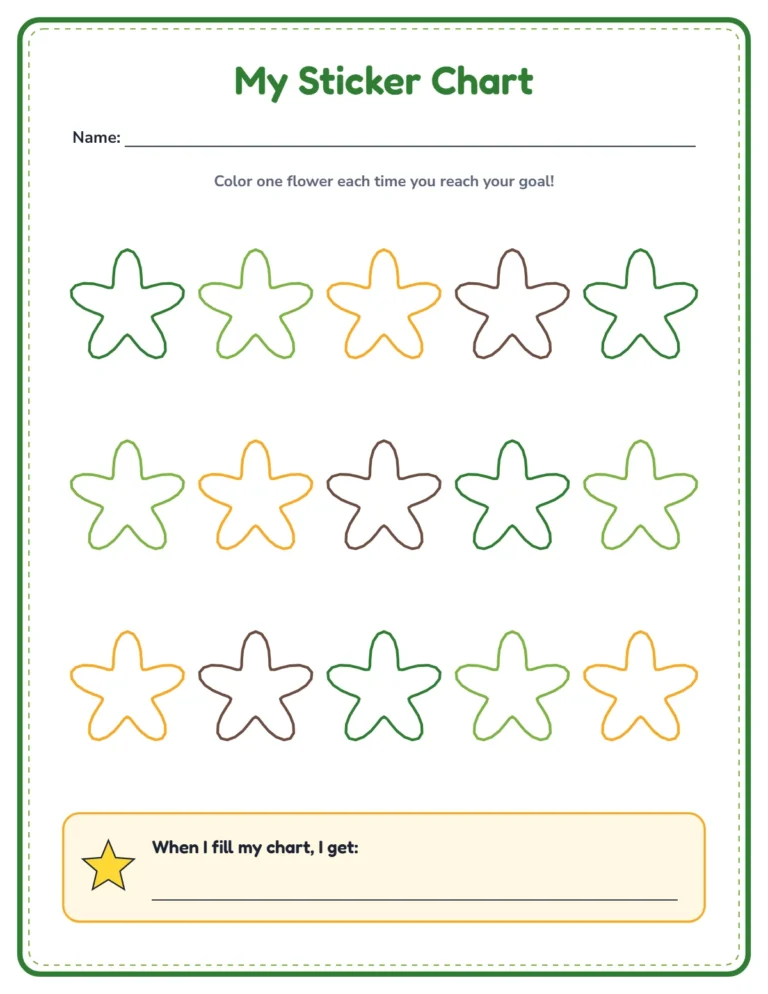
Six charts are ready to go, from a 10-star potty chart to a 30-star black and white version. Each one prints as is, or choose Customize to type in a name, goal and reward first.
How to make a reward chart work
- Pick one clear goal. “Read for 15 minutes” works better than “be good”. Write it on the chart.
- Choose the right size. Young children do best with 10 spaces and a quick reward. Older kids can work toward 25 or 30.
- Agree on the reward together. Small, meaningful rewards like a trip to the park, extra story time or choosing dinner work well.
- Be consistent. Add the sticker right away and praise the effort, not just the result.
- Celebrate the finish, then start a new chart with a new goal.
Reward chart for kids: which size by age?
| Age | Spaces | Why it works |
|---|---|---|
| 2 to 3 years | 10, with numbers | The reward comes within a few days, before a toddler loses interest. Counting the numbered stars is a bonus. |
| 4 to 6 years | 10 or 15 | Long enough to build a habit like brushing teeth or getting dressed, short enough to stay exciting. |
| 7 to 10 years | 20 or 25 | Children can wait a week or two for a bigger reward and enjoy watching the chart fill up. |
| 11 and up | 25 or 30 | Older kids prefer a plain black and white reward chart printable and a goal they chose themselves. |
Sticker chart, printable reward chart or behavior chart?
The names overlap, but they work a little differently. A sticker chart or reward chart counts up toward one goal: every time your child does the thing, a space gets a sticker, and a full chart earns the reward. A behavior chart tracks several behaviors across the days of the week, which suits older children working on more than one habit. A chore chart lists jobs and who does them. For one clear goal, such as using the potty or reading every night, a simple reward chart printable is the easiest place to start.
Potty training with a reward chart printable
Potty training is the most popular use for a sticker chart. Keep it simple: one star each time your child sits on the potty at first, then one star for each success once sitting is easy. Use a short chart of 10 numbered stars so the reward is never far away, and stick the chart at your child’s eye level in the bathroom. Every child is ready at a different time, and the American Academy of Pediatrics has practical guidance on readiness signs and staying positive in its potty training section on HealthyChildren.org.
Rewards for your reward chart printable (not food or toys)
- Choosing dinner or the family movie
- An extra bedtime story or 15 more minutes before lights out
- A trip to the park, library or playground with a parent
- Baking something together
- A sleepover in the living room or a backyard camp-out
- Being the DJ in the car for a week
- Picking a new library book or a craft supply
- A “yes day” afternoon with a few simple rules
Experiences and time together tend to motivate children just as well as things, and they do not fill the house with clutter. Whatever you choose, agree on it before the reward chart printable goes on the wall and write it in the reward box at the bottom.
Mistakes to avoid with a reward chart printable
- Too many goals at once. One chart, one behavior. Start a second chart only when the first habit sticks.
- Taking stickers away. Once a sticker is earned, it stays. Removing stickers turns a positive chart into a punishment and children lose interest fast.
- Vague goals. “Be good” is hard to judge. “Put shoes on the rack” is easy to see and easy to praise.
- Waiting too long. Add the sticker right away, while the moment is still fresh, and say exactly what your child did well.
For more ideas on encouraging good behavior without punishment, the AAP’s communication and discipline pages are a helpful, research-based read.
Popular reward chart printable ideas
| Goal | Spaces | Example reward |
|---|---|---|
| Potty training | 10 | A small toy |
| Reading | 20 | A trip to the bookstore |
| Homework | 15 | Movie night |
| Trying new foods | 10 | Pick a dessert |
Frequently asked questions
6 quick answers
What age are reward charts for?
Sticker charts work best for children from about 2 to 10 years old. For toddlers, keep the chart short so the reward comes quickly.
Can I use real stickers?
Yes. The spaces are big enough for most small stickers, or children can simply color them in.
How many stickers should a reward chart have?
Use 10 for toddlers and preschoolers, 15 to 20 for young school-age children and 25 to 30 for older kids. The younger the child, the sooner the reward should come.
What if my child misses a day?
Nothing is lost. The chart counts successes, not days, so simply add the next sticker when the goal is met again.
Is this reward chart printable free?
Yes. Make and print as many charts as you need, for home or a classroom, without signing up.
Is my child’s name saved anywhere?
No. The chart is made in your browser. The name only appears on the page you print or download.
More charts and printables
- Chore charts and routine checklists.
- Behavior charts.
- Award certificates to celebrate a finished chart.
- Calendar generator.
- Printable planner generator with a habit tracker.