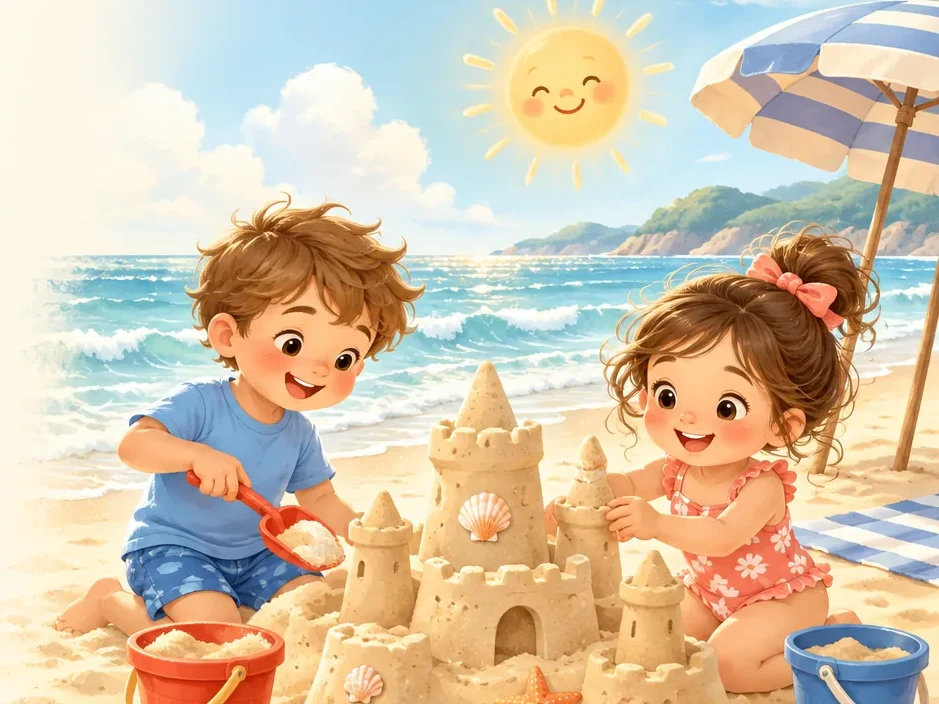
Free summer worksheets for children, with seven printable activities that use real summer words, from beaches and watermelon to sunscreen, camping and lemonade. Print a word search in three levels, bingo cards, a word scramble, a “how many words can you make” page, an acrostic poem, a writing prompt and a fold-up summer card, each with an answer key where one is needed.
Summer worksheets to print (PDF)
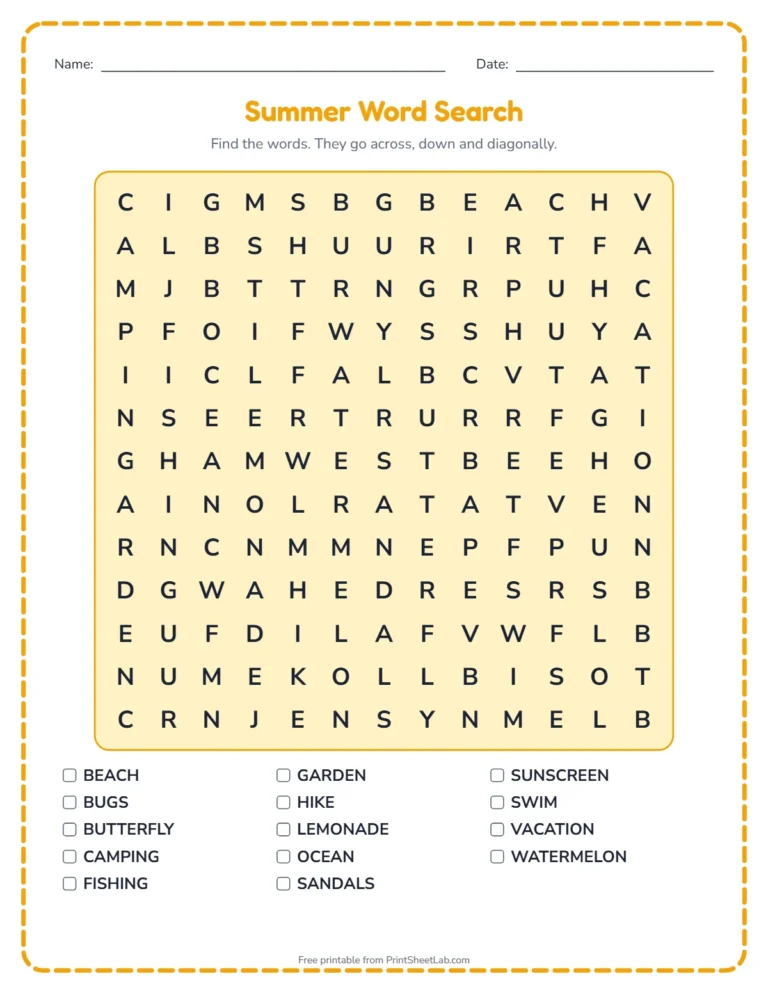
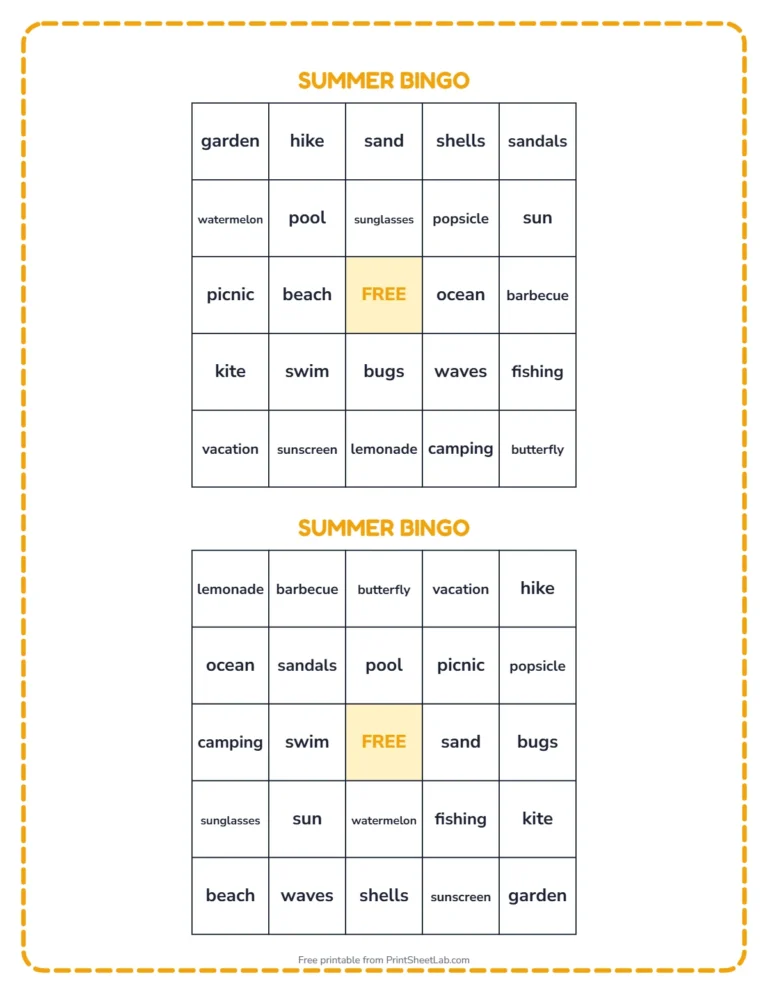
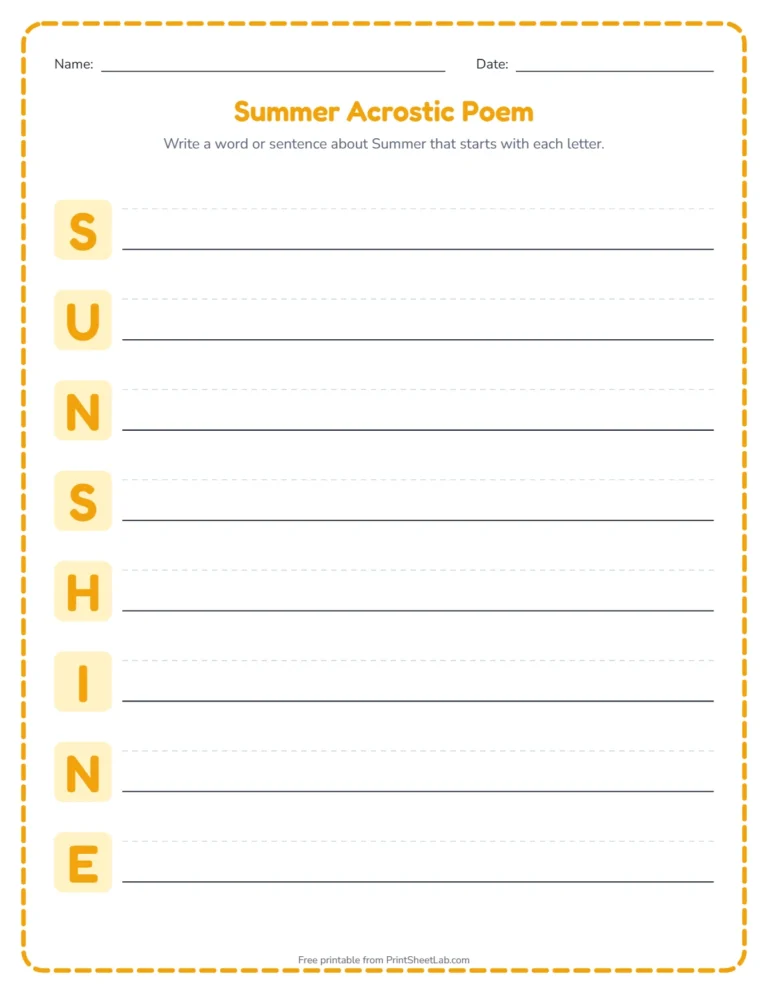
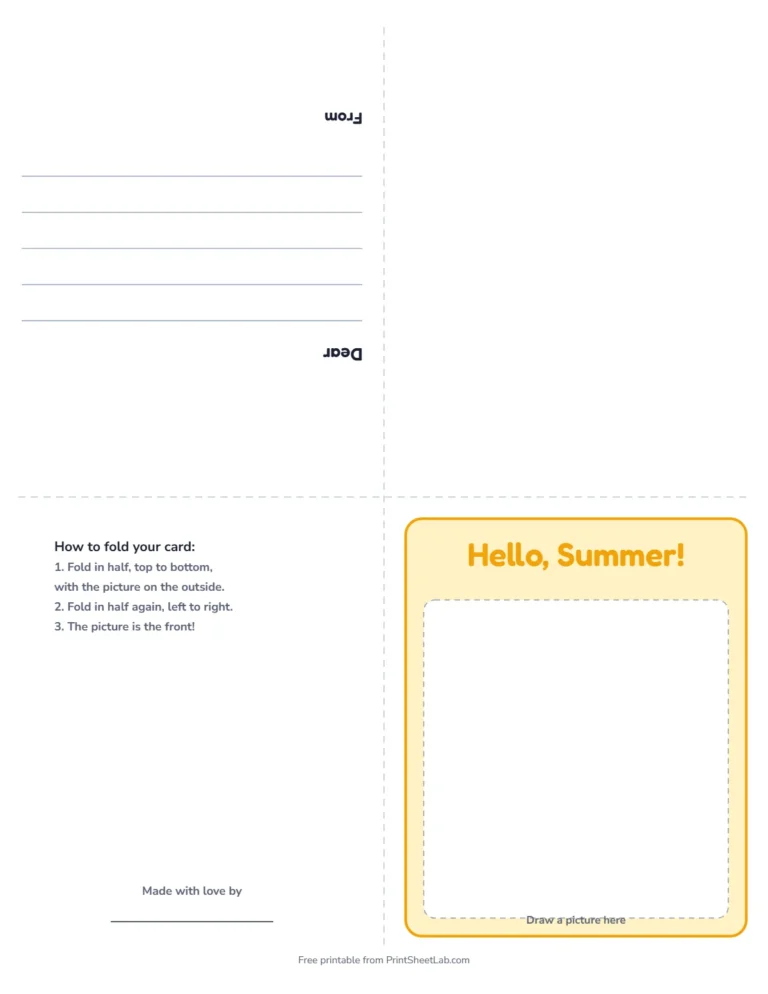
These four pages show what the summer maker prints: a medium word search with a word list, two bingo cards on a page, an acrostic poem for the letters of SUNSHINE, and the fold-up card that says “Hello, Summer!” Click a picture for the PDF.
Prefer one download? Grab the ready-made summer activity pack (PDF), which has every page in one file.
About summer: the season at a glance
Summer is a season rather than a single holiday, so its start date depends on the hemisphere you live in and on whether you go by the sun or by the calendar. These facts sit behind the words on the worksheets:
| When it starts | Around June 21 in the Northern Hemisphere, at the summer solstice; around December 21 in the Southern Hemisphere |
|---|---|
| Calendar summer | Weather services count June 1 to August 31 in the Northern Hemisphere, and December 1 to the end of February in the Southern Hemisphere |
| Solstice in 2027 | Monday, June 21, 2027 at 14:11 UTC (10:11 a.m. EDT) |
| Longest day | The summer solstice has the most daylight of the year |
| Weather | Warm to hot, with long, light evenings |
| Foods | Watermelon, ice pops, lemonade and barbecue |
| Activities | Swimming, camping, hiking and fishing |
| Safety | Sunscreen, shade, a hat and plenty of water |
The story of summer
Summer begins at the solstice, when the sun reaches its highest point in the sky and the day is the longest of the year. After that the days slowly shorten, though the hottest weather often comes weeks later because it takes time for the land and sea to warm up.
For many children summer means a long break from school, and a chance to try something new. A few small projects keep minds active: reading a book each week, keeping a journal of adventures, or learning a new skill. Safety matters too, so remember sunscreen, a hat, shade and plenty of water.
Summer is the warmest of the four seasons; the season sort and four seasons poster show how it fits between spring and fall. Wikipedia’s summer article explains the season and the solstice.
What is in the summer activity pack?
Every activity uses the same list of 24 summer words, so children meet each word several times in different ways. The list is the heart of the pack: the word search hides it, the scramble mixes it up, the bingo calls it out and the writing prompt asks children to use it.
Summer word search printable: three levels
The summer word search comes in easy, medium and hard grids, hiding 10, 14 and 18 of the 24 words. A kindergartner or early first grader does best on the easy grid with an adult reading the word list aloud; second and third graders can usually finish the hard grid alone, where the two 10-letter words are the slowest to spot.
The longest summer words are watermelon and sunglasses with 10 letters, and the shortest word is sun with 3.
Summer vocabulary: words to talk about
Four of the 24 words are compound words made from two smaller words: sunscreen, sunglasses, watermelon and butterfly. Splitting one on a whiteboard (sun + glasses) before the search helps beginning readers decode it. These eight words are worth a quick chat first:
| Word | Letters | What it means |
|---|---|---|
| sunscreen | 9 | A lotion that protects skin from the sun |
| vacation | 8 | A holiday away from school or work |
| popsicle | 8 | A flavored ice treat on a stick |
| lemonade | 8 | A drink of lemon juice, water and sugar |
| picnic | 6 | A meal eaten outdoors |
| sandals | 7 | Open shoes with straps |
| hike | 4 | A long walk in the countryside |
| waves | 5 | Moving ridges of water on the sea |
The other 16 words in the list are sun, beach, ocean, sand, swim, shells, watermelon, camping, garden, butterfly, bugs, pool, kite, sunglasses, fishing and barbecue.
How people celebrate summer
- Swimming at the beach, lake or pool
- Camping, hiking and cooking outdoors
- Eating ice pops and watermelon
- Reading, journaling and learning something new
- Visiting family and going on vacation
Summer activities for kids to do with the worksheets
Each of these summer activities for kids reuses words from the list and needs little more than chalk, paper, a cup or a bucket:
- Summer plan: use the prompt to plan the perfect summer day from morning to night.
- Beach treasure hunt: collect shells and sort them by shape and color.
- Lemonade stand math: set a price, count the cups and make a profit chart.
- Shadow tracing: trace a friend’s shadow in chalk at different times of day.
- Backyard campout: pitch a tent or a blanket fort and tick off squares on a camping bingo card for a night under the stars.
- Sunshine acrostic: write SUNSHINE down the page and add a happy word for each letter.
How to use these summer worksheets in five minutes
The maker works from the 24-word summer list, so every page you print uses the same words. Choose an activity, set the level and press Download PDF or Print, and press New puzzles for a fresh set.
Summer worksheets for reading, writing and math
Summer worksheets keep school skills fresh when they are short and mixed: one reading page, one writing task and one math or game page, about 15 minutes at a time, three or four days a week. That rhythm leaves most of the day for play and still means a child reads, writes and counts every week of the break.
- Reading: follow the word search with one of the short reading passages for grades 1 and 2, each with questions to answer.
- Writing: use the writing prompt once, then keep a summer journal with one sentence a day that uses a word from the list, such as “We found three shells on the beach.”
- Math: price the lemonade stand in cents, count and graph the shells, or mark off the days on a countdown chart for the last weeks of school.
- Games: a summer bingo board of things to do over the break works for the whole holiday, and ocean animal picture bingo suits 4- and 5-year-olds who are not reading yet.
For a mixed-age family, give the youngest the bingo and the card, and the older children the scramble and the hard grid, so everyone works on the same summer words at their own level.
Frequently asked questions
5 quick answers
When does summer start?
In the Northern Hemisphere it begins around June 21. In the Southern Hemisphere it begins around December 21.
How can I stop children losing learning over summer?
Short daily activities, such as reading, a journal, a puzzle or a worksheet, keep skills fresh without taking away the fun.
What ages are the summer worksheets for?
Ages 4 to 9. The bingo, card and acrostic suit younger children, and the word search and scramble suit grades 1 to 3.
When is the summer solstice in 2027?
The June solstice, the first day of astronomical summer in the Northern Hemisphere, falls on Monday, June 21, 2027 at 14:11 UTC, which is 10:11 a.m. Eastern Daylight Time. It is the longest day of the year north of the equator and the shortest day south of it.
Which summer worksheets suit preschoolers?
For 4- and 5-year-olds, choose the pages that need little reading: the bingo cards, the Hello, Summer! card to color and fold, and the easy word search with an adult reading each word aloud. Leave the scramble and the “how many words” page for children who already read short words on their own.
Summer printables: find the right page
Word search grids
Print the easy grid for children of 5 to 6, the medium grid for 7 to 8 and the hard grid for confident readers of 8 and 9, each with its answer key. Giving siblings different levels of the same summer word search printable lets them race fairly on a rainy afternoon.
More holiday worksheets
- Spring worksheets
- Fourth of July worksheets
- Back to school worksheets
- All holiday worksheets for 22 holidays and seasons
- Word search generator for your own words
- Bingo card generator for custom cards
Did you like this?
Last updated: