
Free homophones worksheets with answers for 1st to 4th grade. Children choose the right word to finish a sentence, match words that sound the same, and write the homophone for each word. Practise easy pairs like sea and see or pair and pear, then the tricky ones such as their, there and they’re and to, two and too. Every sheet prints with an answer key, and the homophones worksheet generator makes a fresh set whenever you like. A printable homophones list of 62 groups is included for reference.

In short: homophones are words that sound alike but have different meanings and spellings, such as night and knight. These homophones worksheets come in two levels (grades 1 to 2 and grades 3 to 4) and three activities, drawing on more than sixty homophone groups, each used in its own example sentence. All are free PDFs with answer keys.
Homophones for kids: play the quiz
Read the sentence and tap the word that fits the blank. It is a quick way to warm up before a printed sheet.
Homophones worksheets PDF
Download any sheet below, or tap Customize for a new level, a different activity or fresh sentences.
Grades 1 to 2
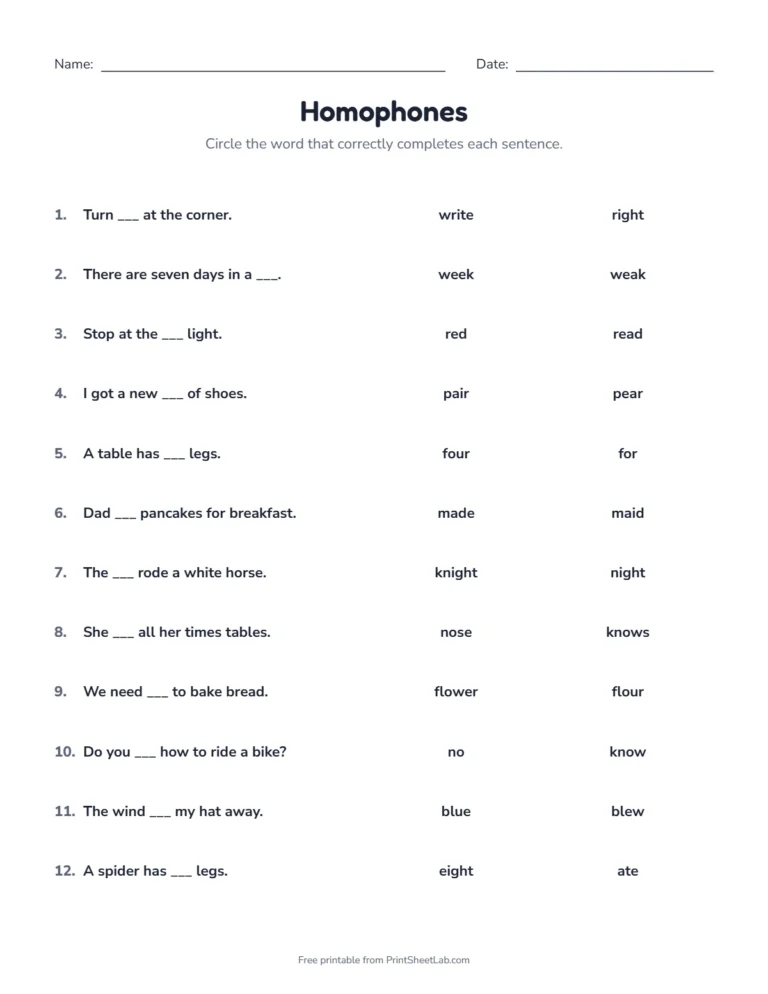
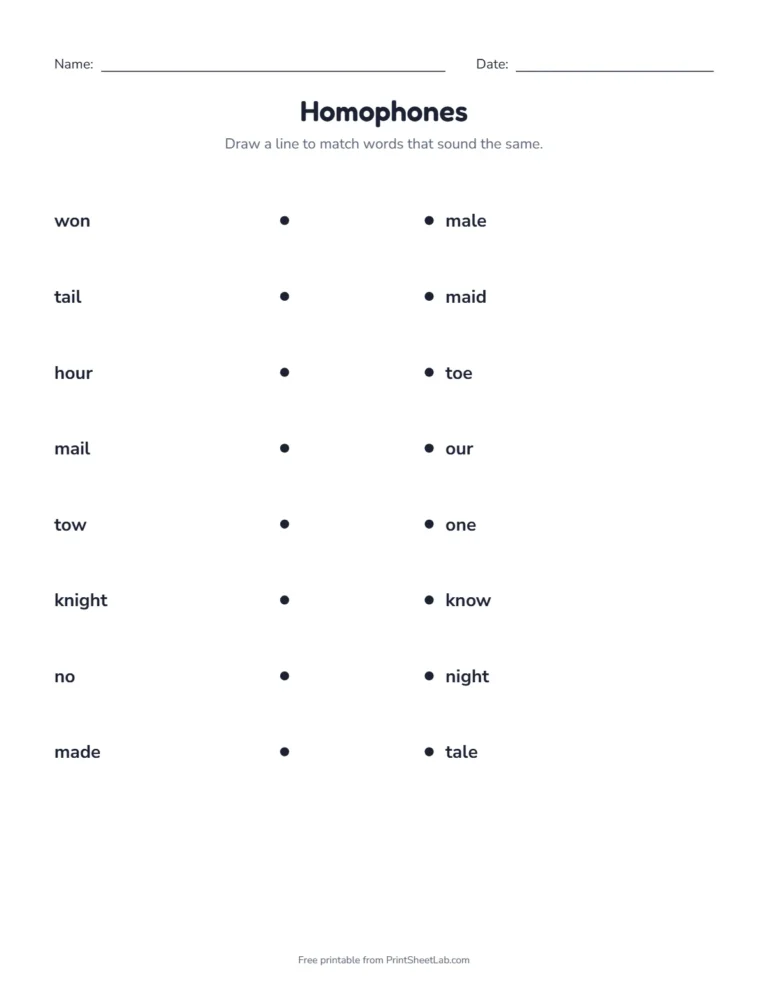
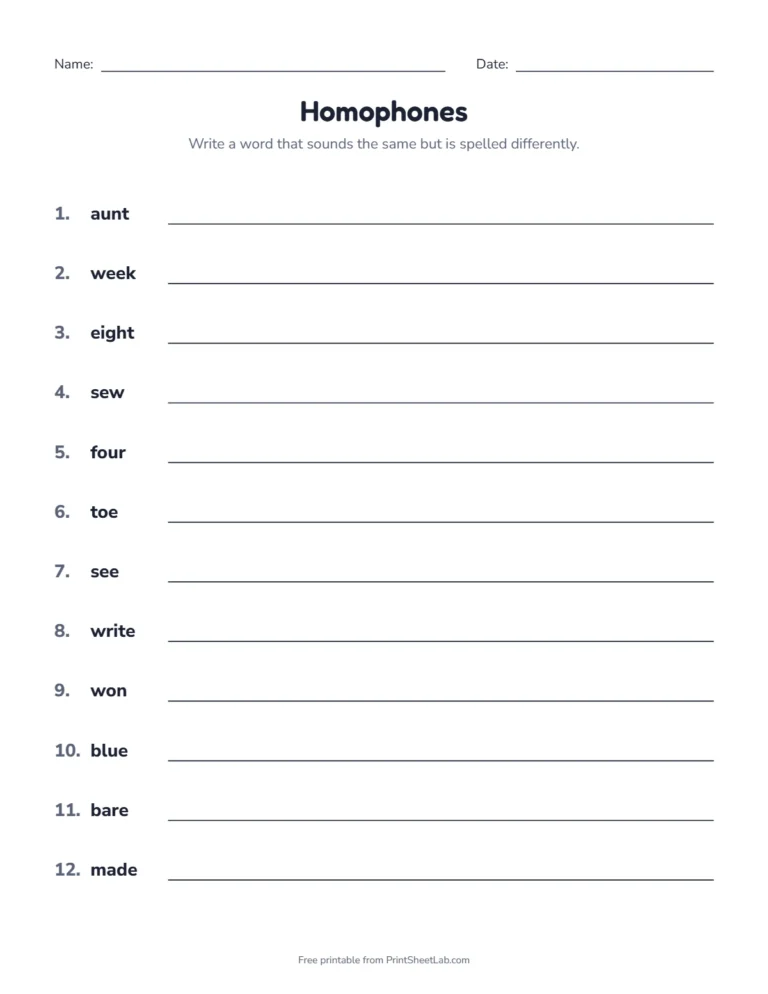
Grades 3 to 4
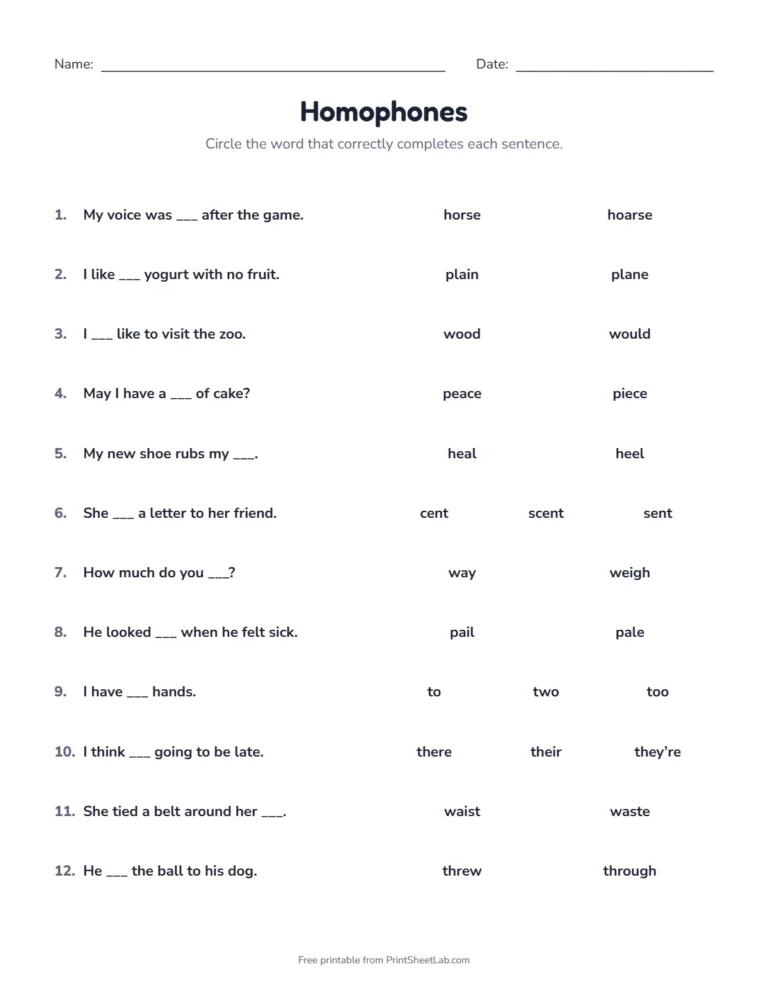
Mixed review

What are homophones?
Homophones are words that sound the same but have different meanings and usually different spellings. “I ate eight grapes” uses two of them. Because they sound alike, the only way to pick the right one is to think about the meaning of the sentence.
| Words | Quick tip |
|---|---|
| their / there / they’re | their = belongs to them, there = a place (it has “here” in it), they’re = they are |
| to / two / too | two = the number 2, too = also or very (it has an extra o), to = everything else |
| its / it’s | it’s = it is. If you can’t say “it is”, use its. |
| your / you’re | you’re = you are |
| hear / here | you hear with your ear, which is inside hear |
| piece / peace | a piece of pie |
| weather / whether | weather is rain or sun; whether means “if” |
Homophones list for kids
This homophones list for kids shows every group used in the worksheets, split by level. Read them aloud together: they sound the same every time.
Grades 1 to 2
sea / see, blue / blew, eight / ate, knight / night, flower / flour, pair / pear, bear / bare, hear / here, write / right, son / sun, one / won, week / weak, sail / sale, tail / tale, road / rode, meet / meat, four / for, knew / new, no / know, ant / aunt, hair / hare, be / bee, by / buy / bye, hi / high, hour / our, made / maid, mail / male, toe / tow, sew / so, red / read, flew / flu, nose / knows, knot / not
Grades 3 to 4
their / there / they’re, to / two / too, its / it’s, your / you’re, hole / whole, deer / dear, plain / plane, peace / piece, wood / would, break / brake, fair / fare, wait / weight, waist / waste, witch / which, threw / through, stair / stare, steal / steel, weather / whether, cent / scent / sent, heal / heel, board / bored, chews / choose, flea / flee, horse / hoarse, way / weigh, wear / where, cell / sell, dew / due, pail / pale
Homophones, homonyms and homographs
- Homophones sound the same but are spelled differently: flour and flower.
- Homographs are spelled the same but can sound different and mean different things: you read a book today, and you read one yesterday; a bow in your hair and the bow of a ship.
- Homonyms is the broad word for words that share a spelling or a sound but differ in meaning, like a baseball bat and a flying bat.
Dictionaries define the word the same way: a homophone is one of two or more words pronounced alike but different in meaning or spelling.
Three homophones worksheets in the generator
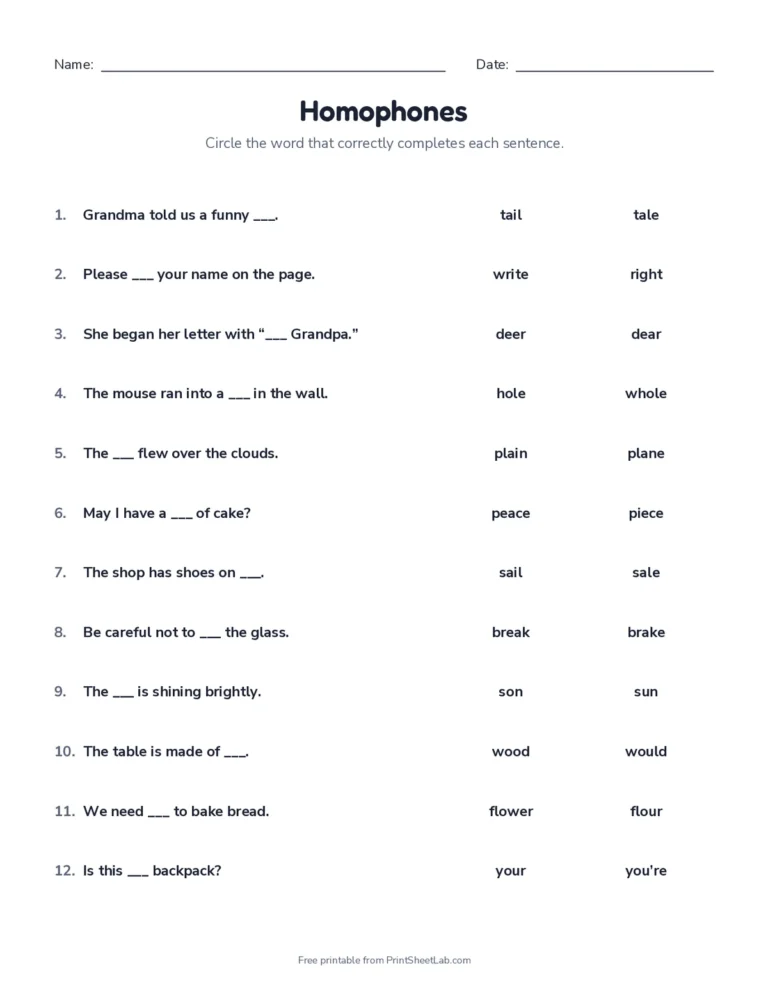
- Choose the right word: circle the homophone that completes each sentence.
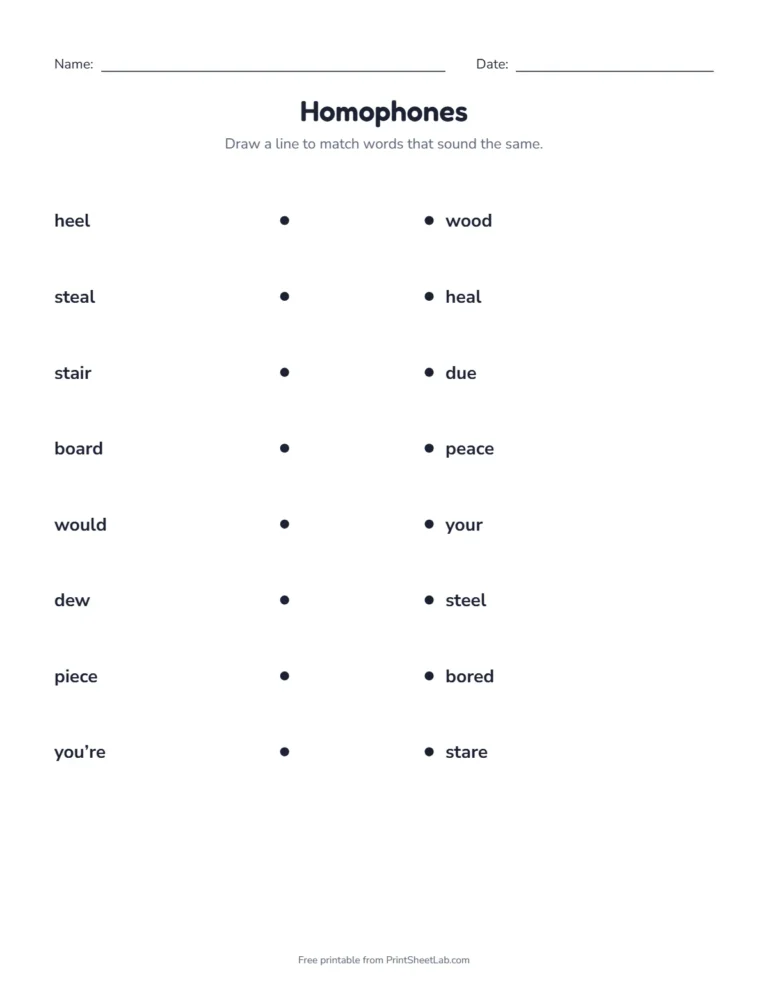
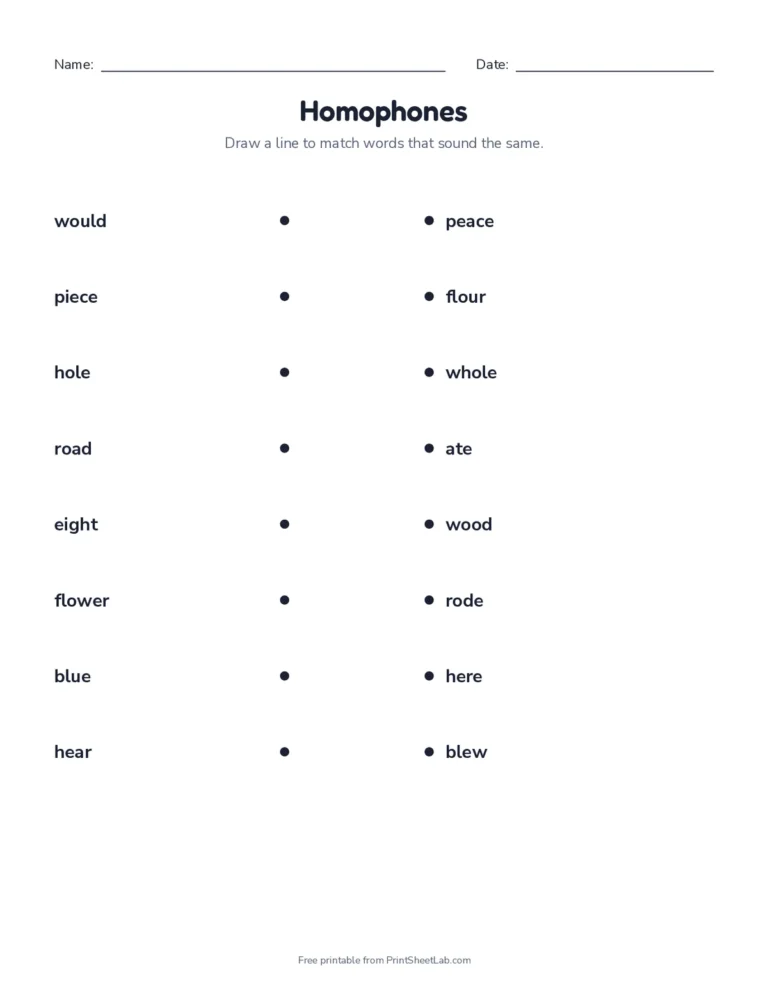
- Match the homophones: draw a line between words that sound alike, like knight and night.
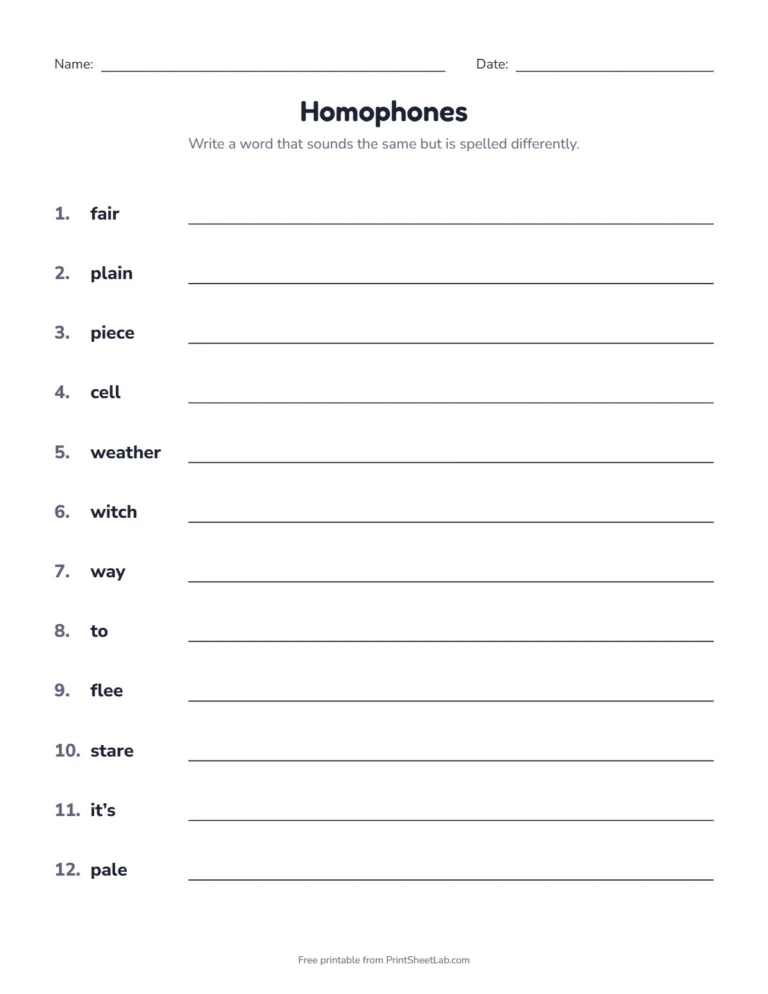
- Write the homophone: see pail, write pale. Groups of three, like by, buy and bye, need both partners.
Pick Grades 1 to 2 for short, familiar words, or Grades 3 to 4 for the confusing pairs that turn up in writing.
Tips for teaching homophones
- Say it, then spell it. Children notice that two words sound the same only when they hear them side by side.
- Draw the difference. A sketch of a pear next to a pair of socks sticks in the memory.
- Use the memory tricks from the table above, especially for there, their and they’re.
- Hunt in real writing. After a sheet, look for homophones in a reading passage or in the child’s own sentences.
- Revisit little and often. Five sentences a day from the homophones worksheets beats one long session a week.
Frequently asked questions
7 quick answers
Do the homophones worksheets with answers have a key for every page?
Yes. Every sheet you make prints its own answer key on the following page, so children can check their work straight away.
How are homophones different from homonyms?
Homophones sound the same but are spelled differently (pair, pear). Homonyms are spelled and said the same but mean different things (a baseball bat and a flying bat).
Which homophones are the most important?
Their, there and they’re; to, two and too; its and it’s; and your and you’re cause the most mistakes in writing, so they appear often on the grades 3 to 4 homophones worksheets.
What grade learns homophones?
Children meet simple homophones such as see and sea in 1st and 2nd grade. By 4th grade, the Common Core standards expect them to use frequently confused words like to, too and two correctly (standard L.4.1g).
Do the homophones worksheets have answers?
Yes. Each sheet ends with an answer key showing the circled words, the matched pairs or the written homophones.
Is “read” a homophone?
Yes, in the past tense. “I read a book yesterday” sounds like the color red, so read and red are homophones.
Are these worksheets free?
Yes. Print as many homophones worksheets as you need for home or school, with nothing to sign up for.
More word skills
- Synonyms and antonyms worksheets for words with the same and opposite meanings.
- Compound words worksheets.
- Prefixes and suffixes worksheets.
- Rhyming words worksheets.
- Grammar worksheets.
- Spelling worksheet generator.
- 2nd grade, 3rd grade and 4th grade worksheets.