
Free rhyming words worksheets for preschool, kindergarten and 1st grade, each one printed with its own answer key. Children who are not reading yet can use the rhyming pictures pages to circle, sort and match picture rhymes, and early readers can circle the word that rhymes, find the odd one out, match rhyming pairs or write their own rhyme. Below the generator you will also find a rhyming words list and simple rhyming games to play at home or in class.
Play the rhyming quiz
Read the word, then tap the word that rhymes with it. It makes a great warm-up for the rhyming words worksheets. How many can you get in a row?
Ready-to-print rhyming words worksheets (PDF)
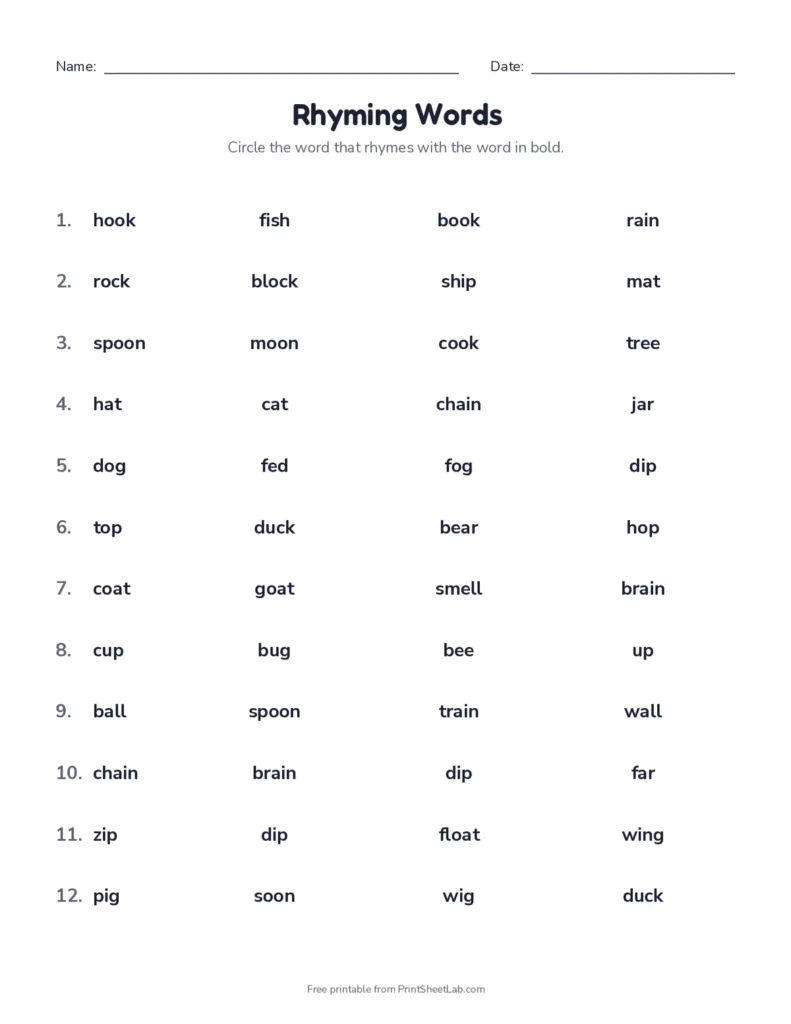
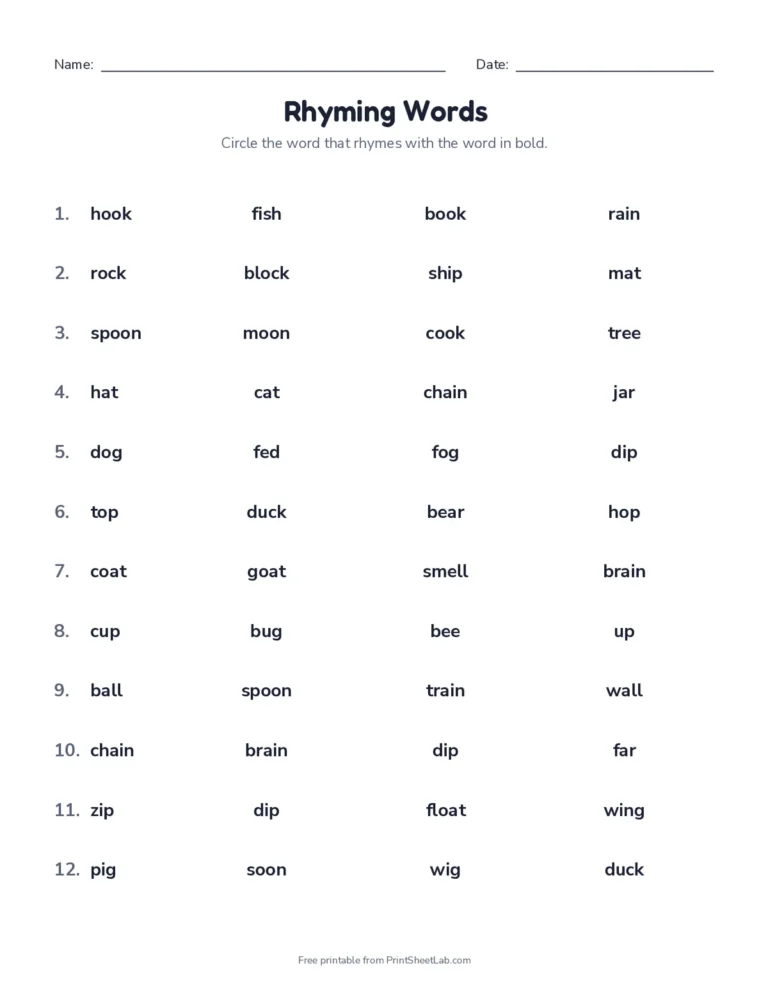
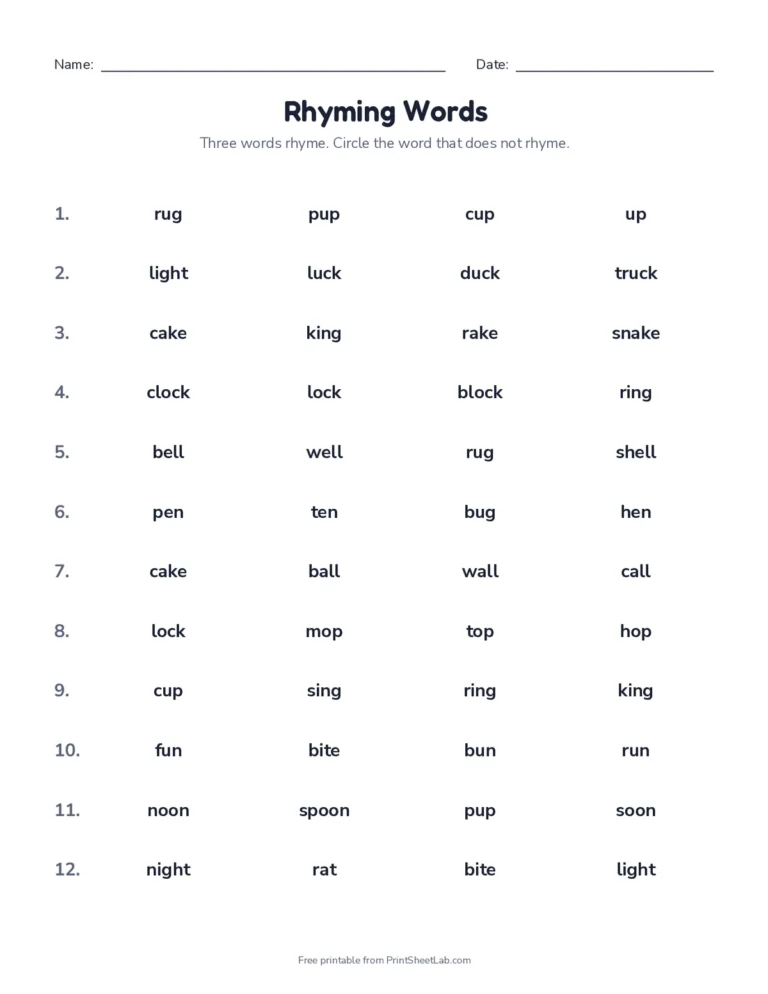
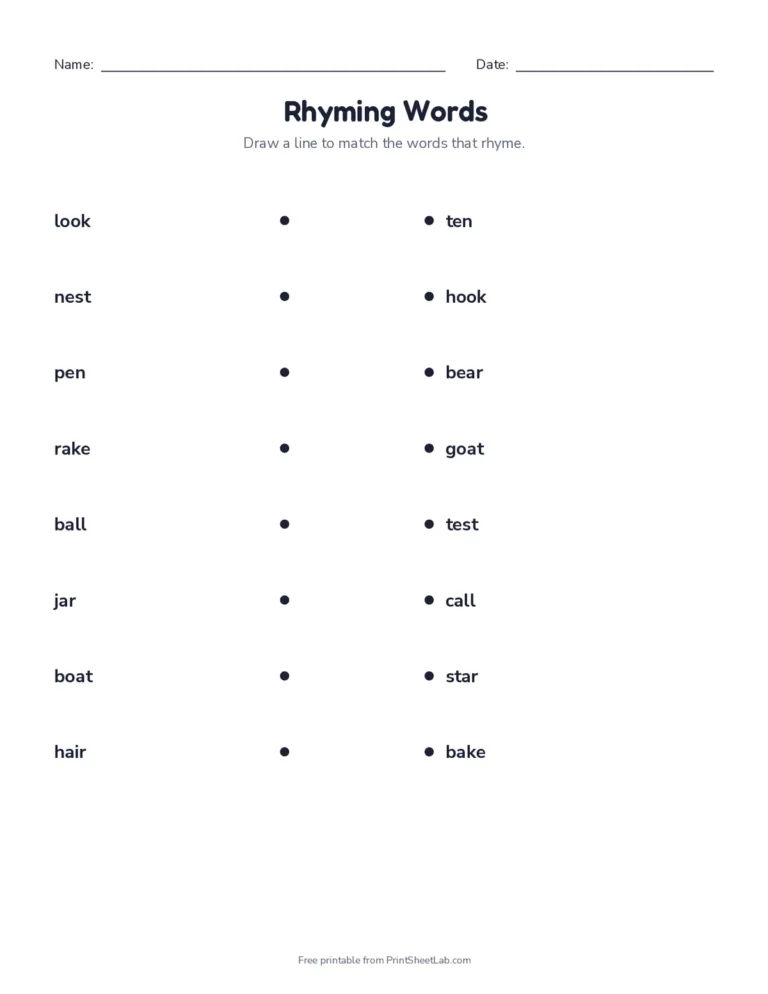
The first three sets use written words, the last three use rhyming pictures. All six print with answer keys; Customize loads the same activity with fresh words.
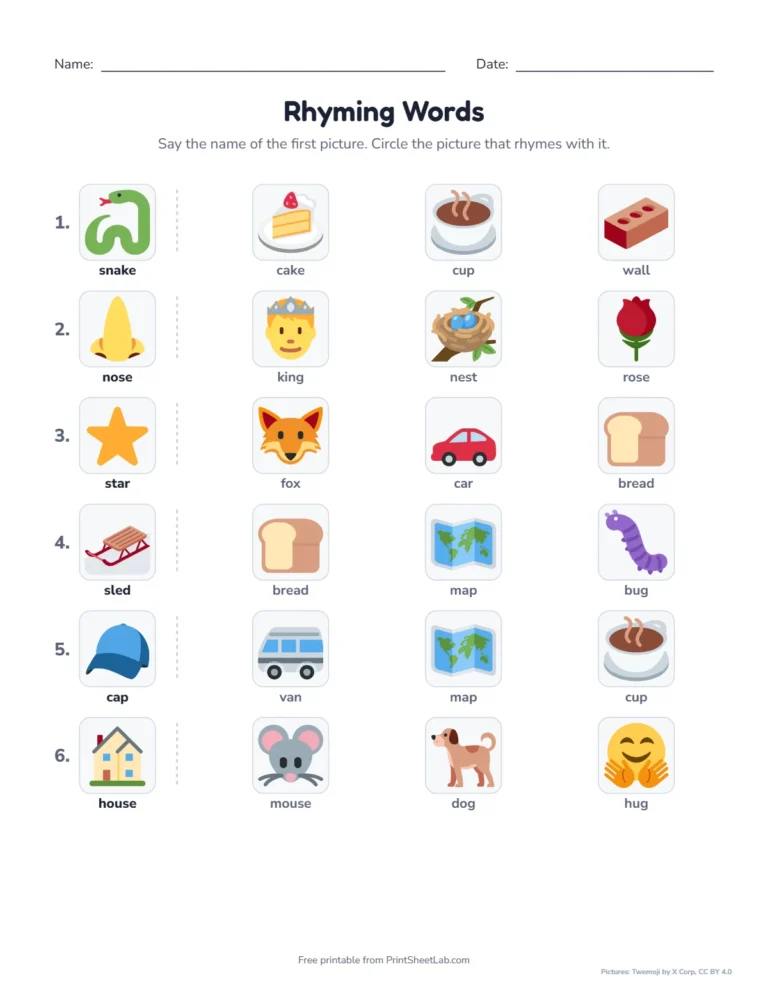
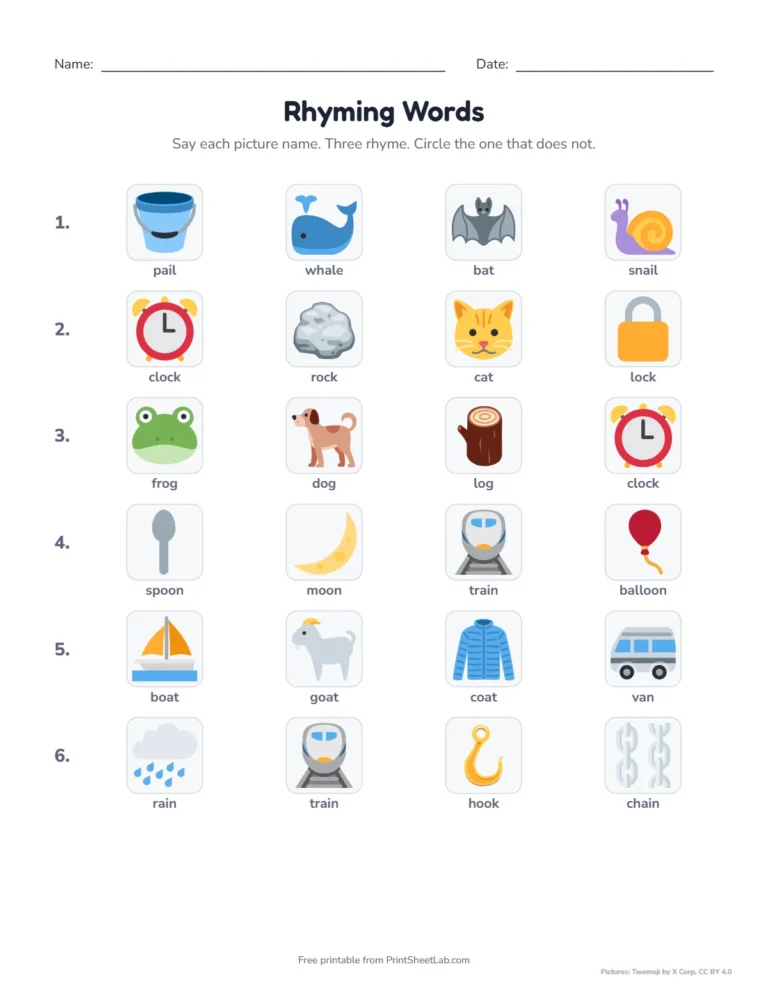
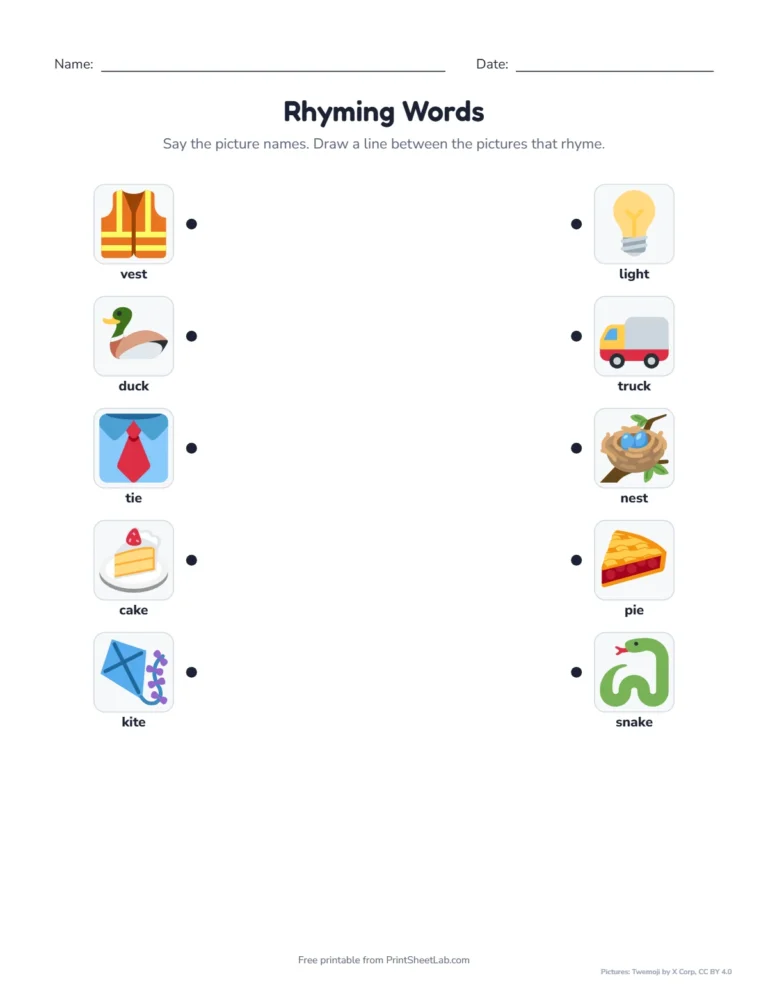
Rhyming pictures for children who cannot read yet
Rhyming is a listening skill, so children can practice it long before they read. The three picture activities use colorful pictures of everyday things, such as a cat, a hat, a goat and a boat, with the name printed under each one. Say the names out loud together, then let your child decide which rhyme. Choose from:
- Circle the rhyme: look at the first picture, then circle the one of three pictures whose name rhymes with it.
- Odd one out: three pictures rhyme and one does not. Circle the one that sounds different.
- Match the pairs: draw a line between pictures that rhyme, such as duck and truck or tie and pie.
There are 31 rhyme families of rhyming pictures, so every press of New words gives a different page, and an answer key always prints at the end.
Rhyming words list for kindergarten and 1st grade
These are the rhyme families used on the word worksheets. Read a row aloud and ask your child to add one more word that rhymes, real or made up.
| Ending | Rhyming words |
|---|---|
| -at | cat, hat, bat, mat, rat, sat |
| -og | dog, log, frog, fog, jog |
| -un | sun, run, fun, bun |
| -ed | bed, red, fed, sled |
| -ig | pig, wig, dig, big |
| -ake | cake, lake, rake, snake, bake |
| -ing | king, ring, sing, wing |
| -oat | boat, coat, goat, float |
| -ee | bee, tree, three, see |
| -ar | star, car, jar, far |
| -oon | moon, spoon, soon, noon |
| -ook | book, cook, hook, look |
| -ight / -ite | night, light, kite, bite |
| -ock | clock, sock, rock, lock, block |
| -ain | train, rain, chain, brain |
| -all | ball, wall, tall, call |
| -op | mop, top, hop, stop |
| -uck | duck, truck, luck |
| -ell | bell, shell, well, smell |
| -ug | bug, rug, mug, hug |
Notice that bear, chair and pear rhyme even though they are spelled differently. The rhyming words list is about sound first, which is why saying the words aloud matters more than looking at them.
How children learn to rhyme
Rhyming develops in two steps. First children recognize rhymes: they can tell you that cat and hat sound alike, often around age 3 or 4. Then they produce rhymes: given cat, they can come up with mat or even a silly word like zat. The Common Core expects kindergarten children to “recognize and produce rhyming words” (RF.K.2a). Rhyming is one part of phonological awareness, along with hearing syllables and the first sound in a word, and children who can rhyme usually find word families and early reading easier.
In our rhyming words worksheets, start with picture rhymes, then move to circling written rhymes, and finish with writing a rhyming word. If a child struggles, slow down and stretch the ending: “c-at, h-at, do they sound the same at the end?”
Rhyming games to play with the rhyming words worksheets
- I spy a rhyme: “I spy something that rhymes with log” (a dog or a frog).
- Rhyme basket: put a few toys in a basket and pull out two that rhyme, such as a toy car and a star sticker.
- Silly name rhymes: make rhymes with family names: Sam, ham, jam.
- Finish the line: read a nursery rhyme and pause before the rhyming word so your child can fill it in.
- Clap and rhyme: clap once for each pair that rhymes and stay still when they do not.
What makes two words rhyme?
Words rhyme when they end with the same sound. Cat, hat and sat all end in “at”. Rhymes do not always look the same: night and kite rhyme, and so do bear and chair, even though they are spelled differently. Say the words out loud and listen to the ending.
Seven activities in our rhyming words worksheets
- Circle the rhyme: one word in each row rhymes with the word in bold.
- Odd one out: three words rhyme, and one does not.
- Match the rhymes by drawing lines.
- Write a rhyming word: made-up rhymes like “zat” can count too, which is great for phonics.
- Three picture activities: circle, odd one out and match, with rhyming pictures instead of written words.
Why rhyming words worksheets matter
Hearing rhymes is one of the first steps in phonological awareness, the ability to hear the sounds inside words. Children who can rhyme find it easier to learn word families and to read new words by changing the first sound.
Practice it as a game
Free online games for the same skill: balloon pop, memory match, races and more. No sign-up.
Frequently asked questions
4 quick answers
What age should children start rhyming?
Many children start recognizing rhymes around age 3 or 4 and can produce their own rhymes by age 5. These rhyming words worksheets suit ages 3 to 7.
My child cannot read yet. Can we still use these?
Yes. Start with the picture pages, which only need your child to say the picture names. On the word pages, read the words aloud and let your child point to the rhyme.
What are some easy rhyming words for kindergarten?
Short words that share an ending are easiest: cat, hat, bat; dog, log, frog; bug, hug, rug; and bee, tree, see. The rhyming words list above has 20 families to start with.
Are the rhyming words worksheets free?
Yes. Print as many rhyming words worksheets as you like for home or school, and you never need an account.
More word skills
- Word family worksheets.
- Synonyms and antonyms worksheets.
- Sight word worksheets.
- Alphabet worksheets.
- Compound words worksheets with picture word math.
- Reading comprehension worksheets for grades 1 to 6.