
Free synonyms and antonyms worksheets for kindergarten through 5th grade, each with an answer key. Circle the word that means the same, match opposites, write your own synonym, or sort pairs into synonyms or antonyms. Choose simple words for grades K to 2 or the richer vocabulary of our grades 3 to 5 synonym worksheets, and use the synonyms and antonyms list below for word walls and quick practice.
Play the synonym and antonym quiz
Pick synonyms or antonyms, then choose the right word. Build a streak of correct answers!
Ready-to-print synonyms and antonyms worksheets (PDF)
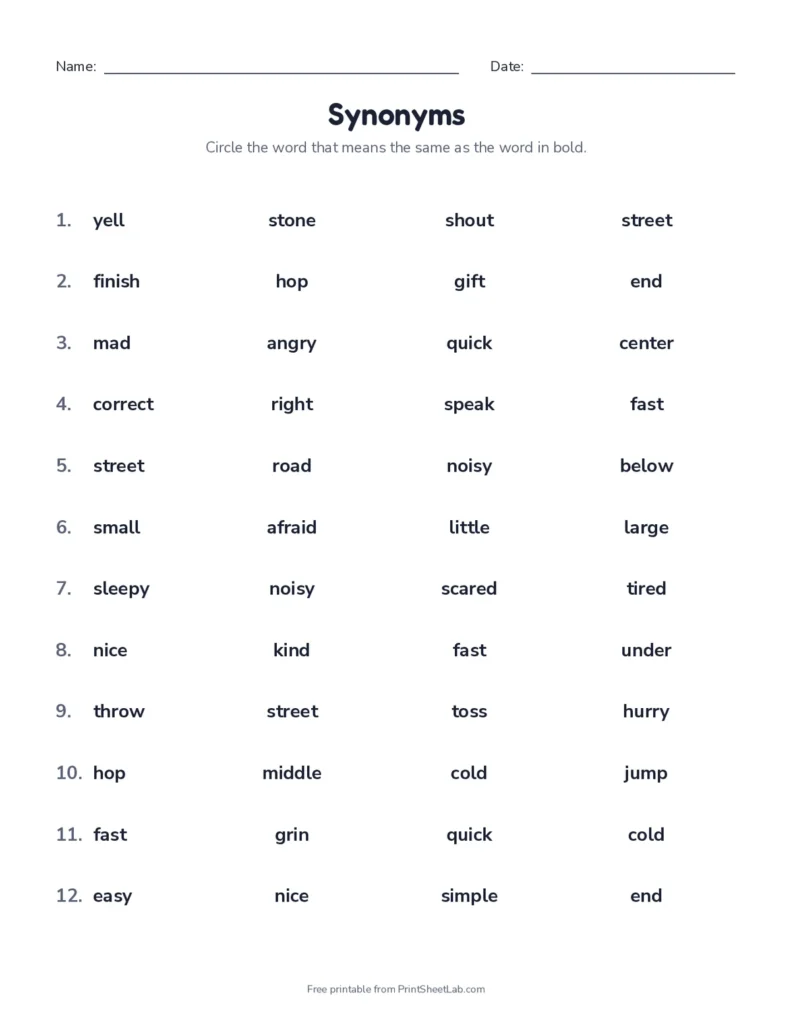
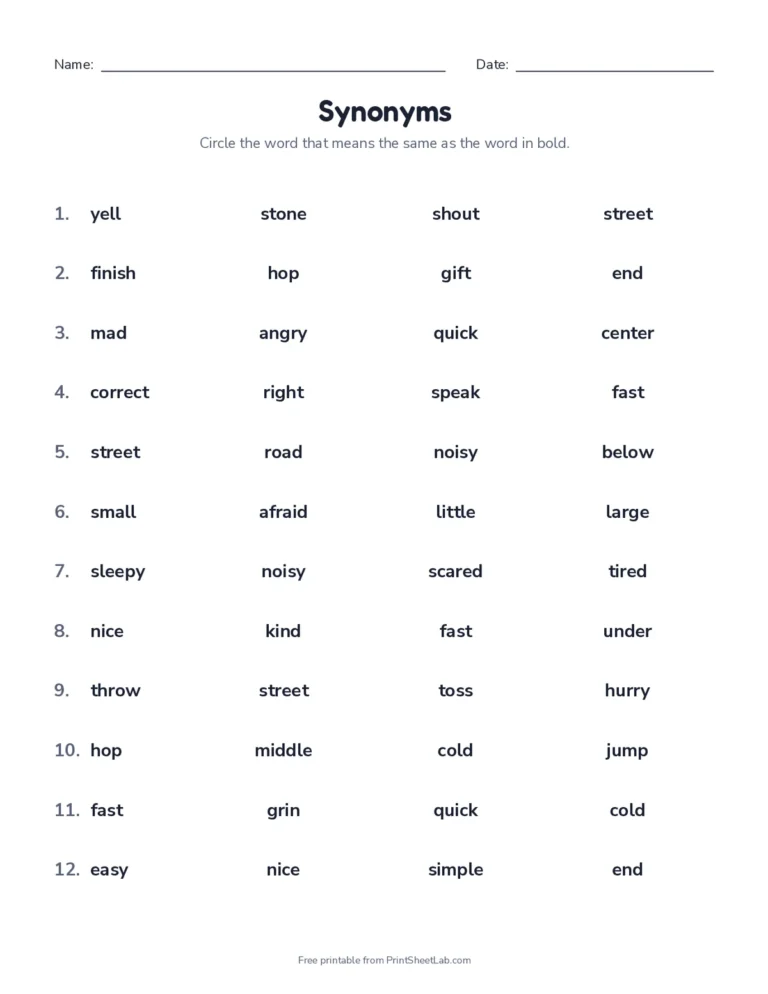
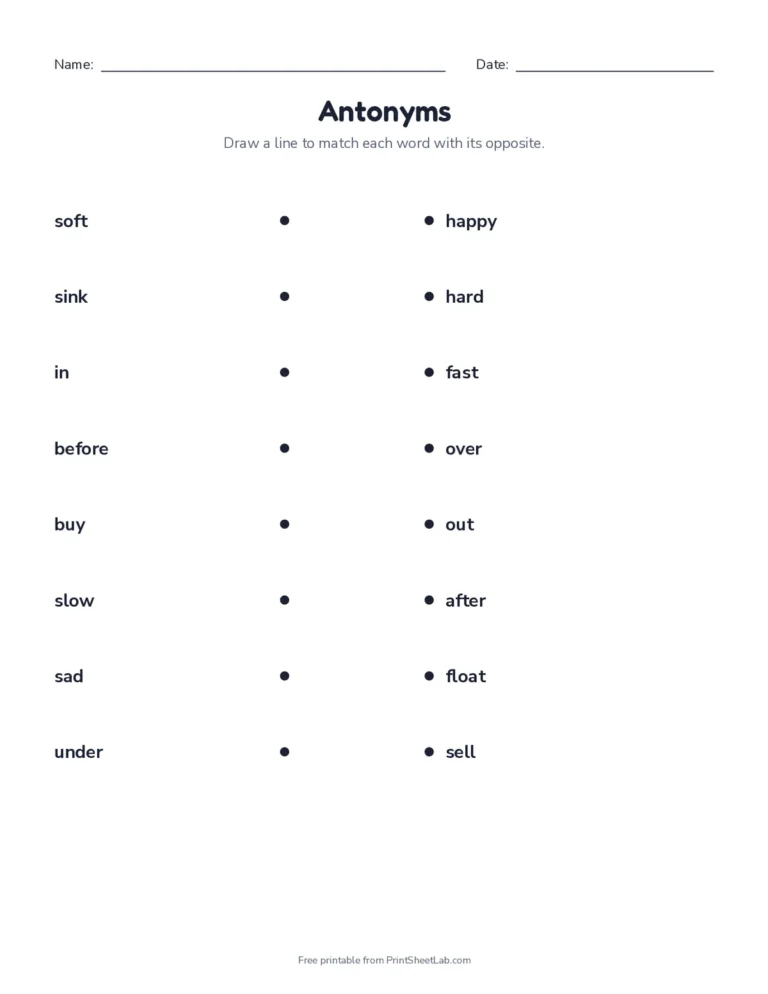
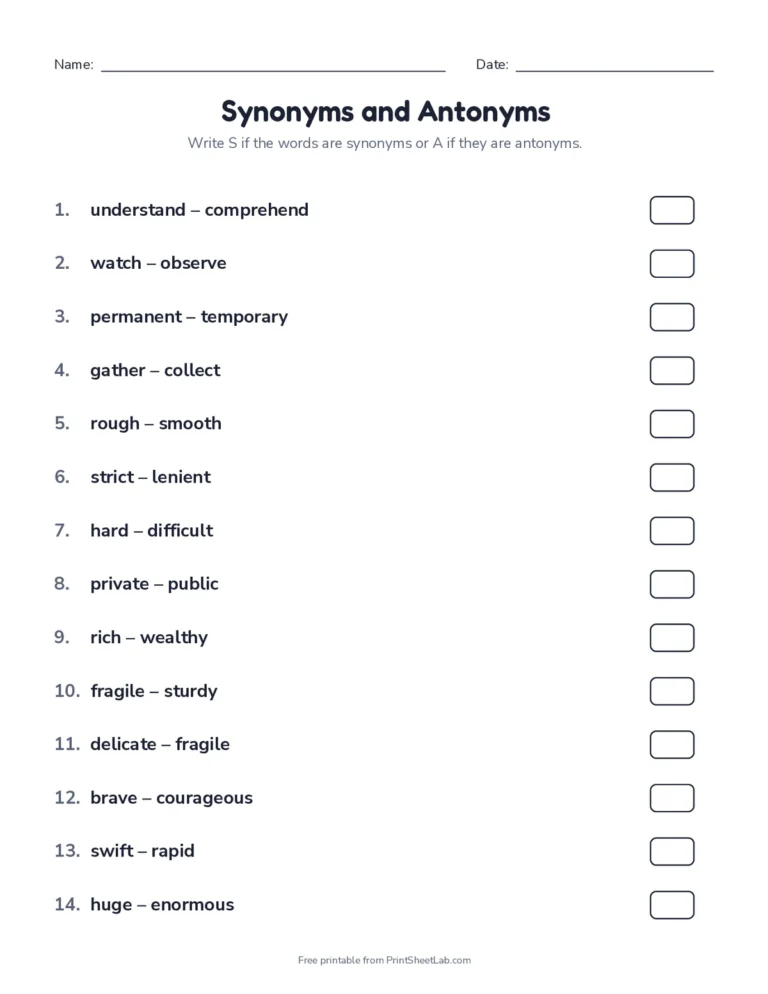
The first sets use everyday words for grades K to 2; the last three use richer vocabulary for grades 3 to 5. Every PDF ends with its answer key, and Customize switches the activity, level or number of pages.
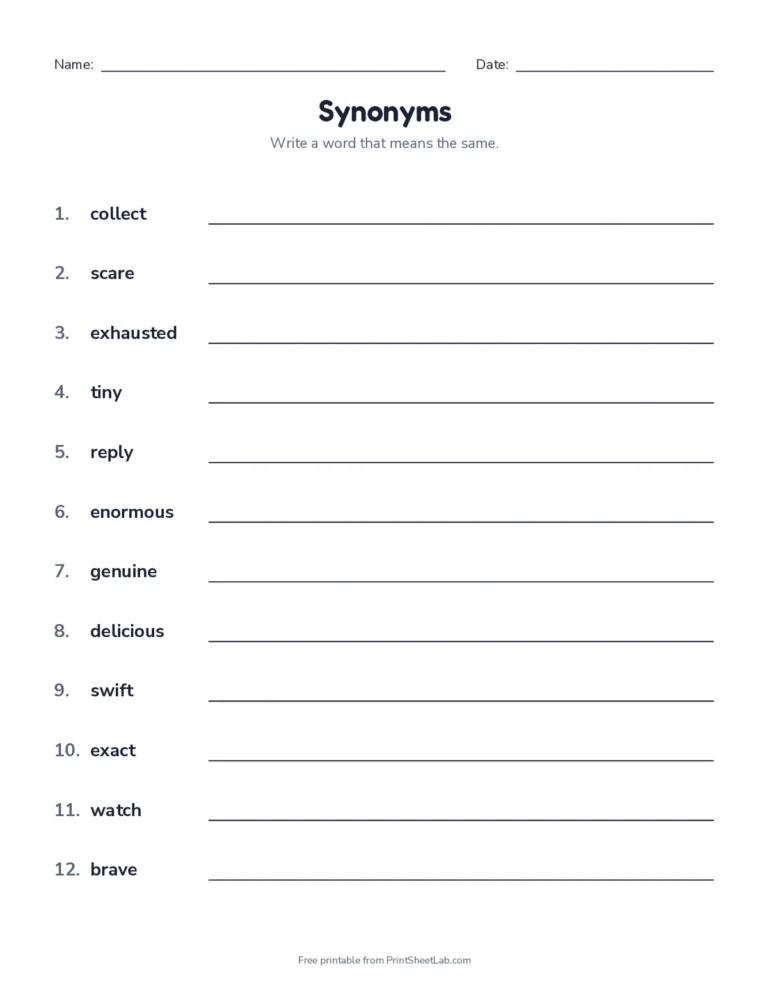

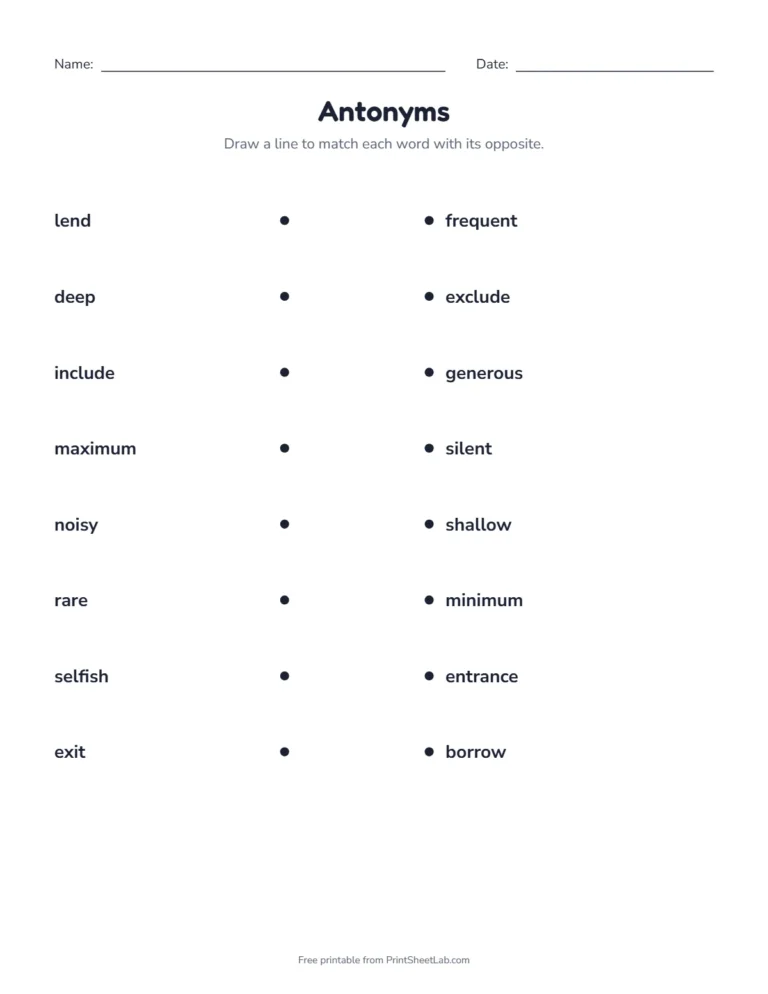
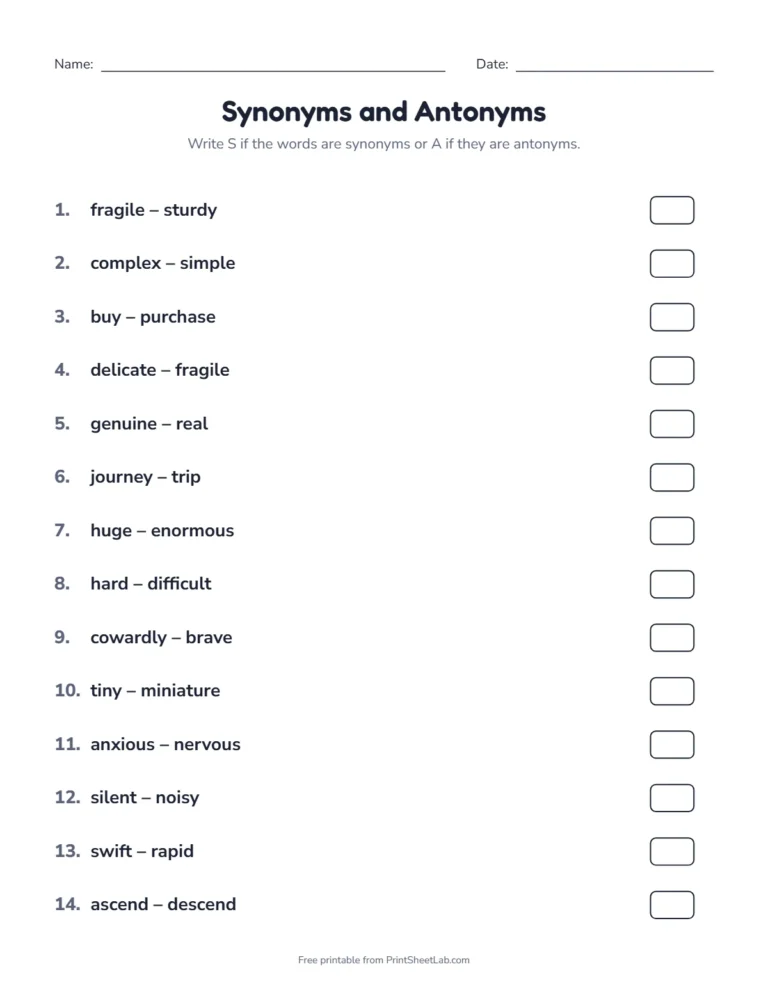
Synonyms vs. antonyms
| Synonyms | Antonyms | |
|---|---|---|
| Meaning | Words that mean the same or almost the same | Words that mean the opposite |
| Examples | big / large, begin / start, error / mistake | hot / cold, arrive / depart, include / exclude |
| Memory trick | Synonym = Same | Antonym = Against |
Synonyms and antonyms list for kids
Use this synonyms and antonyms list for quick oral practice, word walls or spelling lists. The first two columns suit grades K to 2, and the last two give richer words for grades 3 to 5.
| Word | Synonym | Antonym | Grades 3 to 5 synonym |
|---|---|---|---|
| big | large | small | enormous |
| happy | glad | sad | delighted |
| fast | quick | slow | rapid |
| smart | clever | foolish | intelligent |
| brave | bold | scared | courageous |
| tired | sleepy | awake | exhausted |
| angry | mad | calm | furious |
| quiet | silent | loud | hushed |
| begin | start | finish | commence |
| easy | simple | hard | effortless |
| rich | wealthy | poor | prosperous |
| look | see | ignore | observe |
Synonym worksheets and shades of meaning
Synonyms are rarely perfect twins. Warm, hot and scorching all describe temperature, but each is stronger than the last. Older children learn to choose the word that fits best, which is why the Common Core asks 4th graders to relate words to their antonyms and to words with similar but not identical meanings (L.4.5c). The grades 3 to 5 synonym worksheets use these richer words, and the write-a-synonym page asks children to come up with their own.
A great follow-up is a shades of meaning strip: take a paint color card from a hardware store and write words from weakest to strongest on the shades, such as tiny, small, medium, large, huge, enormous.
Antonyms: more than one kind of opposite
Some opposites are either-or, like alive and dead or on and off. Others sit at two ends of a scale, like hot and cold, with warm and cool in between. A third kind describes a relationship from two sides, like buy and sell or teacher and student. The opposite article on Wikipedia explains these types in more detail. Talking about which kind an antonym pair is gets children thinking hard about meaning.
Synonyms and antonyms worksheets by grade
- Kindergarten: start with opposites children can act out: up and down, open and closed, happy and sad. Use the matching page and read the words aloud.
- 1st and 2nd grade: add synonyms with the circle and sort pages, and talk about why big and large can swap in a sentence but big and small cannot.
- 3rd grade: switch to the richer word level and try the write-a-synonym page, where children have to find their own word.
- 4th and 5th grade: use the synonyms and antonyms worksheets alongside a thesaurus and focus on shades of meaning in your child’s own writing.
Ten minutes, two or three times a week, is plenty. Mixing a worksheet with one of the games below keeps vocabulary practice fun rather than a chore.
Games to play with synonyms and antonyms worksheets
- Synonym swap: read a sentence and replace one word with a synonym. Does the sentence still make sense?
- Opposite charades: act out a word and its antonym, such as tiptoe for quiet and stomp for loud.
- Thesaurus hunt: give older children a thesaurus and one boring word like nice, and see how many better words they can find in five minutes.
- Antonym memory: cut out the pairs from the matching worksheet and play a memory game face down.
- Story upgrade: circle three plain words in a piece of your child’s writing and choose a stronger synonym for each.
Four activities in our synonyms and antonyms worksheets
- Circle the synonym or antonym: pick the right word from three choices.
- Match the opposites or synonyms by drawing lines.
- Write a synonym or write the opposite, with a sample answer in the key.
- Synonym or antonym? Read each pair and write S or A.
Every word pair is checked by hand. Wrong choices are never close in meaning to the right answer, so there is only one best answer on every line.
Frequently asked questions
5 quick answers
Why teach synonyms and antonyms?
Knowing several words for the same idea makes writing more interesting, and knowing opposites helps children understand new words by contrast. Both are key vocabulary skills from 1st grade onward.
What is the difference between the two levels?
Grades K to 2 uses everyday words like big, fast and happy. Grades 3 to 5 uses richer words like enormous, cautious and temporary.
What is a synonym for big?
Large, huge, giant, enormous and massive all mean big. Huge, giant and enormous are stronger: they mean very big.
What grade learns synonyms and antonyms?
Children start with simple opposites in kindergarten and 1st grade, learn synonyms in 2nd grade, and study shades of meaning in grades 3 to 5. Our synonyms and antonyms worksheets have a level for each stage.
Are these synonyms and antonyms worksheets free?
Yes. Every synonyms and antonyms worksheet here is free to download and copy for a family or a classroom, without an account.