
Grab a free printable chore chart below or build your own in a minute. Pick an age to get ready-made chore ideas, switch on pictures for children who can’t read yet, add money or points to each job, and print one chart per child or a single family chart. There is also a cut-and-pin chore wheel, a set of chore jar cards and an online wheel that hands out the jobs for you.
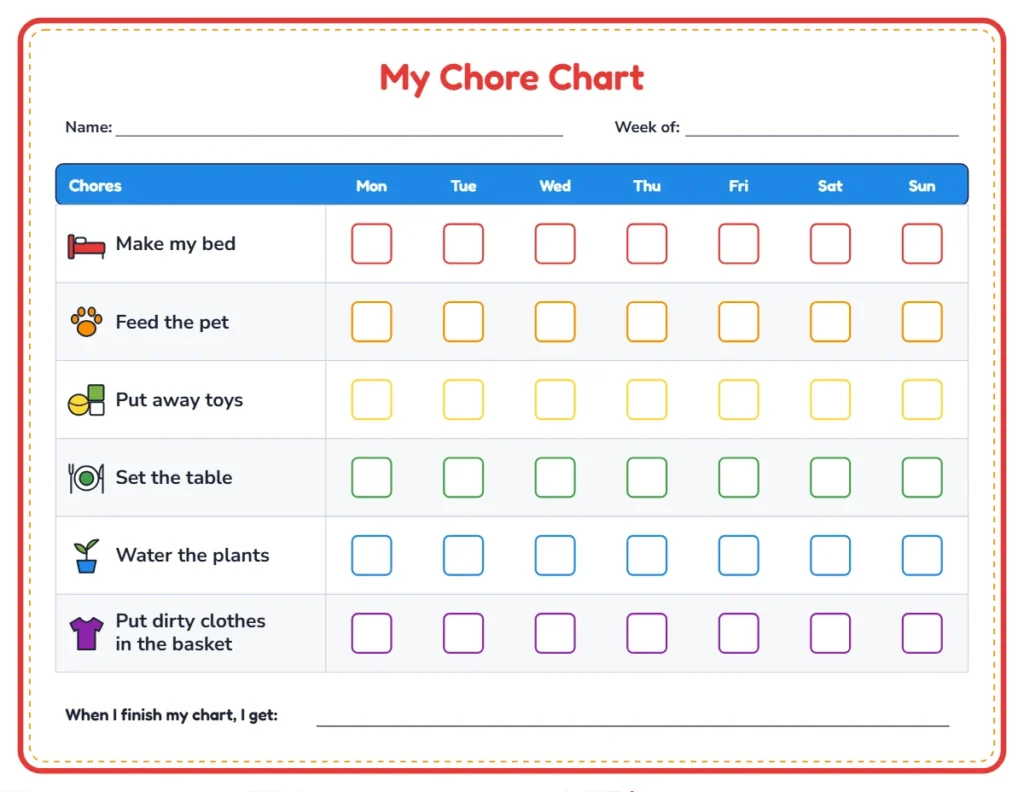
In short: there are 19 free printable chore charts here as PDFs: picture charts for toddlers up to age 12, teen and adult charts, allowance and points charts, family charts for multiple kids, blank templates, a chore wheel and chore jar cards. You can edit every one in the chore chart maker on this page and print it on Letter or A4, in colour or black and white, with no sign-up.
Spin the chore wheel online
Type the names of everyone at home and this week’s jobs, then press Spin the wheel. Each spin gives the next person a job, so nobody can say the list was rigged. In a hurry? Hand out all jobs shares every chore out evenly in one go. When you are happy, download the result as a family chore chart with the names already filled in. Names and jobs are saved only in this browser.
Free printable chore chart PDFs
Click a picture to open the PDF, or press Customize to load that chart into the maker and change the chores, names, days, colours or paper size.
Chore charts with pictures, by age
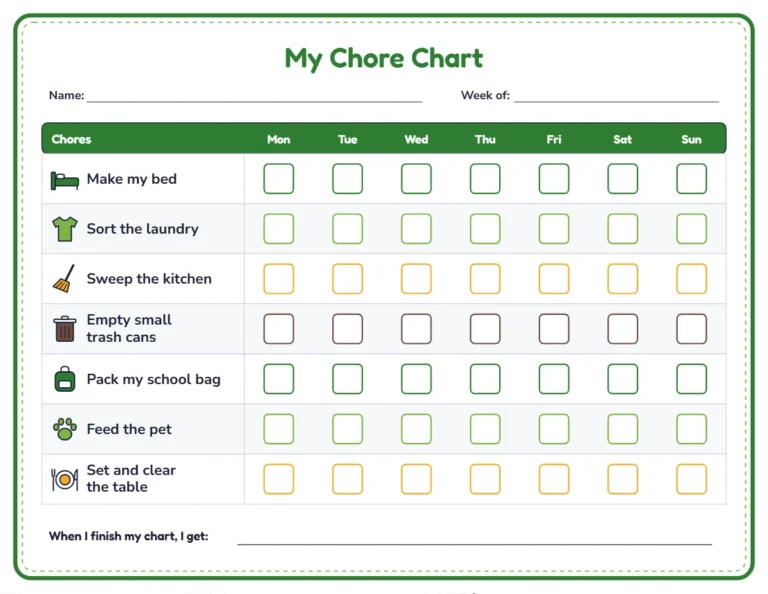
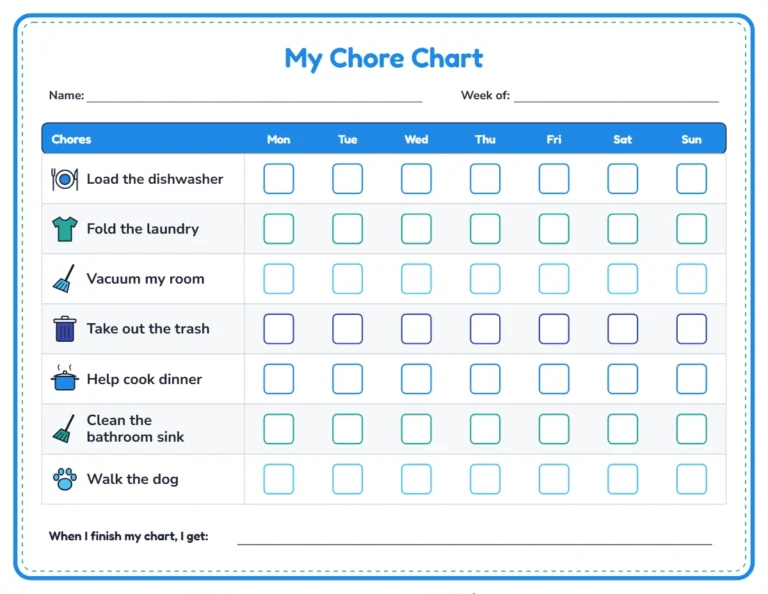
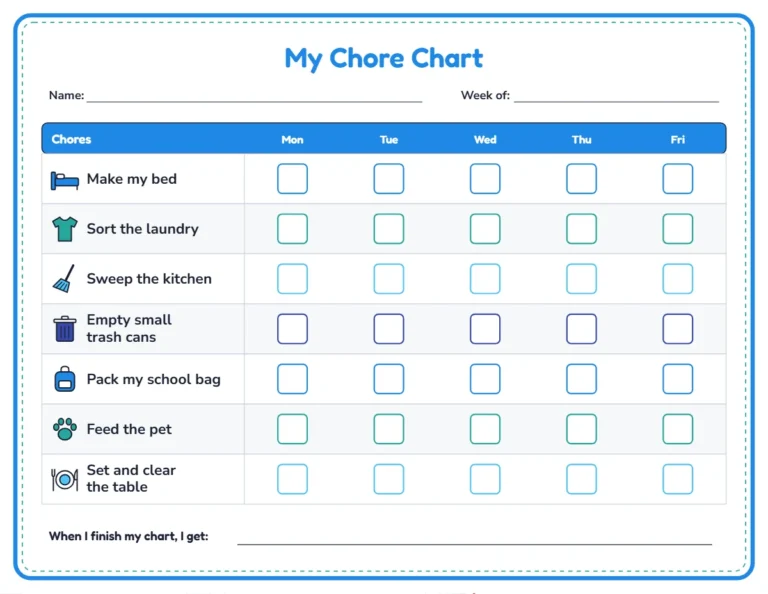
Chore charts with money or points
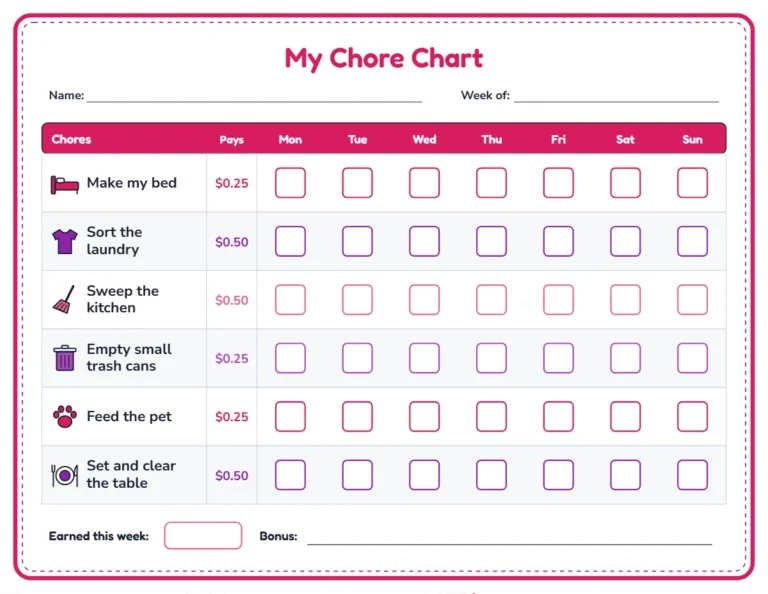
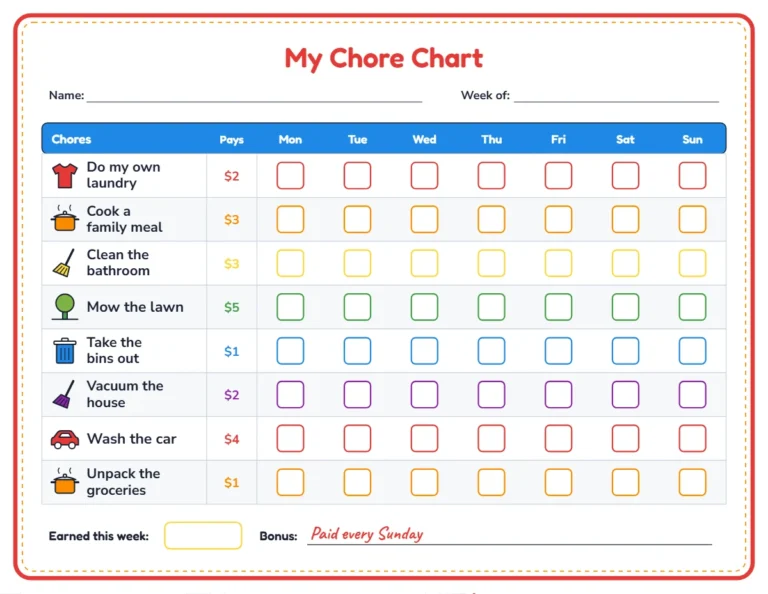
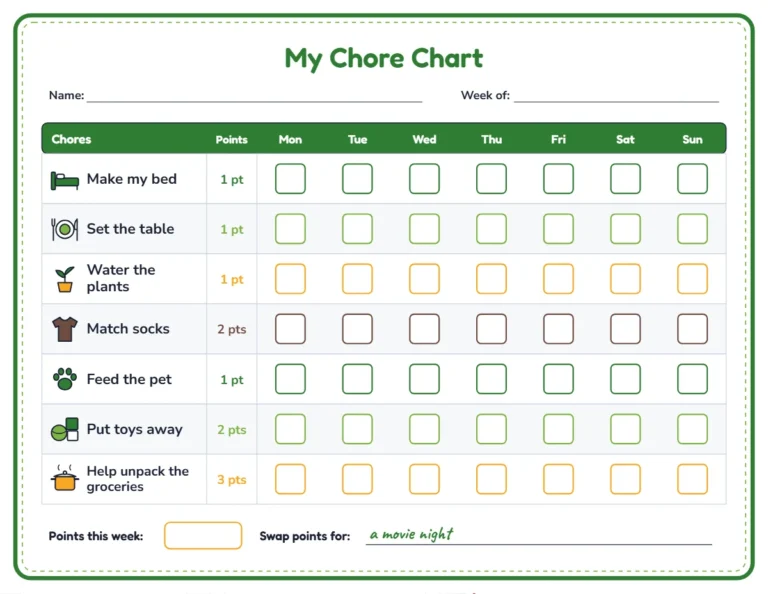
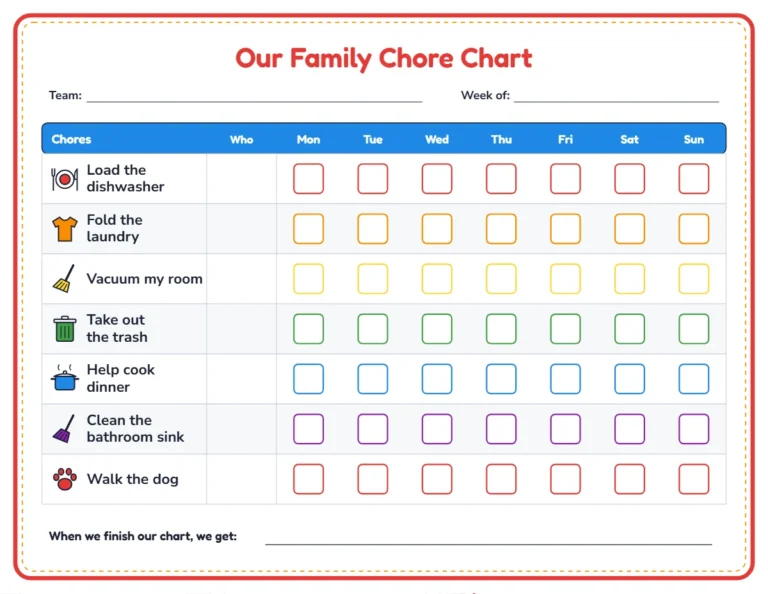
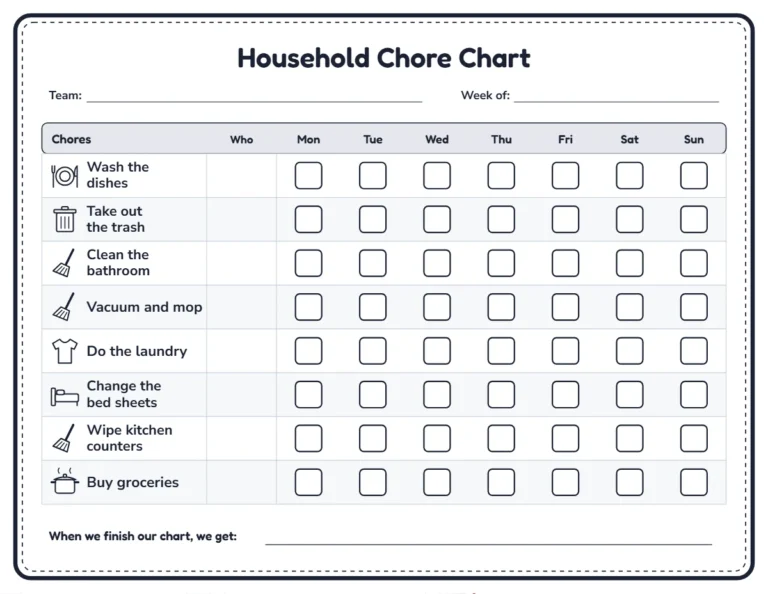
Family, adult and classic weekly chore charts
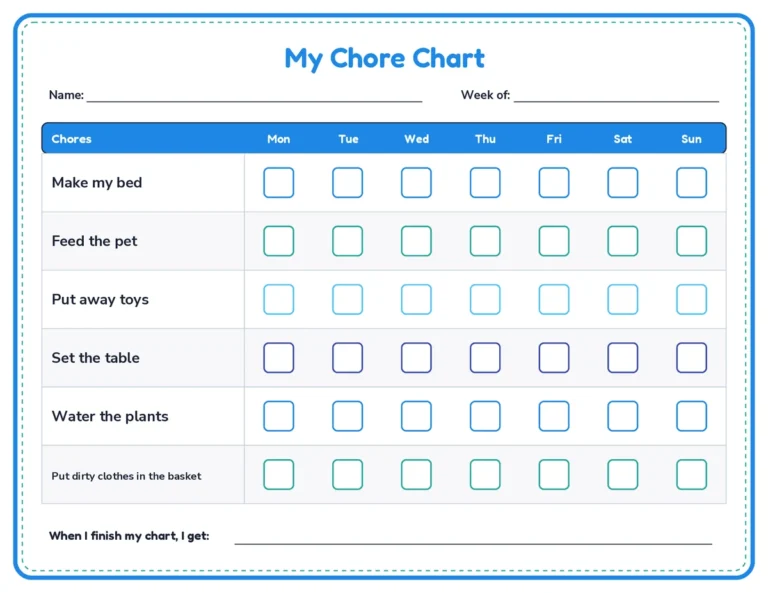
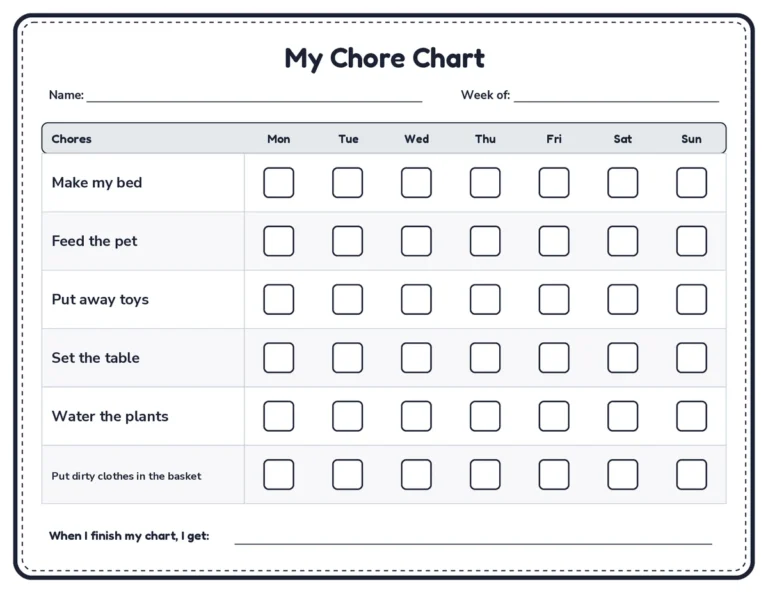
Blank chore chart templates, chore wheel and chore jar cards
Morning and bedtime routine charts
Chore charts with pictures
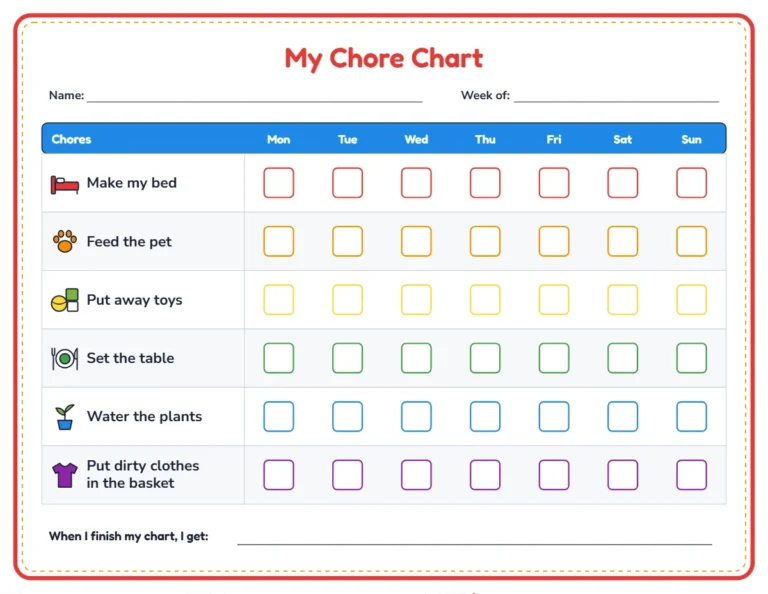
Toddlers and preschoolers can follow a chart long before they can read one. Turn on Add pictures and the maker draws a small picture beside every chore, chosen from the words you type: a bed for “make my bed”, a paw print for anything to do with a pet, a plate for setting the table, a T-shirt for laundry, a broom for sweeping or vacuuming, plus a toothbrush, a bin, a book, a plant pot, a cooking pot, a shoe, a school bag, a car and a tree for yard work. A job it does not recognise gets a star.
Read the pictures together for the first few days and act each job out. Soon most young children “read” their chore chart with pictures on their own. The pictures print in colour, or as plain outlines in the black and white theme, so your child can colour them in before the chart goes on the fridge.
Chore chart by age: ideas from age 3 to teens
Use the Chore ideas for menu in the maker to fill the chart with jobs that suit an age, then change anything you like. Treat these as starting points: a careful 4 year old may be ready for jobs from the next row.
| Age | Good first chores | Chart |
|---|---|---|
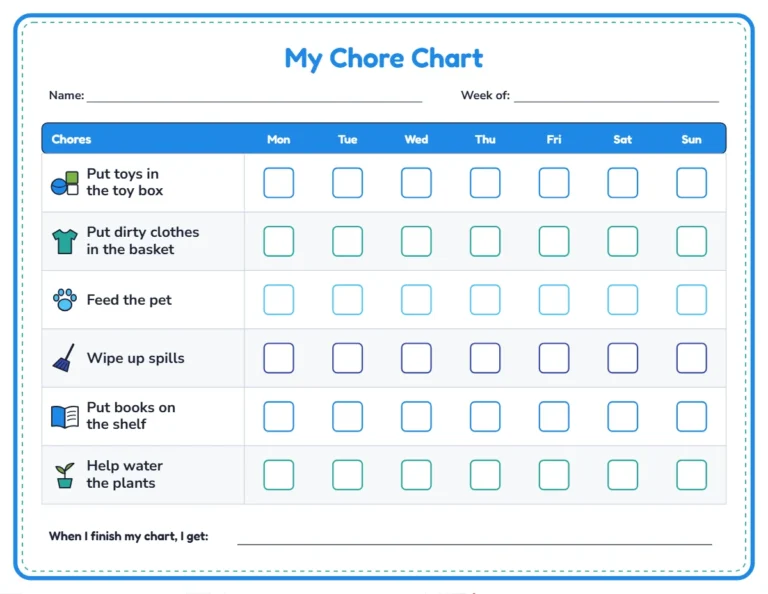
| 2 to 3 | Put toys in the toy box, put clothes in the basket, wipe up spills, put books on the shelf | Toddler chart |
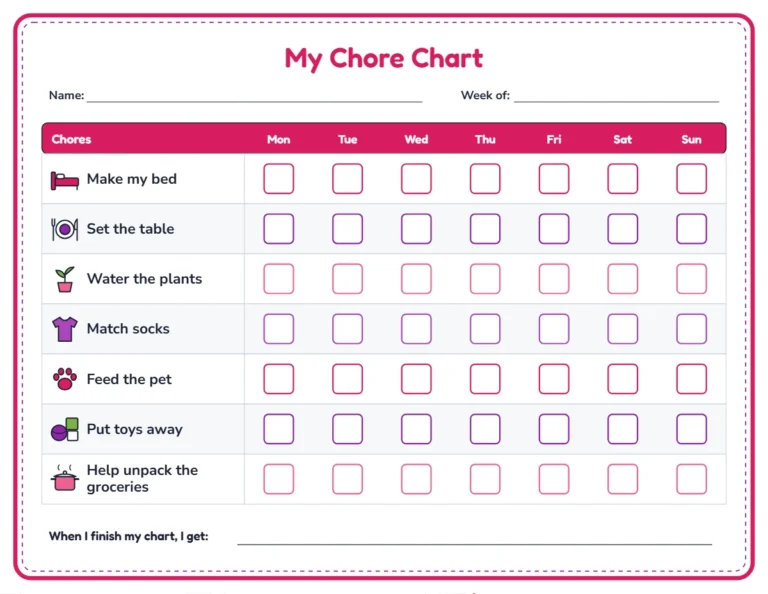
| 4 to 5 | Make the bed, set the table, water the plants, match socks, feed the pet | Ages 4 to 5 |
| 6 to 8 | Sort the laundry, sweep the kitchen, empty small bins, pack the school bag, clear the table | Ages 6 to 8 |
| 9 to 12 | Load the dishwasher, fold laundry, vacuum, take out the trash, walk the dog, help cook dinner | Ages 9 to 12 |
| Teens | Their own laundry, a family meal, cleaning the bathroom, mowing the lawn, washing the car | Teen chart |
| Adults and housemates | Dishes, bins, bathroom, floors, bed sheets, the grocery run | Household chart |
For more ideas, the American Academy of Pediatrics keeps a list of age-appropriate chores for children.
A chore chart for a 4 year old or a 5 year old works best with four or five picture jobs and a reward that comes soon, like a sticker at bedtime. A 6 or 7 year old can usually work towards a weekly goal, and by 9 or 10 many children are ready for a points or allowance chart. Always pick jobs your child can do safely, and show them how first.
Chore chart for multiple kids
There are three ways to share jobs between brothers and sisters:
- One chart each. Type every child’s name on its own line under Names. The maker prints one page per child with the same chores, ready to tweak for each age.
- One family chore chart. Turn on Family chart and a Who column appears. Jobs are shared out in turn between the names, or you decide: write
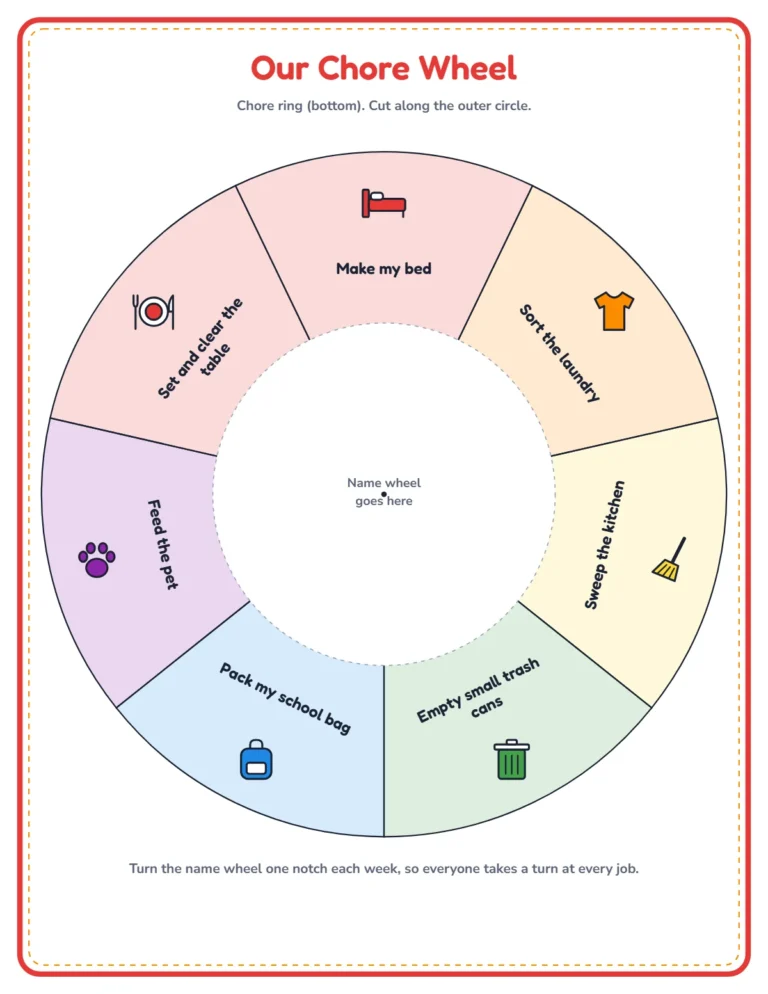
Feed the dog | Leoto give a job to one person. - A chore wheel. Choose the wheel style to print a chore ring and a name wheel. Turn the top wheel a notch each week and everyone takes a turn at the jobs nobody wants.
Rotating jobs every week stops the “I always do the bins” argument, and younger children pick up skills by watching older ones do a job first.
Chore chart with money: allowance and points
To make an allowance chore chart, set Pay to Money and add the amount after each chore with a bar, for example Mow the lawn | 5. The amounts show in a Pays column with $, £ or €, or with no sign for any other currency, and an Earned this week box at the bottom holds the total. Leave the amounts off if you’d rather write them in by hand.
Not keen on paying cash? Choose Points. Children collect points for each job and swap them for the reward you type, such as a movie night, extra screen time or a trip to the park. Points suit younger children who can’t count money yet, and they can turn into pocket money later on.
Families tend to split two ways on paying for chores. Some keep everyday jobs unpaid, because everyone helps at home, and pay only for bigger extras like washing the car. Others tie the weekly allowance to the whole chart. Either can work, as long as the rules are agreed before the week starts and stay the same.
Printable chore wheel and chore jar cards
Chore wheel: the PDF has two pages. Page one is the chore ring, with up to 10 jobs and a picture for each. Page two is the name wheel, with a pointer for every person. Print on card, cut both out, put the name wheel on top and push a split pin through the middle. Each pointer now shows one person’s job, and one turn moves everybody on to something new.
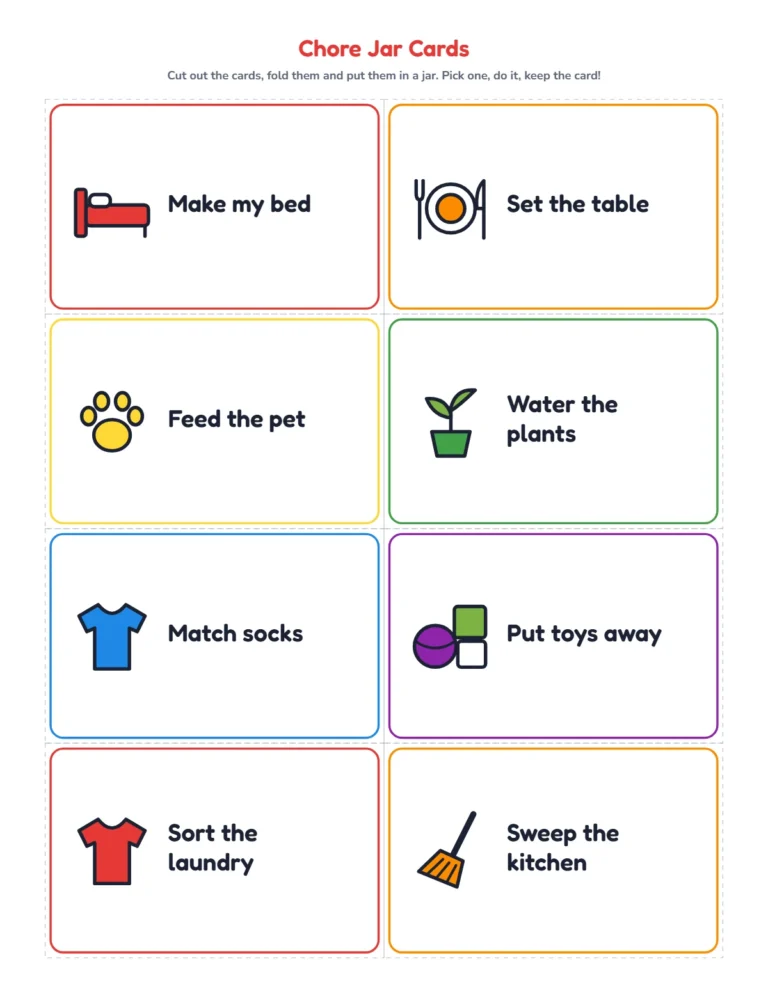
Chore jar cards: eight cards to a page, each with a picture, the job and an optional value. Fold them into a jar and let children pick one when they say they’re bored, or keep them as bonus jobs that earn extra points. One PDF holds up to 24 cards.
Chore charts for teens and adults
A chore chart for teens should feel like a weekly plan, not a sticker chart. Use the ocean or black and white colours, switch pictures off, and list bigger jobs that build real skills: doing their own laundry, cooking one meal a week, cleaning a bathroom properly. Add a money column and it becomes a first lesson in earning and budgeting.
For a chore chart for adults, couples or a shared flat, pick the adults and housemates ideas, turn on Family chart and add everyone’s names. The Who column becomes a cleaning rota, and the day boxes show at a glance who has done their share. For room-by-room deep cleaning, try the cleaning schedule printable instead.
Blank chore chart template
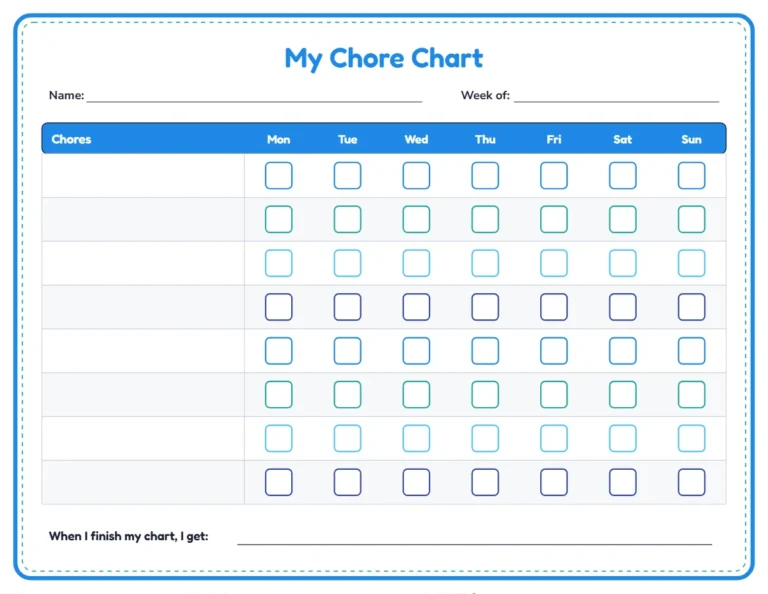
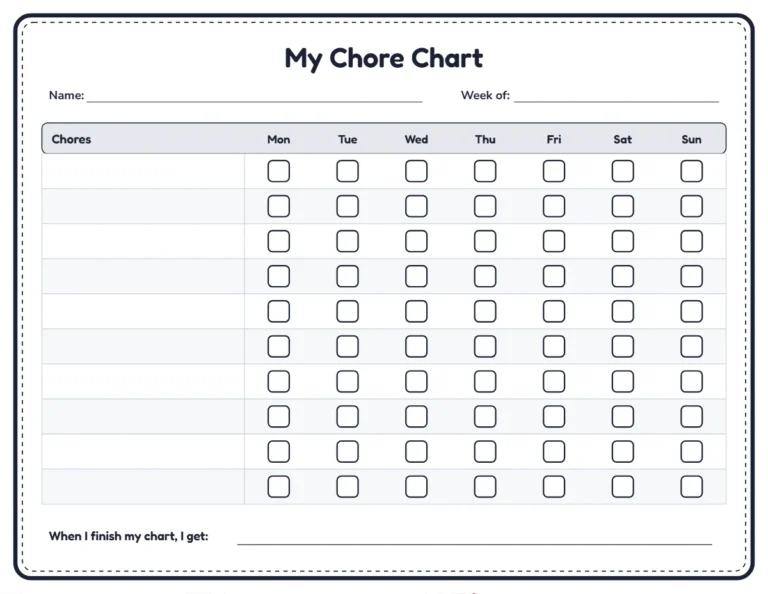
Want to write everything by hand? Turn on Blank chart to print empty rows with the day boxes and reward line still in place. It is ideal for a reusable chart: slide the page into a plastic sleeve, or laminate it, and write this week’s jobs with a dry-erase marker.
How to set up a chore chart that lasts
- Start small. Three to five jobs a day is plenty at the beginning.
- Make each job one clear action. “Put books on the shelf” is easier to finish than “tidy your room”.
- Show it before you ask for it. Do each new chore together until your child can manage alone.
- Hang the chart where the work happens, at your child’s eye level, with a pen or stickers nearby.
- Check in on the same day each week. Give the reward straight away, then print a fresh chart.
For more detail, read how to make a chore chart that works.
Charts for children who need more structure
Some children, including many with ADHD, find long lists overwhelming. Keep the chart to three or four jobs, break each job into one clear step, use pictures, place the chart where the job happens, and give the tick or sticker straight away. Your child’s teacher or therapist may have extra ideas that suit them.
Morning, bedtime and after school routines
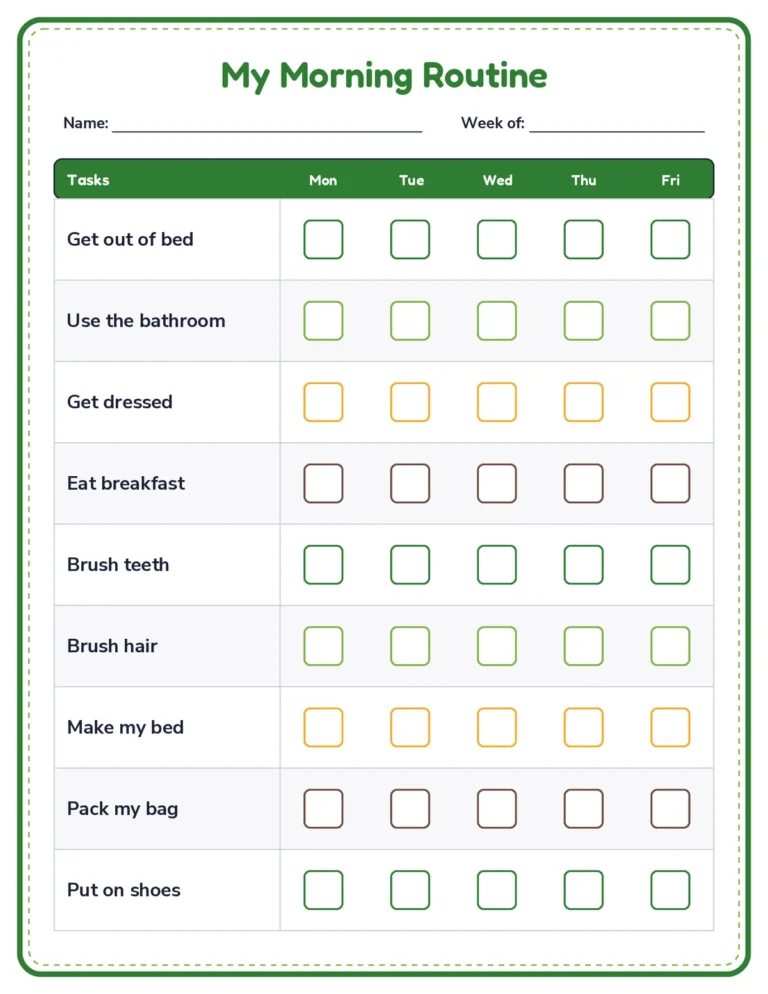
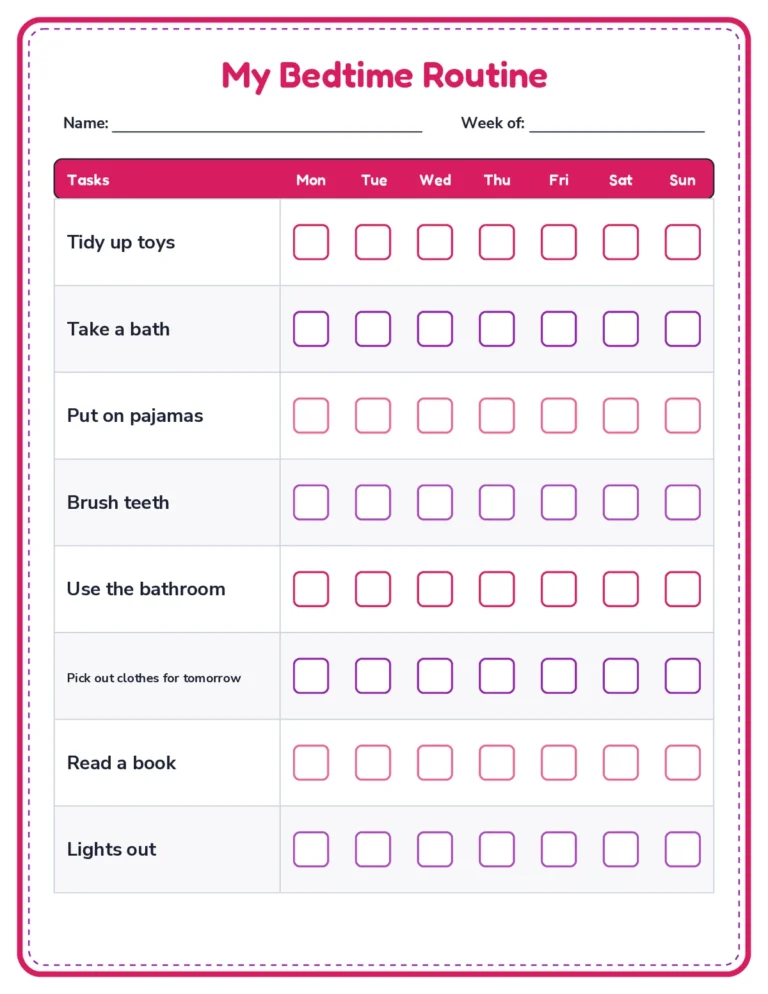
Choose morning, bedtime or after school in the maker for a ready-made list of steps with pictures, or type your own. A routine chart lists the steps of one part of the day, while a chore chart covers jobs across the week, so many families hang a routine on the bathroom door and the chore chart on the fridge.
Frequently asked questions
9 quick answers
Are these chore charts really free?
Yes. All 19 PDFs and the chore chart maker are free for home and classroom use. There is no account to create and nothing is watermarked.
Can I edit a printable chore chart?
Yes. Press Customize under any chart, or use the maker at the top of this page, to change the chores, names, days, colours, pay and paper size before you print or download the PDF.
Is there a chore chart with pictures for toddlers?
Yes. The toddler chart for ages 2 to 3 has short jobs with a picture beside each one. Turn on Add pictures in the maker to put pictures on any chart you make.
How many chores should a 5 year old have?
Four or five small daily jobs suit most 5 year olds, such as making the bed, feeding a pet and putting toys away. Add more once those have become habits.
How do I make one chore chart for multiple kids?
Turn on Family chart and type the names. The jobs are shared out in turn in a Who column, or write the chore, a bar and a name to choose who does what.
How much should kids get paid for chores?
There is no standard amount. A simple approach is to set a weekly total you can afford and divide it between the jobs, with more for bigger ones. The money column takes any amount in $, £, € or with no sign.
Can I print a chore chart for adults or roommates?
Yes. Choose the adults and housemates ideas, switch on Family chart and add everyone’s names to make a household rota. The black and white theme keeps it plain and grown-up.
Can I print on A4 paper or in black and white?
Yes. Choose Letter or A4 under Paper size, and Black and white (saves ink) under Colors.
What is a chore wheel?
A chore wheel is two paper circles joined in the middle. The bottom circle lists the jobs and the top one carries everyone’s names. Turning the top circle each week changes who does which job.