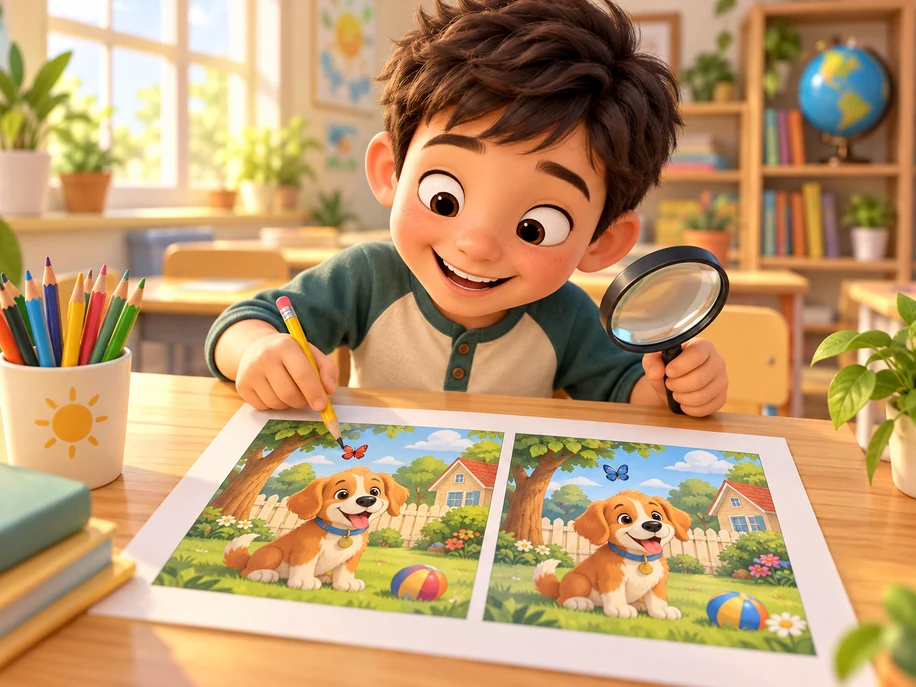
Print these spot the difference printables for a quiet-time challenge. Each puzzle shows two pictures that look the same, with a set number of changes hidden in the bottom one. There are five themes, and every PDF has three puzzles (5, 7 and 10 differences) followed by an answer page for each, so you can start easy and work up to hard. All the spot the difference printables are free to print.
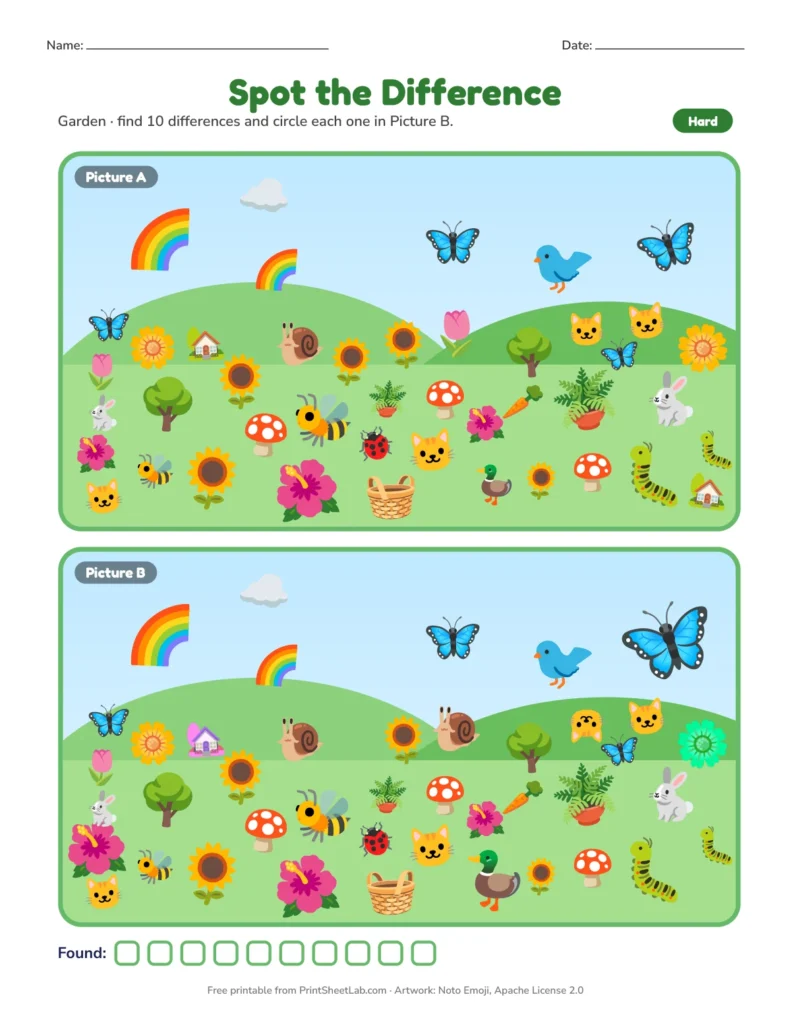
Quick answer: pick a theme below and print the PDF. Look at Picture A (top) and Picture B (bottom), circle each difference in Picture B and tick a box for every one you find. The answer pages circle every change and list it in words.
Spot the difference printables (PDF)
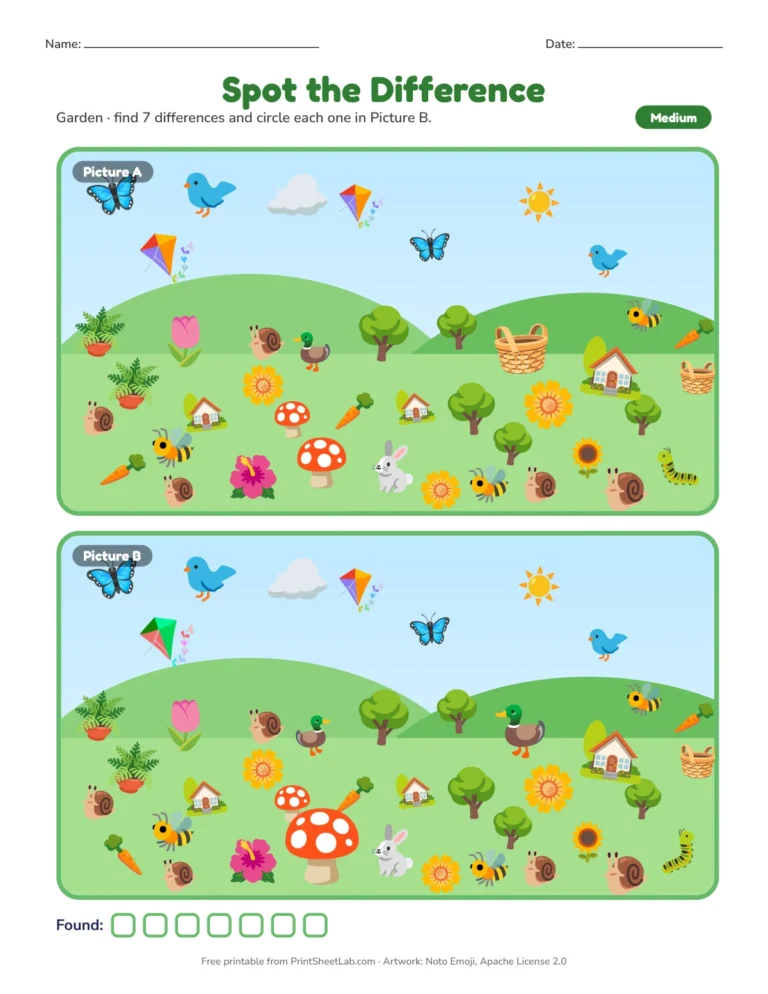
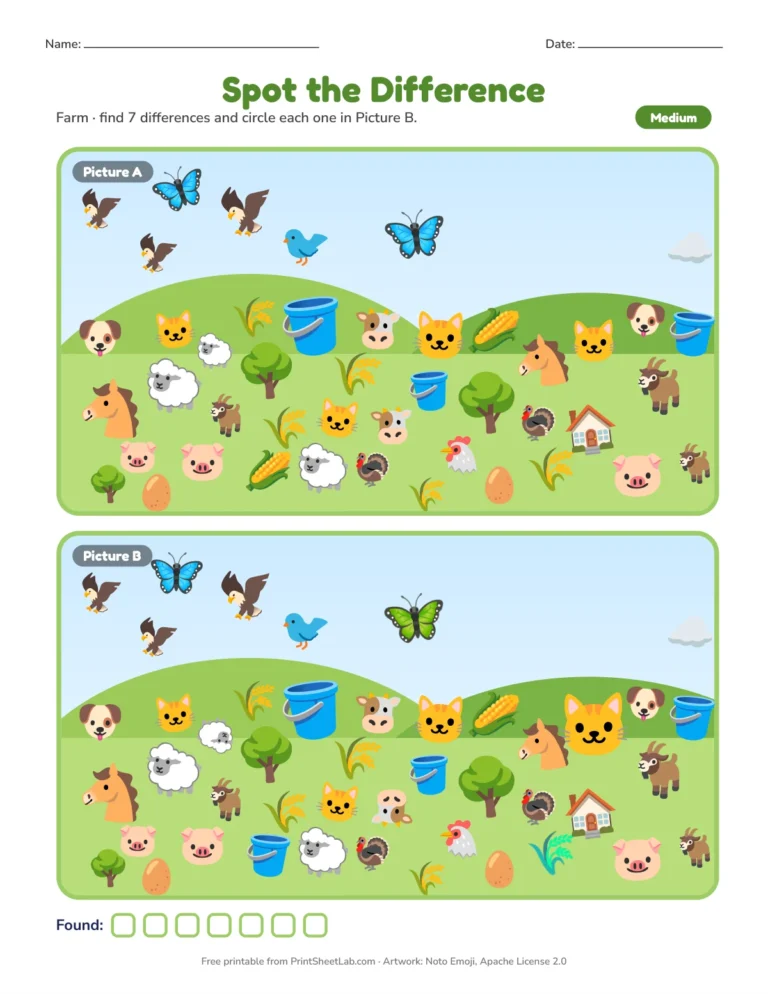
Each pack is a six-page PDF: three puzzles, then three answer pages. Click a picture to open the PDF; the preview shows the medium puzzle.
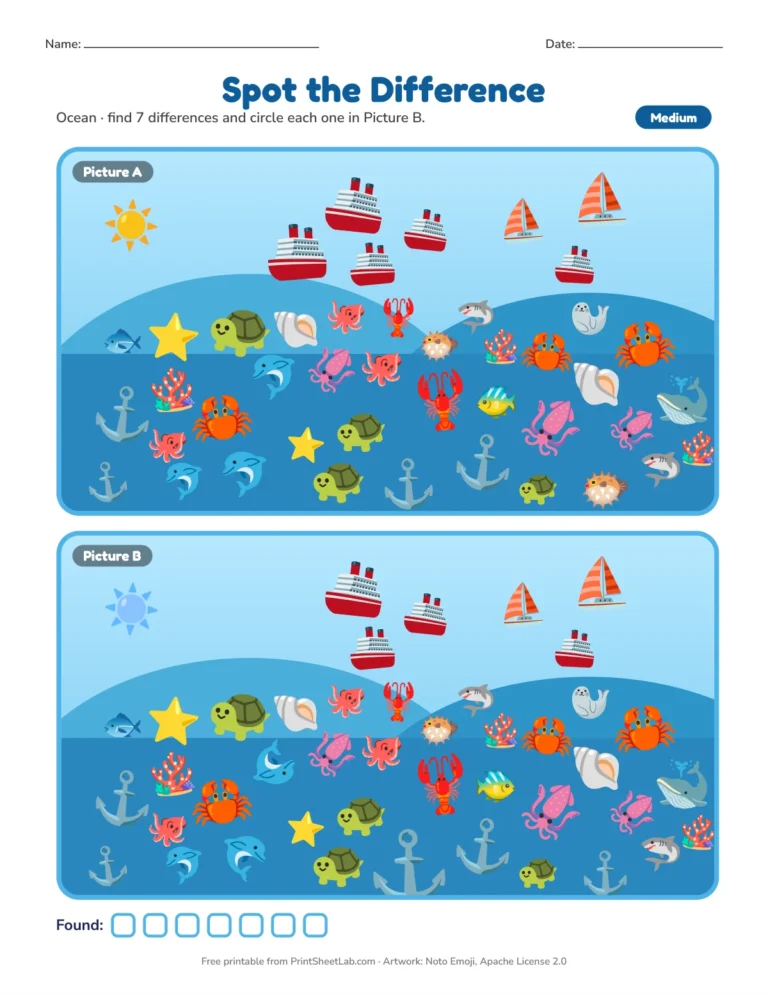
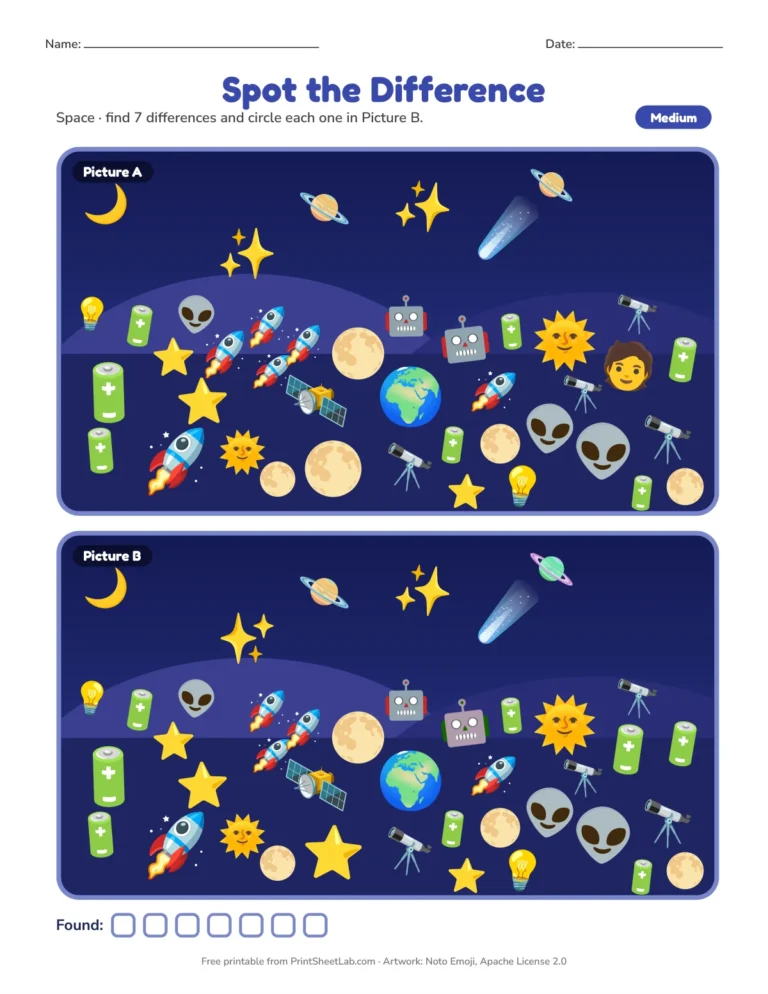
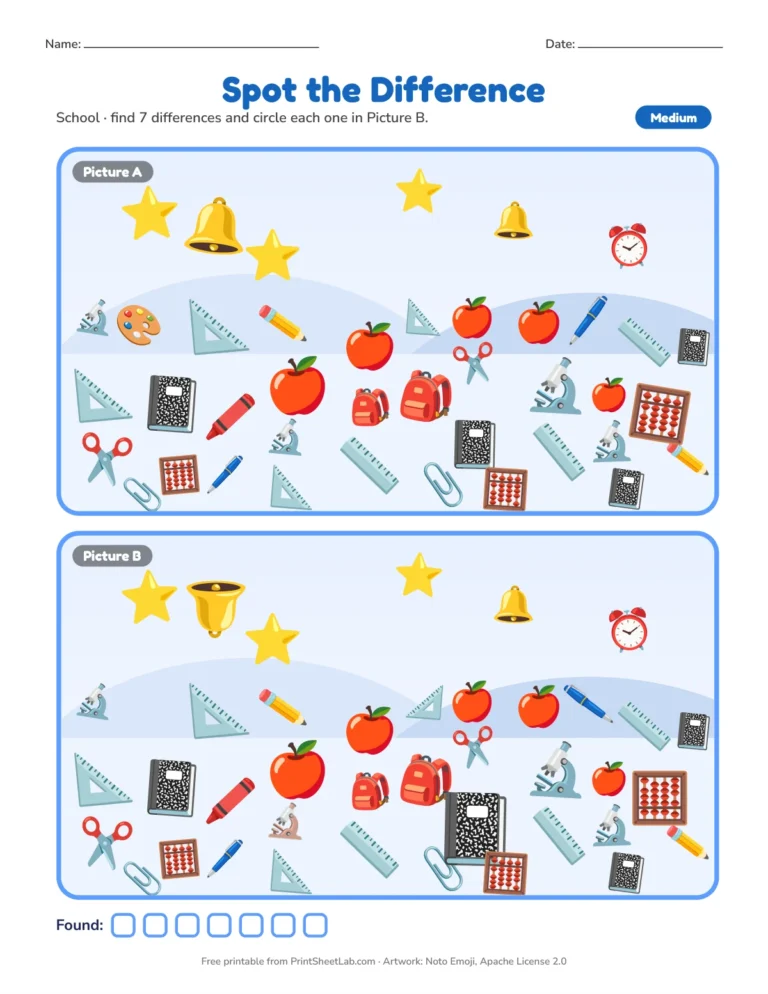
Easy, medium and hard puzzles
Every pack has the same three steps. The number of differences goes up and the kinds of change get trickier, from missing items to mirrored ones.
| Level | Differences | What changes | Good for |
|---|---|---|---|
| Easy | 5 | Missing, bigger, added or swapped items | Ages 4 to 6 |
| Medium | 7 | Adds mirrored, upside-down and color changes | Ages 6 to 8 |
| Hard | 10 | All seven kinds, many small items | Ages 8 and up, families, early finishers |
How to play a spot the difference worksheet
- Print the pack. Use US Letter or A4 paper; color pages look best, but gray pictures still work.
- Check the count. The line under the title says how many differences to find. The row of boxes at the bottom lets a child tick them off.
- Look in zones. Split the picture into the sky, the middle and the ground and compare one zone at a time, instead of staring at the whole page.
- Circle in Picture B. Mark each difference in the bottom picture so the top one stays clean.
- Check with the answer page. Picture B is shown again with every change circled, and each one is written out below.
Seven kinds of differences and how to find them
| Kind of change | What it looks like | How to spot it |
|---|---|---|
| Missing item | Something in Picture A is gone from Picture B | Count the items in each zone, or check empty gaps. |
| Swapped item | One picture was replaced by a different one | Compare neighbors: does each item match its twin? |
| Bigger item | One item is about one and a half times larger | Look for something that crowds its neighbors. |
| Added item | A new picture appears in Picture B | Scan for an extra item in a space that was empty. |
| Mirrored item | An item faces the other way | Check animals and vehicles: which way do they point? |
| Upside-down item | An item is turned over | Look for pictures with their tops where the bottoms should be. |
| Color change | The same picture in a different color | Compare every colorful item, not just the shapes. |
Easy puzzles use only the first four kinds. Medium and hard puzzles add the others, which is why they feel trickier.
Tips for finding every difference
These tips work for any spot the difference puzzle, not only ours.
- Go row by row. Move across the page in the same order in both pictures instead of jumping around.
- Cover half. Use a sheet of paper to hide the right half of both pictures, compare the left halves, then swap.
- Say what you see. Naming items out loud, such as “snail” or “kite”, makes it easier to notice when a name changes.
- Take a break. If a last difference hides from you, look away for a minute and try again.
- Make it a race. Two players can each use their own copy and see who finishes first, or work together against a timer.
Ways to use spot the difference printables at home and in class
These pages fit quiet reading time, travel bags and early-finisher folders. Print a pack for each table, hand out pencils and let pairs compare their answers when they finish. For a short lesson, ask children to describe a difference in a full sentence, such as “The kite in Picture B is upside down”, which practices describing words and positions. Slide a page into a plastic sleeve and use a dry-erase marker to reuse it.
How these puzzles are made
Each puzzle is generated by a program. It builds a picture from scattered artwork, copies it, and then changes the copy in a set number of ways: it removes an item, swaps one for a different picture, makes one bigger, adds a new one, mirrors one, turns one upside down or shifts its color. The answer page is drawn from the same list of changes, so the circles and the written answers always match the puzzle.
The pictures are Noto Emoji artwork from Google, used under the Apache License 2.0; the project is on GitHub. A credit line is printed on every page.
Use the spot the difference printables as a quiet activity for travel, waiting rooms or the end of a lesson.
Frequently asked questions
6 quick answers
Are these spot the difference printables free?
Yes. Print as many copies as you like for your own children or class, with no account or sign-up.
How many differences are in each puzzle?
Easy puzzles have 5 differences, medium puzzles have 7 and hard puzzles have 10. Every pack contains one of each.
What age are the puzzles for?
Easy puzzles suit roughly ages 4 to 6, medium puzzles ages 6 to 8, and hard puzzles older children and adults. Every child is different, so let them choose.
Do the puzzles come with answers?
Yes. Each pack ends with three answer pages. Each one shows Picture B with every difference circled and lists the changes in words.
Can I print them in black and white?
Yes. Color changes are harder to spot in grayscale, but missing, added, mirrored and upside-down items still show clearly.
Will there be seasonal spot the difference pages?
Yes. We are adding Thanksgiving and Christmas spot the difference pages; they will be linked from this page when they are published.
More picture puzzles and printable games
- I spy printables with find-and-count pages in six themes.
- Halloween I spy pages with three themed packs.
- Thanksgiving spot the difference puzzles.
- Christmas spot the difference puzzles.
- Printable mazes in square and round shapes.
- Dot to dot printables from 10 to 100 dots.
- Printable sudoku from 4×4 to 9×9.
- Every puzzle and brain teaser on PrintSheetLab.
Did you like this?
Last updated: