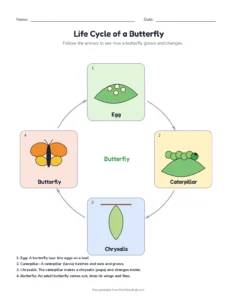
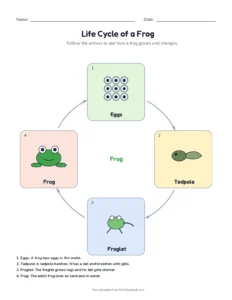
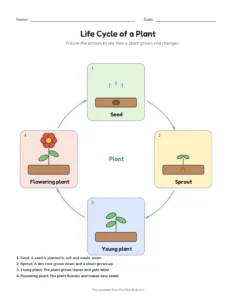
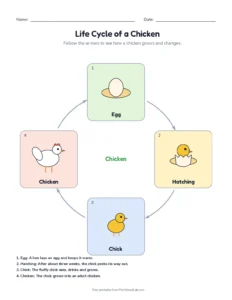
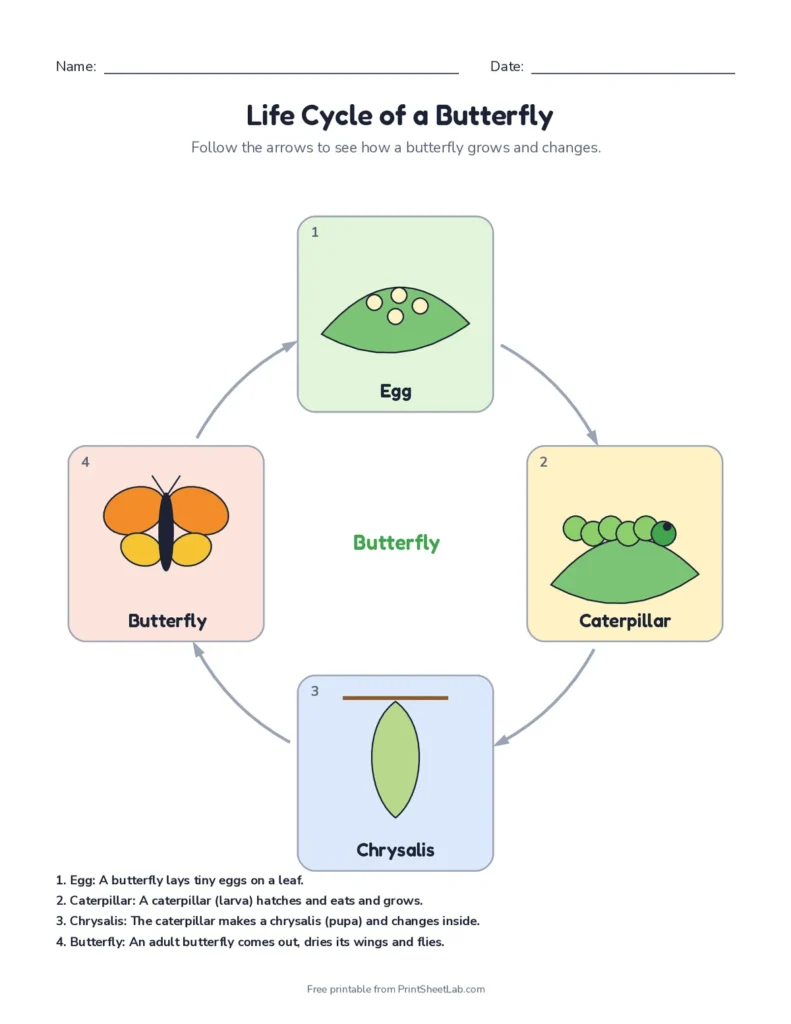
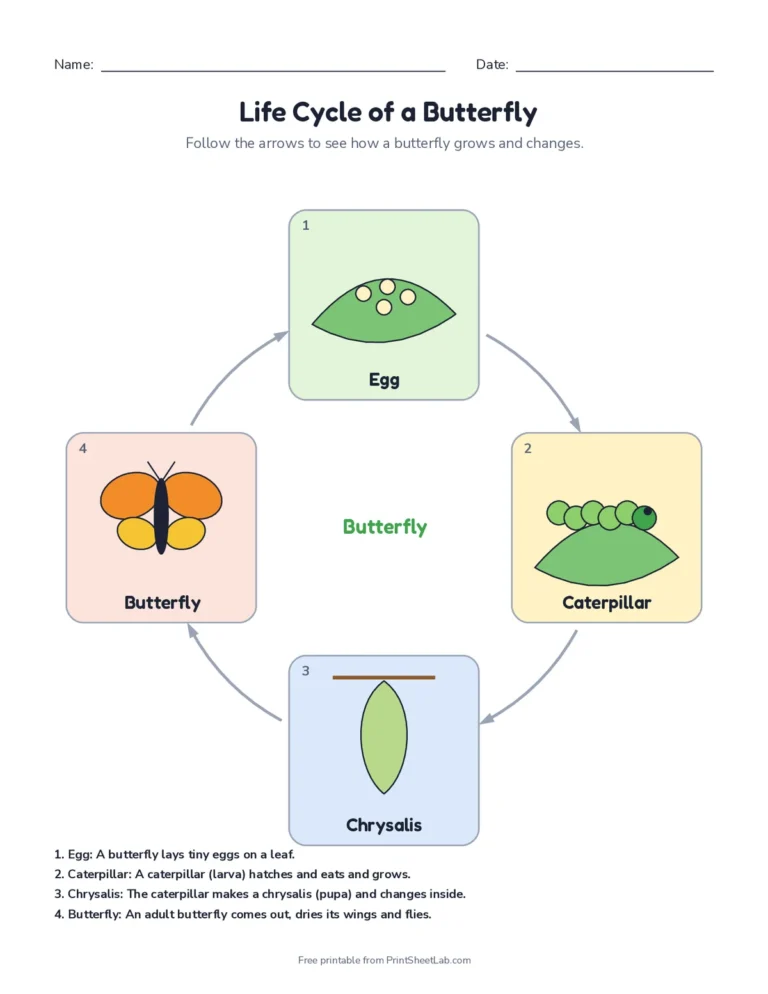
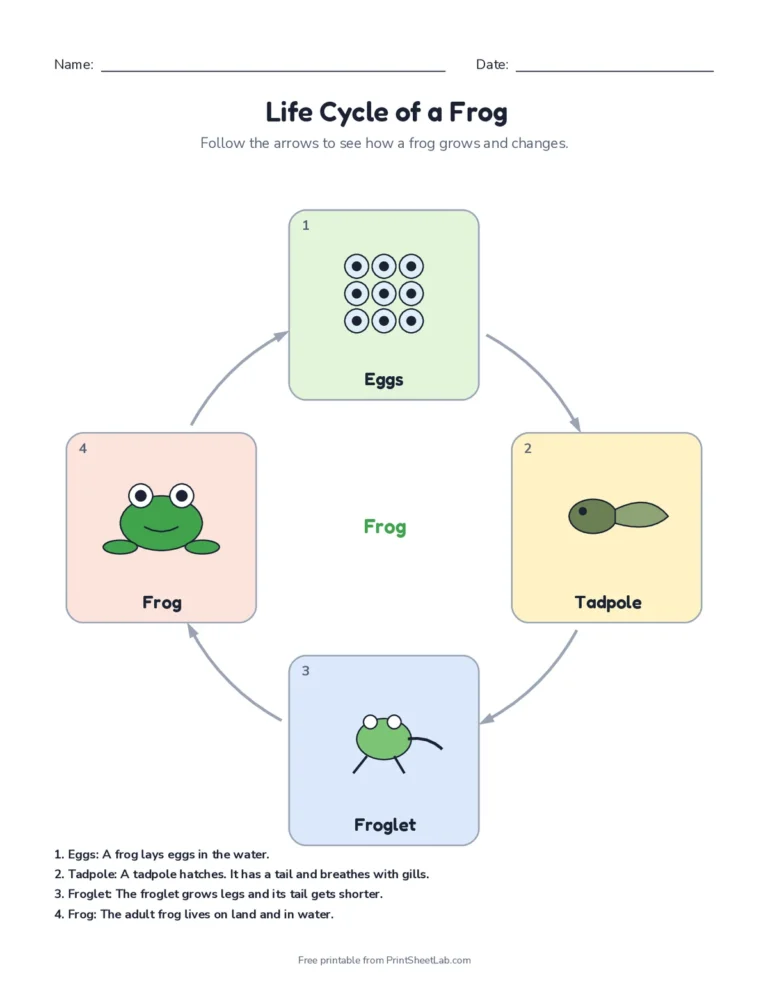
Free life cycle worksheets for the butterfly, frog, plant, chicken, ladybug, honey bee, sea turtle and pumpkin. Print a colorful life cycle diagram, a label-it page with a word bank, a cut and glue sequencing activity and a draw-your-own cycle page, with an answer key. Every picture is drawn clearly so young scientists can see each stage. The butterfly life cycle worksheet and the frog life cycle worksheet are the favorites, but every set of life cycle worksheets works the same way.
Put the stages in order
Tap the pictures in the right order, from the first stage to the last. Switch to another life cycle, or try putting the planets in order.
Ready-to-print life cycle worksheets (PDF)
Open any pack as a PDF and print, or press Customize to choose one page or switch to black and white.

Life cycle worksheets for eight living things
| Animal or plant | Stages |
|---|---|
| Butterfly | Egg, caterpillar (larva), chrysalis (pupa), adult butterfly |
| Frog | Eggs, tadpole, froglet, adult frog |
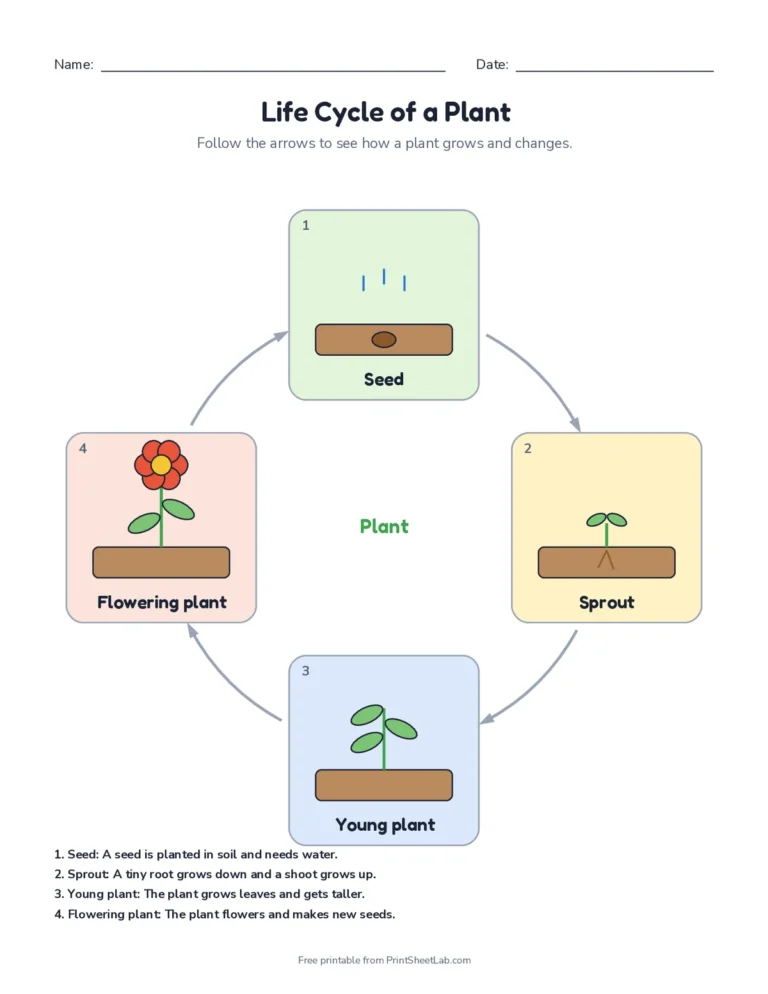
| Plant | Seed, sprout, young plant, flowering plant that makes new seeds |
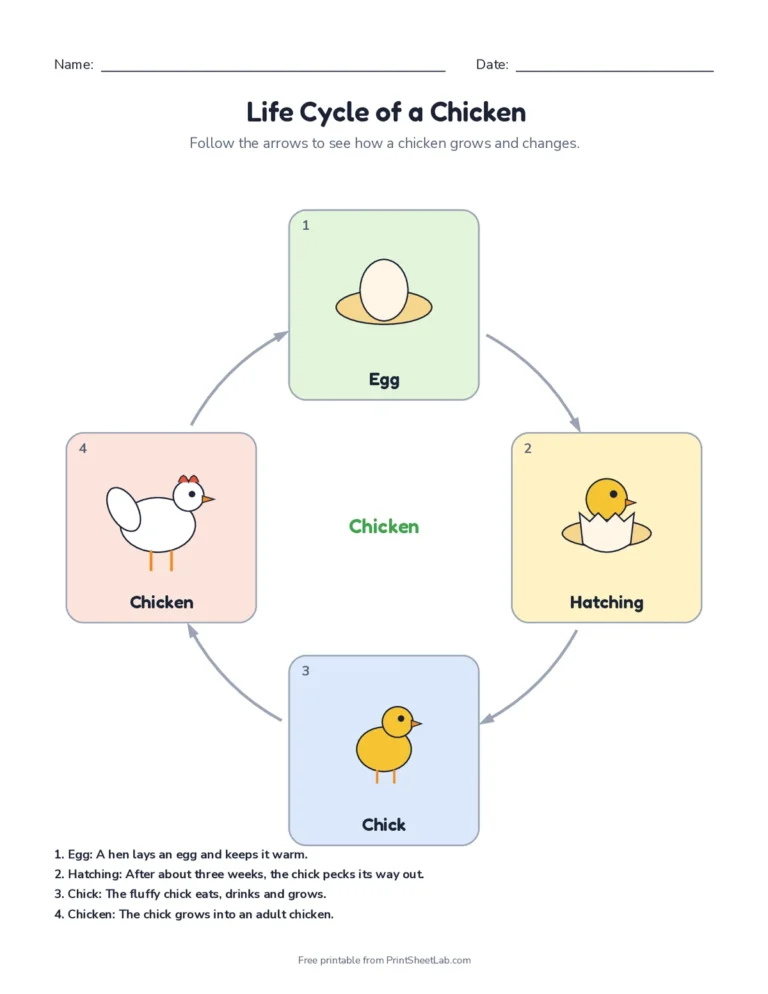
| Chicken | Egg, hatching, chick, adult chicken |
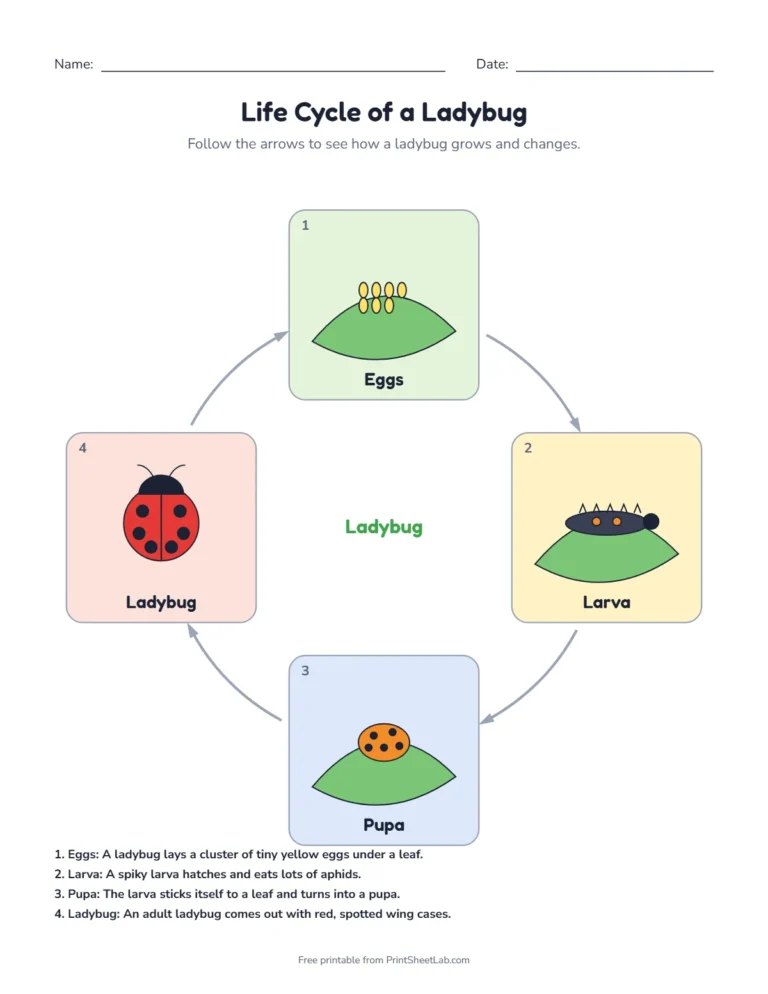
| Ladybug | Eggs, larva, pupa, adult ladybug |
| Honey bee | Egg, larva, pupa, adult bee |
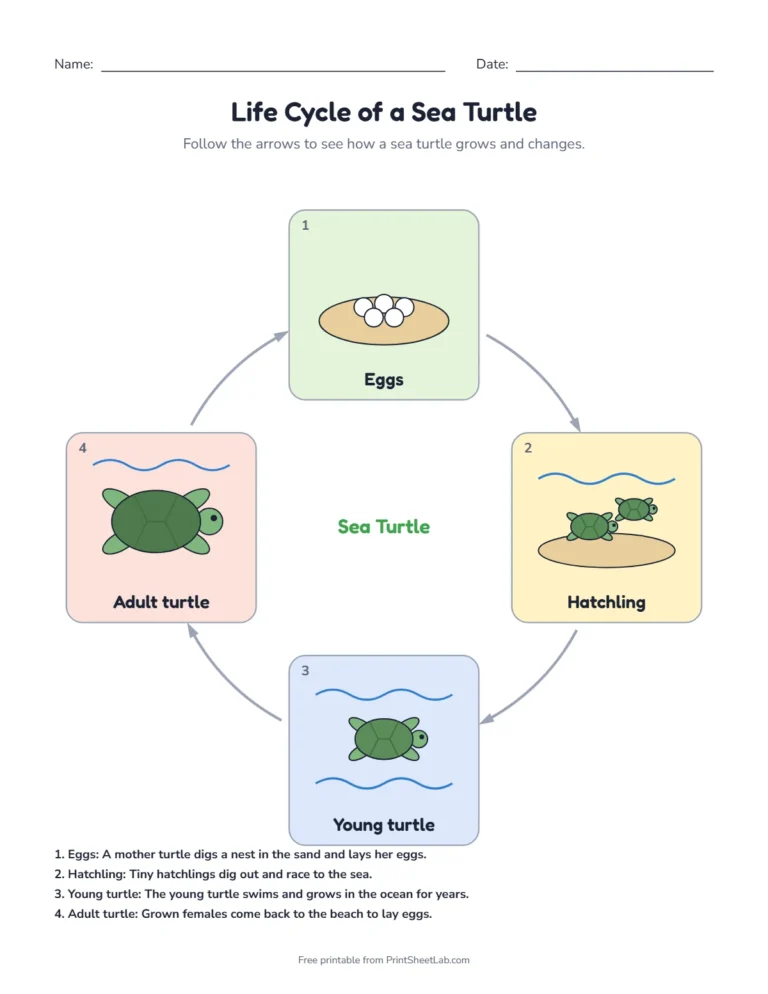
| Sea turtle | Eggs, hatchling, young turtle, adult turtle |
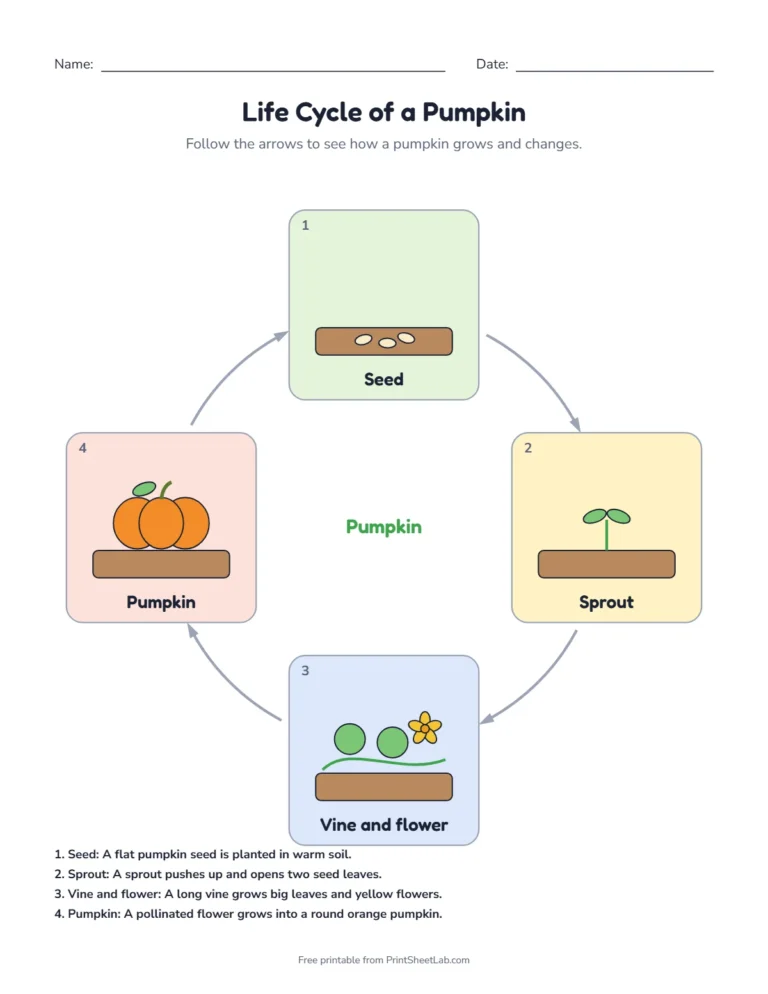
| Pumpkin | Seed, sprout, vine and flower, pumpkin |
What is a life cycle?
A life cycle is the series of changes a living thing goes through during its life. It is called a cycle because it goes round and round: adults make eggs or seeds, and the young grow into adults that start the cycle again.
- Metamorphosis: butterflies and frogs change their body shape completely as they grow. A caterpillar looks nothing like a butterfly!
- Growing bigger: chickens hatch looking much like a small version of the adult and simply grow.
- Plants start as seeds, grow roots and shoots, and flower to make new seeds.
Complete and incomplete metamorphosis
Scientists sort insect life cycles into two kinds. In complete metamorphosis there are four very different stages: egg, larva, pupa and adult. The larva looks nothing like its parents, and it rebuilds its whole body inside the pupa. Butterflies, ladybugs and honey bees all grow this way. In incomplete metamorphosis there is no pupa: a grasshopper or a dragonfly hatches as a nymph that looks like a small, wingless adult and molts several times as it grows. Frogs change shape too, from a water-breathing tadpole to a land-living frog, which is why their life cycle is also called a metamorphosis.
The ladybug life cycle
A ladybug lays a neat cluster of tiny yellow eggs on the underside of a leaf, usually close to a colony of aphids. The larva that hatches looks like a small, spiky alligator rather than a beetle, and it eats aphids constantly while it sheds its skin several times. When it is fully grown it glues itself to a leaf and becomes a pupa. About a week later an adult climbs out with soft, pale wing cases that darken to red and grow their spots within a few hours. Gardeners love ladybugs because both the larva and the adult eat plant pests.
The honey bee life cycle
Everything in a beehive happens inside six-sided wax cells. The queen lays one egg in each cell. Worker bees feed the larva that hatches, then seal the cell with a wax cap so the pupa can change in the dark. The new adult bee chews through the cap and starts work right away, first cleaning cells and feeding larvae, and later flying out to collect nectar and pollen. Larvae that are fed only royal jelly grow into new queens. The honeycomb pictures on our bee worksheets show each stage in its own cell.
The sea turtle life cycle
A mother sea turtle crawls up the beach at night, digs a deep nest in the sand and lays a clutch of round, leathery eggs. The warmth of the sand incubates them, and the temperature even decides whether more males or females hatch. The hatchlings dig their way out together, usually at night, and scramble towards the bright horizon and the sea. Young turtles spend years drifting and feeding in the ocean before they are grown. Females then return to nest on the same stretch of coast where they hatched, which starts the cycle again.
The pumpkin life cycle
The pumpkin is a favorite fall project because children can grow one from start to finish. A flat seed planted in warm soil sprouts two round seed leaves, then rough true leaves and a long, creeping vine. Bright yellow flowers open on the vine, and bees carry pollen from male flowers to female ones. Each pollinated female flower swells into a green pumpkin that turns orange as it ripens, and the seeds inside start the next life cycle. Compare it with the general plant life cycle worksheet to show that every flowering plant follows the same seed-to-seed pattern.
Which life cycle for which grade?
- Preschool and kindergarten: the butterfly and chicken diagrams with the cut and glue page. Four stages, big pictures and lots of talking.
- 1st and 2nd grade: the plant, pumpkin and ladybug packs with the label page and word bank.
- 3rd grade: compare two cycles, such as the frog and the sea turtle, or the honey bee and the butterfly. In the US, 3rd graders build models that show how different organisms have different life cycles.
For older students, the biological life cycle article explains how the idea extends to every living thing, from bacteria to trees.
Activity ideas
- Grow a bean: plant a bean in a clear cup and draw it every few days on the draw-the-cycle page.
- Act it out: curl up like an egg, wriggle like a caterpillar, wrap up like a chrysalis and fly like a butterfly.
- Compare two cycles: how is a frog’s life cycle like a butterfly’s? How is it different?
- Make a spinner: glue the cut-out pictures around a paper plate in order.
Practice it as a game
Free online games for the same skill: balloon pop, memory match, races and more. No sign-up.

Frequently asked questions
10 quick answers
What is on the butterfly life cycle worksheet?
The four stages, egg, caterpillar, chrysalis and butterfly, as a color diagram, a labeling page, a cut and glue sequencing page and a drawing page. Like all our life cycle worksheets it has an answer key.
What does the frog life cycle worksheet show?
Eggs, tadpole, froglet and adult frog. It pairs well with the butterfly pack, because both animals change their body shape completely as they grow.
Which life cycle worksheets suit kindergarten?
The butterfly and chicken life cycle worksheets with the cut and glue page. They have big pictures and only four stages to put in order.
Are these life cycle worksheets free?
Yes. All life cycle diagrams, label pages, cut and glue activities and answer keys are free for home and classroom use.
What grade are they for?
Life cycles are usually taught in kindergarten to 3rd grade. The cut and glue page suits younger children; the label and draw pages suit older ones.
What is the difference between a chrysalis and a cocoon?
A chrysalis is the hard case a butterfly caterpillar forms around itself. A cocoon is a silk covering spun by many moth caterpillars.
Which life cycles are on this page?
Eight: the butterfly, frog, plant, chicken, ladybug, honey bee, sea turtle and pumpkin. Each one has a color diagram, a label page, a cut and glue page and a draw-it page, plus an answer key.
What is complete metamorphosis?
It is a life cycle with four very different stages: egg, larva, pupa and adult. Butterflies, ladybugs and honey bees all go through complete metamorphosis.
Do all animals go through metamorphosis?
No. Chickens, sea turtles and people hatch or are born looking like small versions of the adult and simply grow. Only some animals, such as insects and frogs, change their body shape completely.
Can I print in black and white?
Yes. Switch the ink to black and white and the pictures become outlines that children can color.