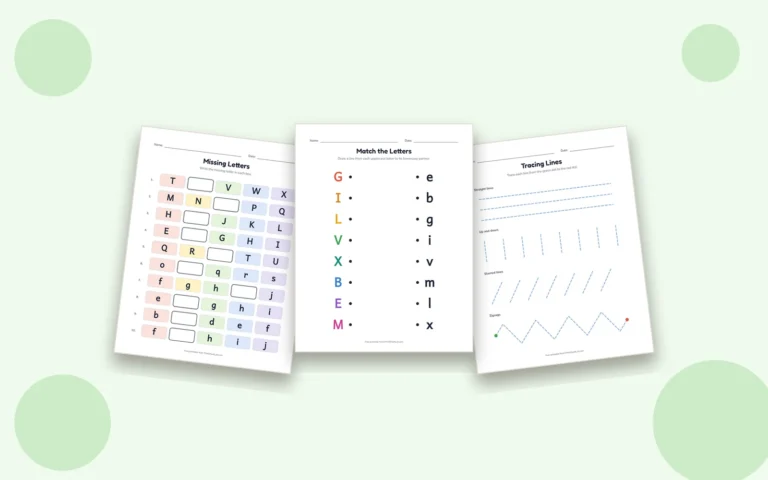
Free printable alphabet review worksheets: fill in the missing letters in ABC order, match uppercase and lowercase letters, and trace pre-writing lines.
Preschool and kindergartenCommon Core RF.K.1.D, RF.K.1.B4 free PDFs with answer keys
Change the numbers, layout and number of problems, then download a new PDF with its answer key.
These free alphabet worksheets bring all 26 letters together once children know most of them on their own. There are three kinds: a missing letters worksheet for ABC order, an uppercase and lowercase matching page, and pre-writing worksheets with tracing lines for the youngest learners. Each one prints with an answer key where it needs one, and the maker below makes a fresh version every time.
Free alphabet review worksheets to print (PDF)
Download a ready-made page, or press Customize to change the paper size, colors or letter range in the maker on this page.
Missing lettersABC order, with answer key.PDFCustomizeUppercase and lowercase matchingDraw lines to match 8 pairs.PDFCustomizePre-writing lines2 pages of tracing lines.PDFCustomize
Alphabet worksheets that put it all together
Once children know most letters on their own, these pages check that they know the order of the alphabet and can pair each uppercase letter with its lowercase partner. The pre-writing page comes first for younger children: straight, slanted, curved and zigzag lines build the pencil control that every letter needs.
A good order is pre-writing lines at age 3, letter of the week pages from about age 4, and these review alphabet worksheets once a child can name most of the 26 letters. Use them every few weeks as a quick check, rather than as daily drills.
ABC order worksheet: how the missing letters page works
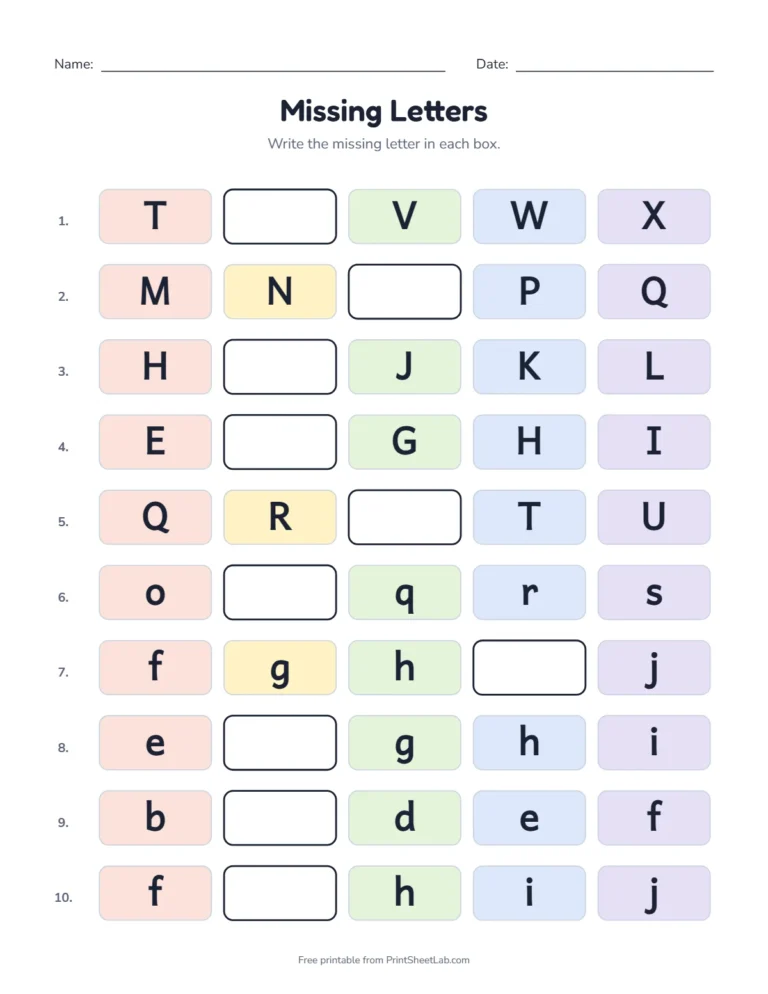
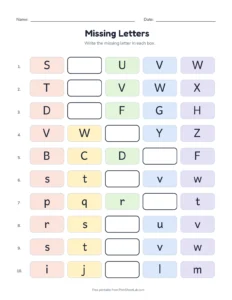
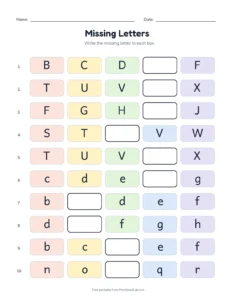
Each of the ten rows on the missing letters worksheet shows five letters in order with one gap, such as A, B, _, D, E. Children say the alphabet up to the gap, then write the letter that fits. The first five rows use uppercase letters and the last five use lowercase, so the same page checks both forms. Because the rows start at different points in the alphabet, children cannot simply copy the song from A each time; they have to know what comes after M or before T.
If this ABC order worksheet feels hard, sing the alphabet slowly while pointing to an alphabet strip, then try one row at a time. The answer key on the second page lists every missing letter.
Uppercase and lowercase matching
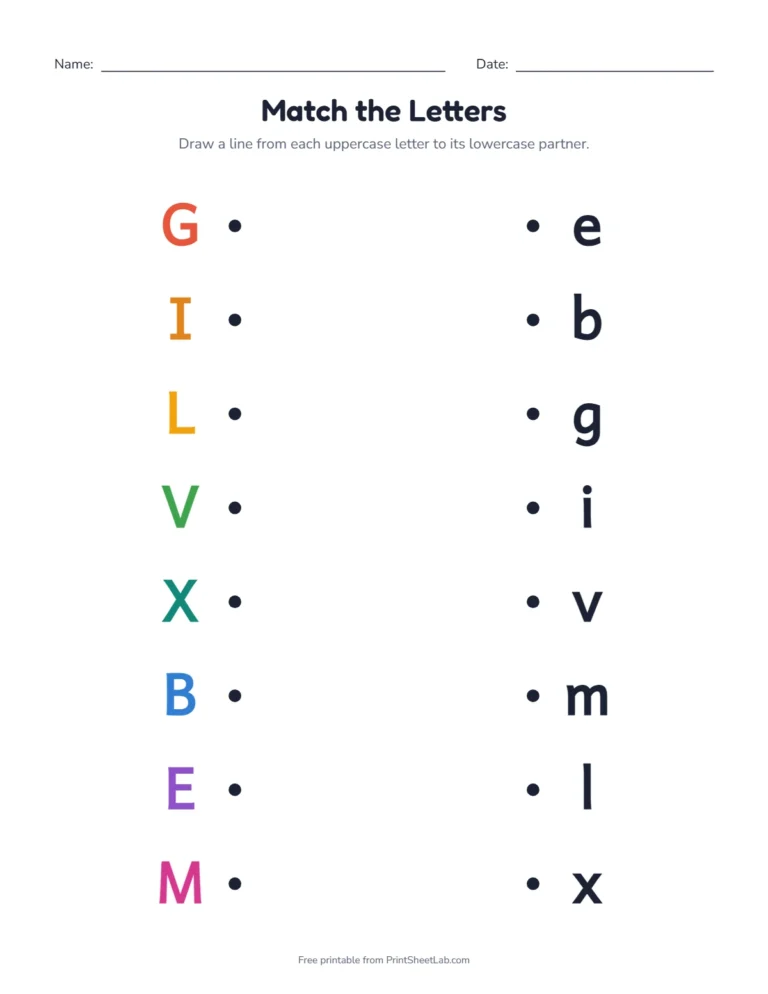
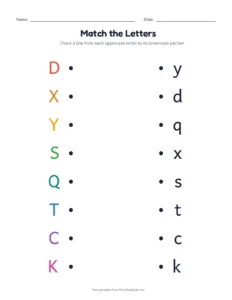
The uppercase and lowercase matching page lists eight capital letters on the left and their lowercase partners on the right, in a different order. Children draw a line from each capital to its partner. Some pairs look alike (C and c, O and o, S and s), while others look completely different (A and a, G and g, R and r), and those are the ones to practice most. Each new version picks a different set of eight letters.
Pre-writing worksheets for little hands
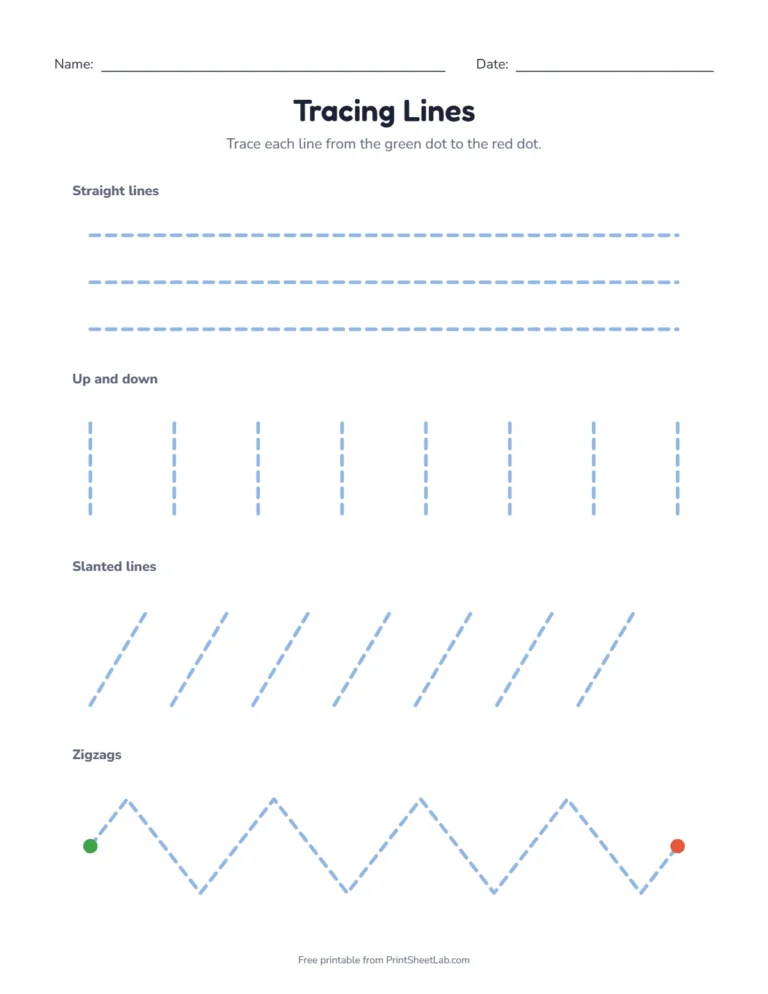
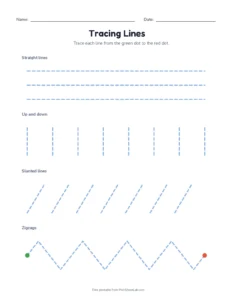
The pre-writing worksheets have rows of dashed lines to trace from a green dot to a red dot: straight lines across, up-and-down lines, slanted lines and zigzags on the first page, then waves, loops, bumps and curves on the second. These are the strokes that make up every letter. A child who can trace a slant and a curve is ready for letters like A, K and S. Use a thick crayon or triangular pencil, and go slowly: neat lines matter more than speed.
Alphabet games to go with the alphabet worksheets
Alphabet line-up: lay out letter cards in ABC order on the floor, take one away while your child closes their eyes, and ask which is missing.
Partner match: hide lowercase cards around the room and give your child the capitals to match.
Letter hop: hop from A to Z on chalk letters outside, saying each name.
Pop the letter: play the free online pop the letter game on our letter pages for quick practice on a phone or tablet.
Alphabet worksheets for kindergarten
By the end of kindergarten, children are expected to recognize and name all uppercase and lowercase letters, as set out in the Common Core reading foundations standards (RF.K.1.D). These alphabet worksheets check exactly that skill. The order of the letters comes from the English alphabet, which has 26 letters: 5 vowels and 21 consonants, with y working as both. If a child struggles with a particular letter, go back to its letter of the week page for tracing and sound practice:
Most children can sing the alphabet by age 4 and recognize most letters by age 5. Kindergarten aims for all 26 uppercase and lowercase letters by the end of the year.
Should children learn uppercase or lowercase letters first?
Many teachers start with uppercase because the shapes are simpler, but lowercase letters make up most of what children read, so teach both early and use the matching page to connect them.
Why do b and d get mixed up?
They are mirror images. Saying “bat before ball” (b starts with the bat, then the ball) helps many children, and the letter B and letter D pages practice each one separately.
What are pre-writing lines?
Tracing paths such as straight lines, zigzags, waves and loops. They build the hand control children need before forming letters.
Is the missing letters worksheet different each time?
Yes. The maker picks new starting letters and gaps every time you make a new version, and the answer key always matches.
Do these alphabet worksheets print on A4?
Yes. Choose US Letter or A4 in the maker before printing; the ready-made PDFs above are US Letter.