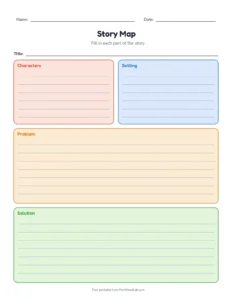
Free reading comprehension worksheets with 18 original reading comprehension passages, fiction and nonfiction, written for grades 1 to 6. These are true reading passages with questions: every passage comes with four multiple choice questions (details, sequence, vocabulary, main idea and theme), one written-response question and an answer key. You can also print graphic organizers such as a story map, a Somebody-Wanted-But-So-Then summary, main idea and details, character traits, a Venn diagram and a reading log to use with any book.
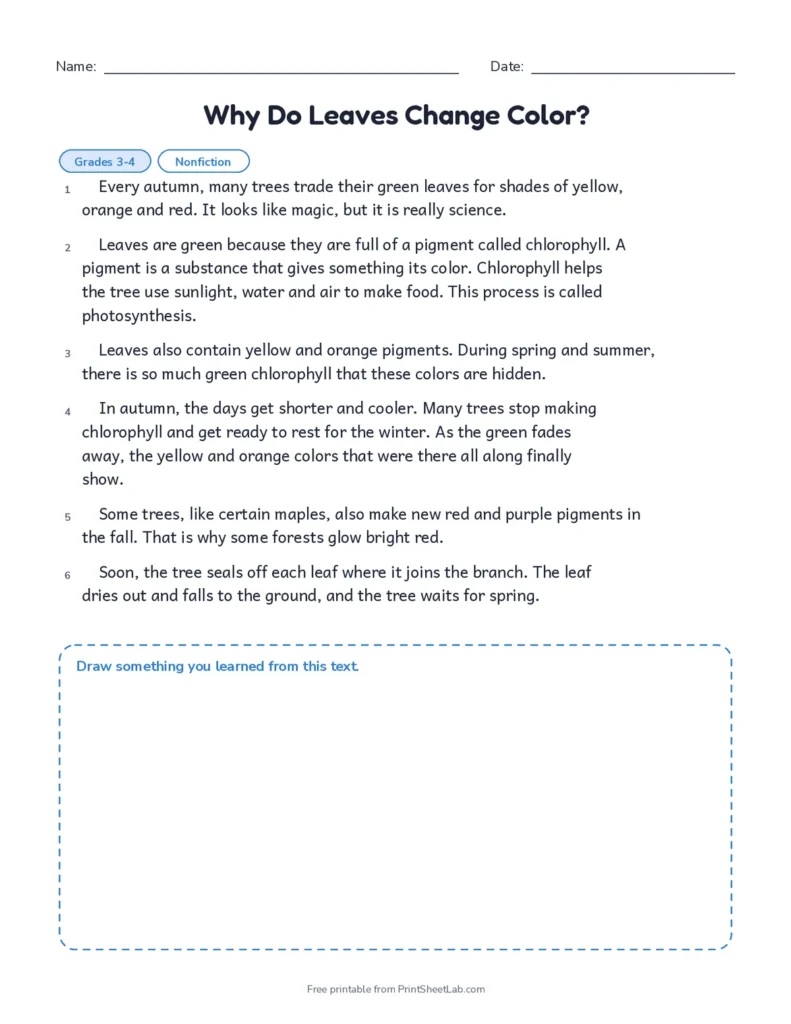
Science too: pair the frog and bee passages with our life cycle worksheets.
Read and answer reading comprehension worksheets online
Choose a passage, read it (or press Read it to me to listen), answer the questions and press Check my answers. Correct answers light up in green, so children can look back at the text and see why.
Ready-to-print reading comprehension worksheets (PDF)
Each set is a ready PDF of reading comprehension worksheets with answer keys at the back. To swap the passage, the text size, the font or the organizer, choose Customize.


All 18 reading comprehension passages
| Level | Fiction | Nonfiction |
|---|---|---|
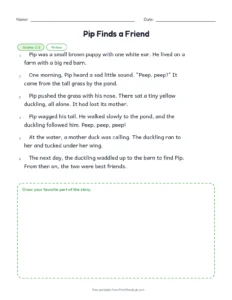
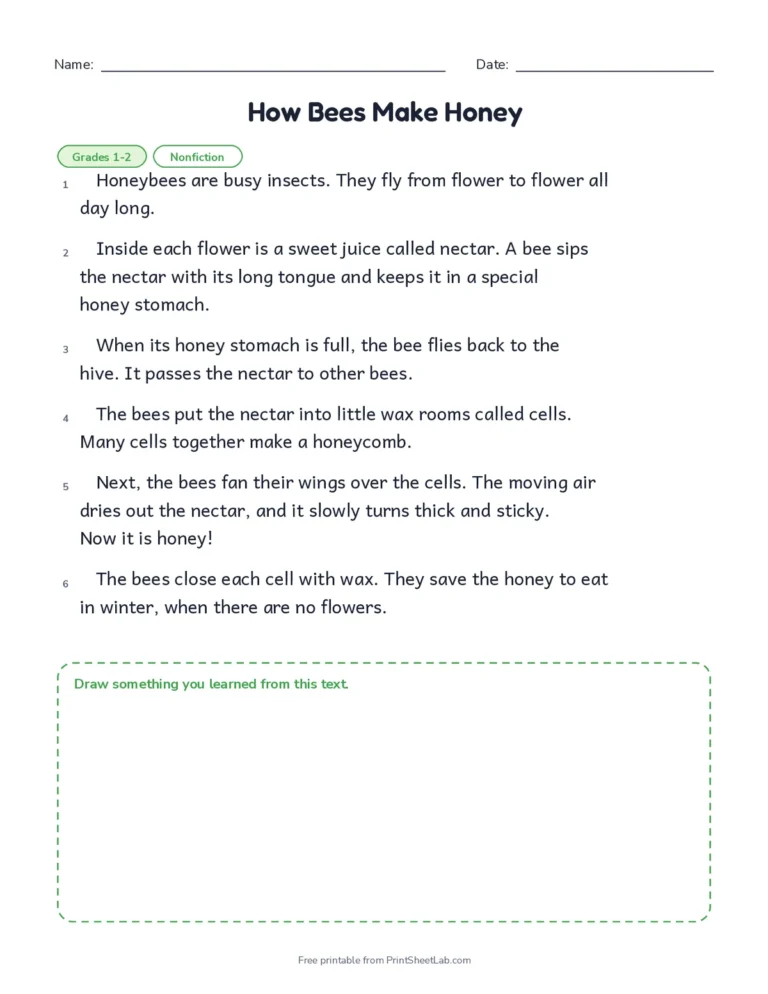
| Grades 1-2 (about 120 words) | Pip Finds a Friend, The Lost Red Mitten, Kiki’s Kite | How Bees Make Honey, Frogs Grow Up, Why Do We Brush Our Teeth? |
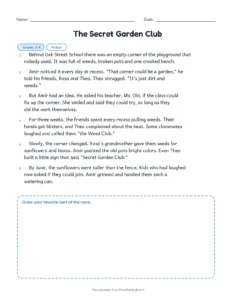
| Grades 3-4 (about 175 words) | The Secret Garden Club, Maya’s Science Fair Surprise, The Night the Lights Went Out | Why Do Leaves Change Color?, The Amazing Octopus, Emperor Penguin Dads |
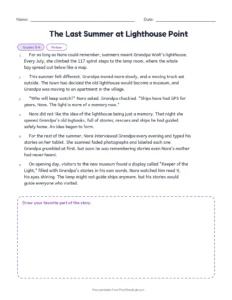
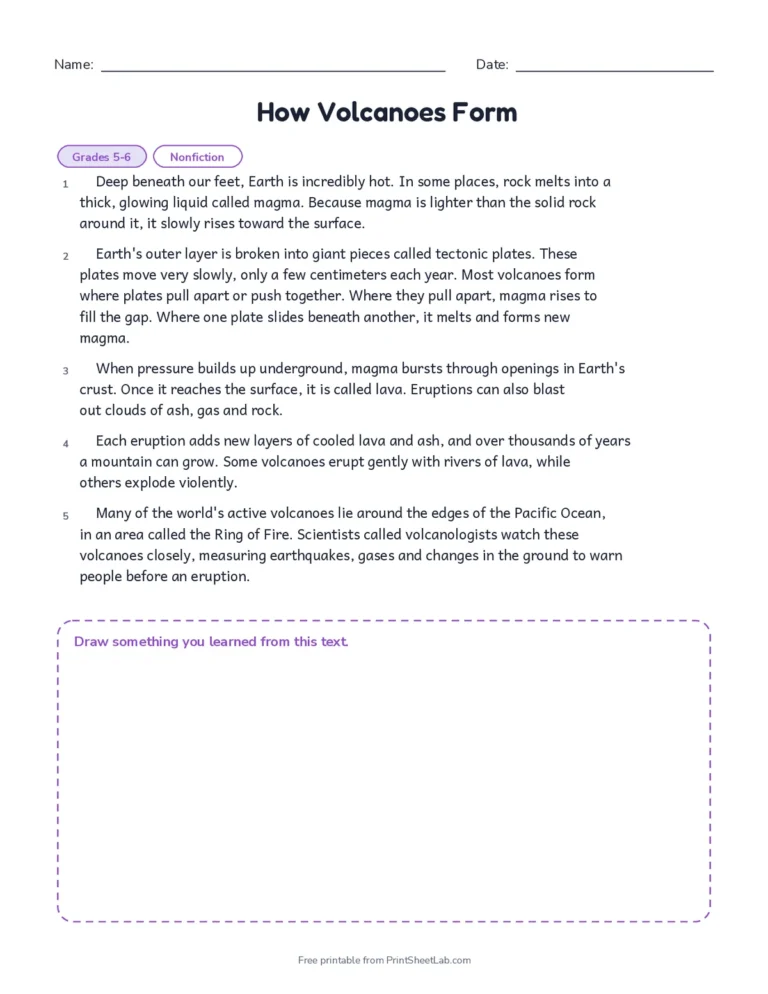
| Grades 5-6 (about 210 words) | The Last Summer at Lighthouse Point, Coach Rivera’s Tough Choice, The Helper Who Couldn’t Say No | How Volcanoes Form, The Machine That Changed the World, The Never-Ending Journey of Water |
Skills practiced in our reading comprehension worksheets
- Finding details: who, what, where and when questions answered right in the text.
- Sequence: what happened first, next and last, like the stages of a frog’s life cycle.
- Vocabulary in context: working out what words like pigment or guide mean from the sentences around them.
- Main idea and theme: what a text is mostly about, or the lesson a story teaches.
- Character and inference: how characters feel and change, and why.
- Written response: answering in complete sentences with evidence from the text.
How to choose reading comprehension passages by grade
All 18 reading comprehension passages are leveled by length, vocabulary and sentence structure, so you can start at the right place:
- Grades 1 and 2: about 120 words, short sentences and familiar topics such as a lost mitten or how bees make honey. Read them aloud together first, then let children answer on their own.
- Grades 3 and 4: about 175 words with a clear problem and solution, or a nonfiction topic with a few new science words to work out from context.
- Grades 5 and 6: about 210 words with more complex characters, longer sentences and themes such as honesty, teamwork and change.
If a child finds the reading comprehension worksheets easy, move up a level. If they struggle with the details questions, drop down a level or switch on the Read it to me button so decoding does not get in the way of understanding.
Reading passages with questions: how to answer them
Each worksheet has the same five question types, which makes it easy to spot what a child finds hard:
- Detail questions can be answered by pointing to one sentence. Children should find the paragraph number before choosing an answer.
- Sequence questions ask what happened first, next or last. Underlining time words such as then, after and finally helps.
- Vocabulary questions ask what a word means in the passage. Read the sentence before and after the word for clues.
- Main idea and theme questions ask what the whole text is about. Cover the answers and say it in one sentence first.
- Written response questions need a full sentence or two. Teach the RACE method: Restate the question, Answer it, Cite the text, and Explain how the evidence supports your answer.
These question types match the Common Core reading standards for literature (asking and answering questions, recounting stories, finding the central message) and for informational text (main idea, key details, word meaning). See the grade 3 reading literature standards and the grade 3 informational text standards for examples.
Graphic organizers to use with any book
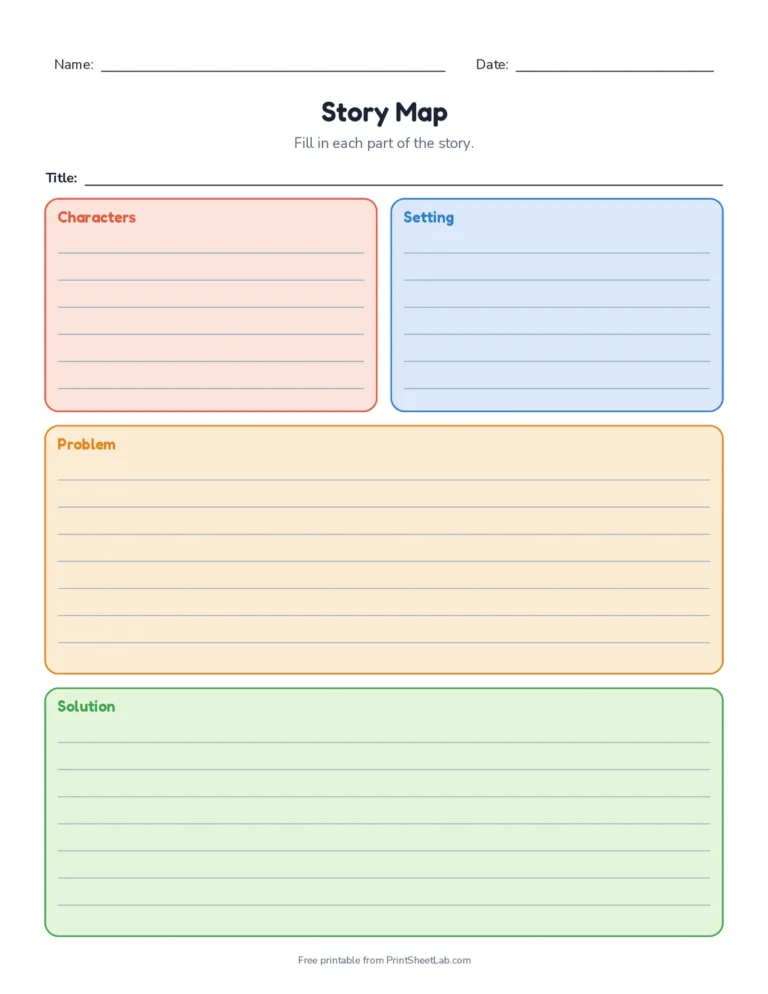
- Story map: characters, setting, problem, events and solution in one page, ideal for retelling a fiction story.
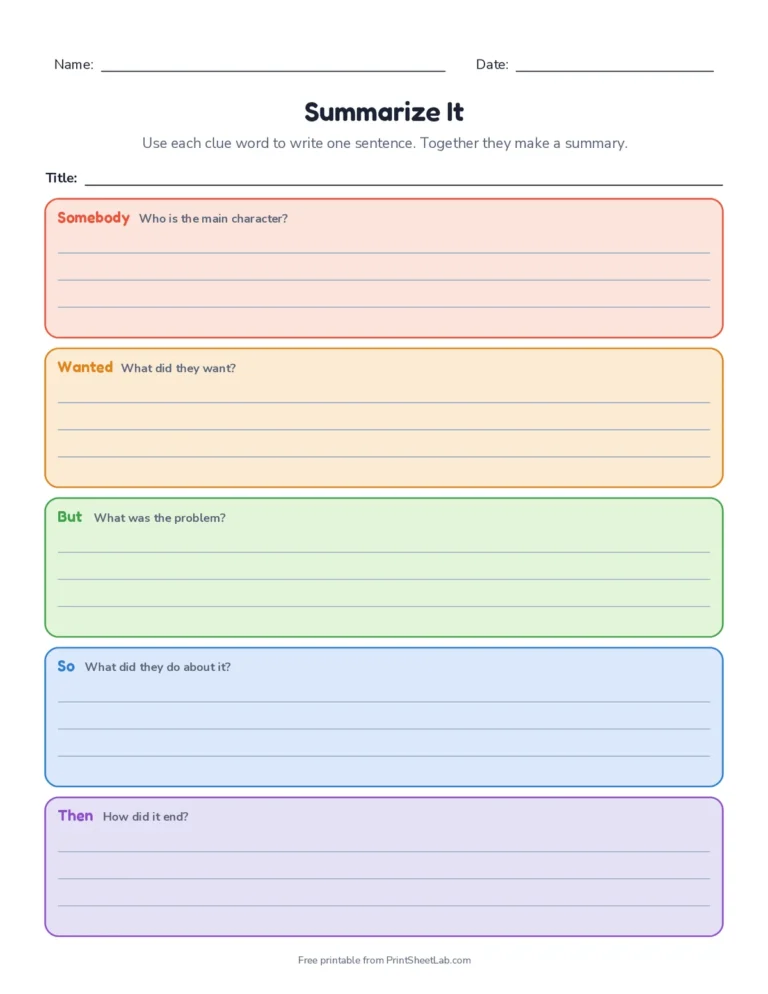
- Somebody Wanted But So Then: a five-word frame that turns a whole story into a one-sentence summary.
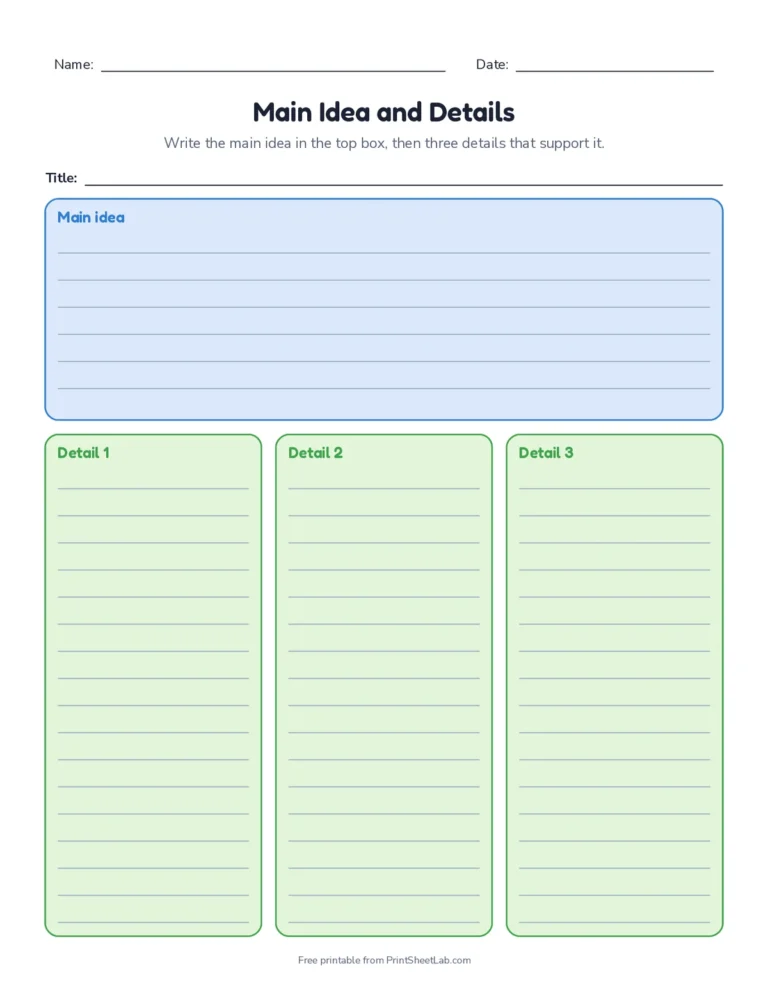
- Main idea and details: one big box for the main idea and three for supporting details, for nonfiction reading.
- Character traits: a trait word plus the evidence from the text that shows it.
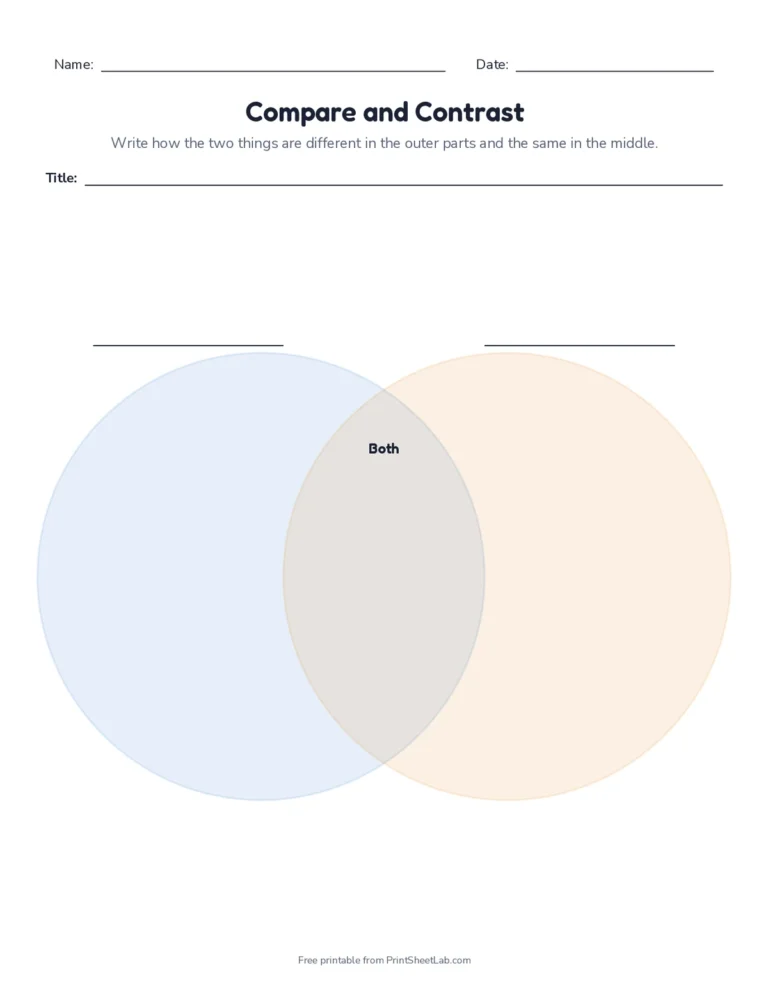
- Venn diagram: compare two characters, two books or a book and its movie.
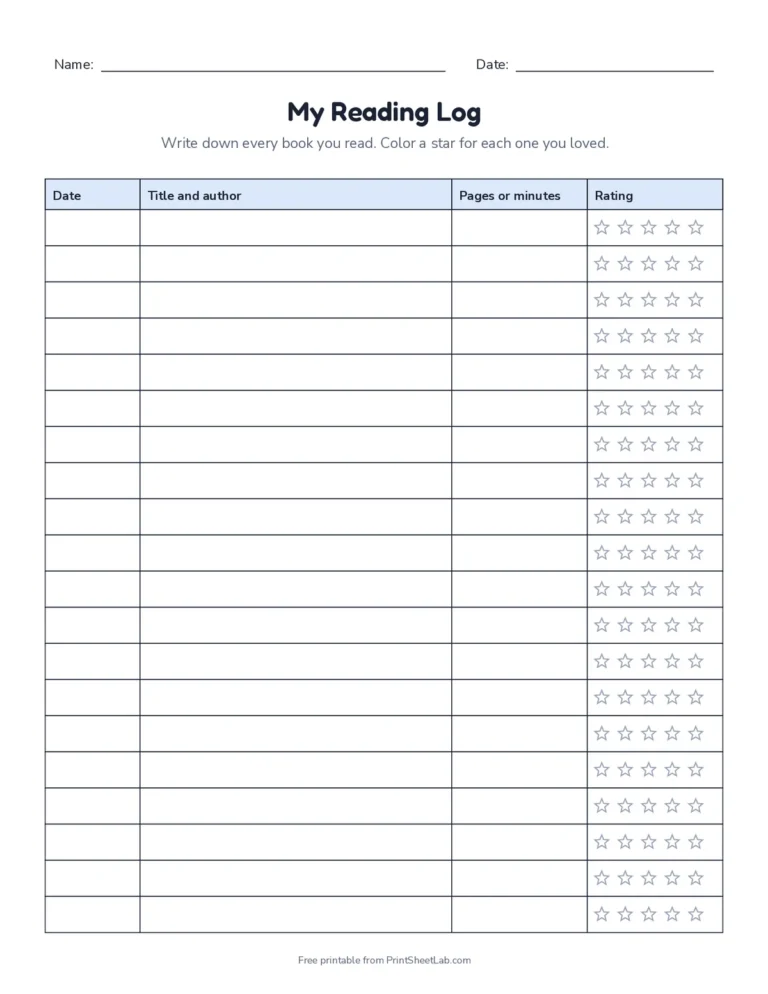
- Reading log: date, title, pages or minutes and a star rating, for building a daily reading habit.
Tips for better reading comprehension
- Preview: read the title and ask, “What do I think this will be about?”
- Read twice: once for the story, once to look for answers.
- Use the paragraph numbers to point to where you found an answer.
- Retell: after reading, tell someone what happened in your own words.
- Talk about it: the written-response question makes a great conversation starter.
Frequently asked questions
6 quick answers
Are these reading comprehension worksheets free?
Yes. Every passage, answer key and organizer costs nothing to print, at home or for a whole classroom, and there is no account to create.
Who wrote the passages?
Every passage and question in these reading comprehension worksheets was written for PrintSheetLab, so you will not find these exact stories anywhere else.
What grade levels are included?
The reading comprehension worksheets include passages for grades 1-2, 3-4 and 5-6, with fiction and nonfiction at every level. Choose Large text for younger or struggling readers.
Do the reading comprehension worksheets include answer keys?
Yes. The answer key lists the correct multiple choice answers and a sample answer for the written question.
Can I use the graphic organizers with any book?
Yes. The story map, summary, main idea, character traits, Venn diagram and reading log work with any book your child is reading.
Is there a dyslexia-friendly option?
Yes. Choose the dyslexia-friendly font and the Large text size in the generator before you print the reading comprehension worksheets.