Change the numbers, layout and number of problems, then download a new PDF with its answer key.
These free primer sight words worksheets cover all 52 words on the Dolch primer list. 12 of the 52 words are action words that a child can act out, so this list is a good place to practice with movement.
Primer sight words worksheets to print (PDF)
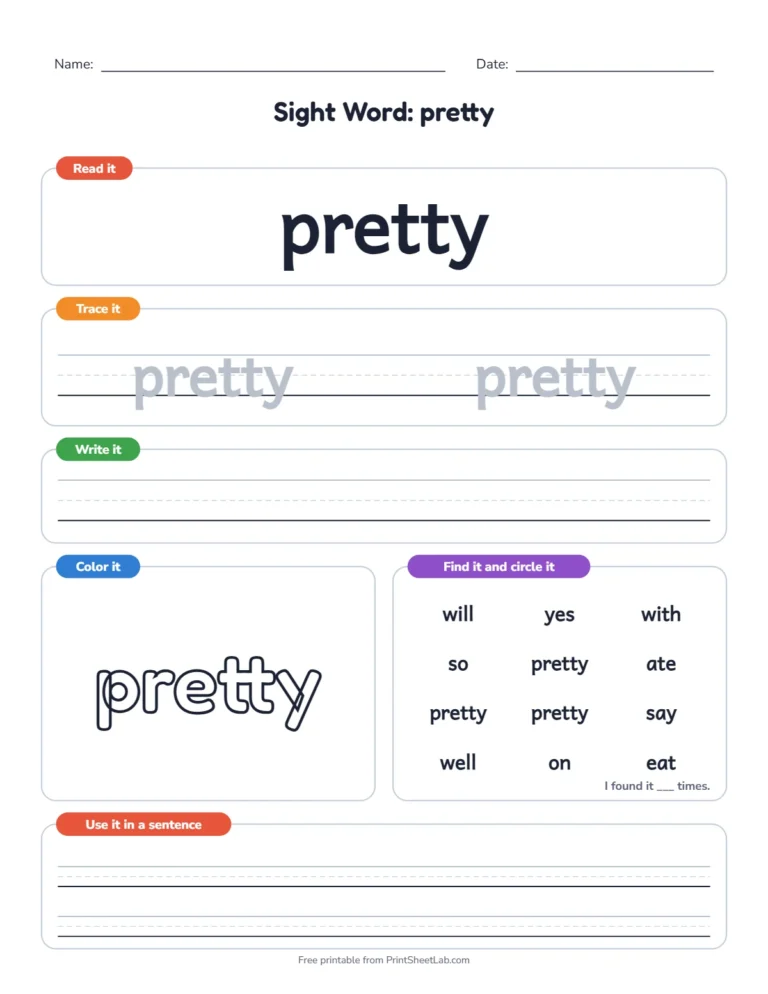
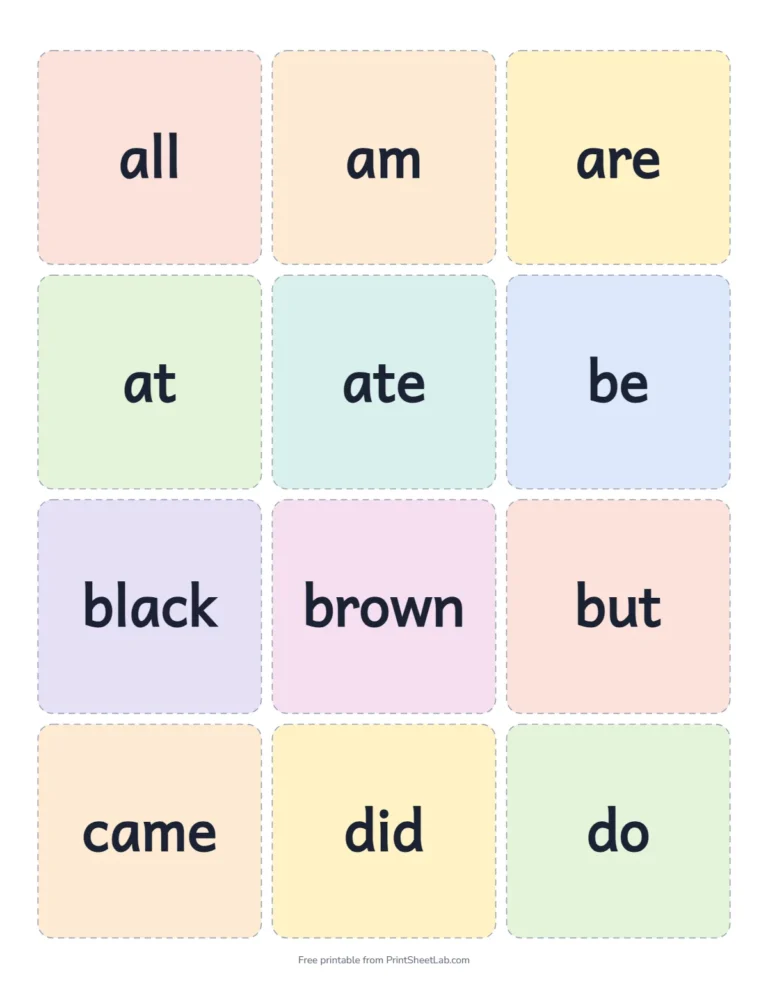
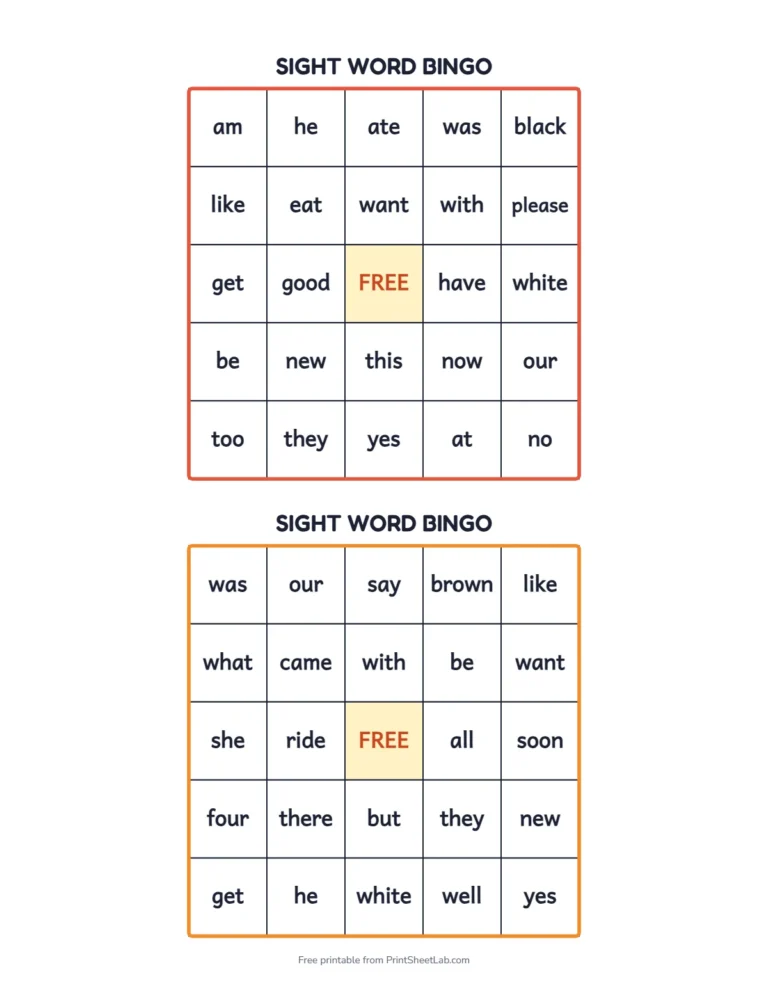
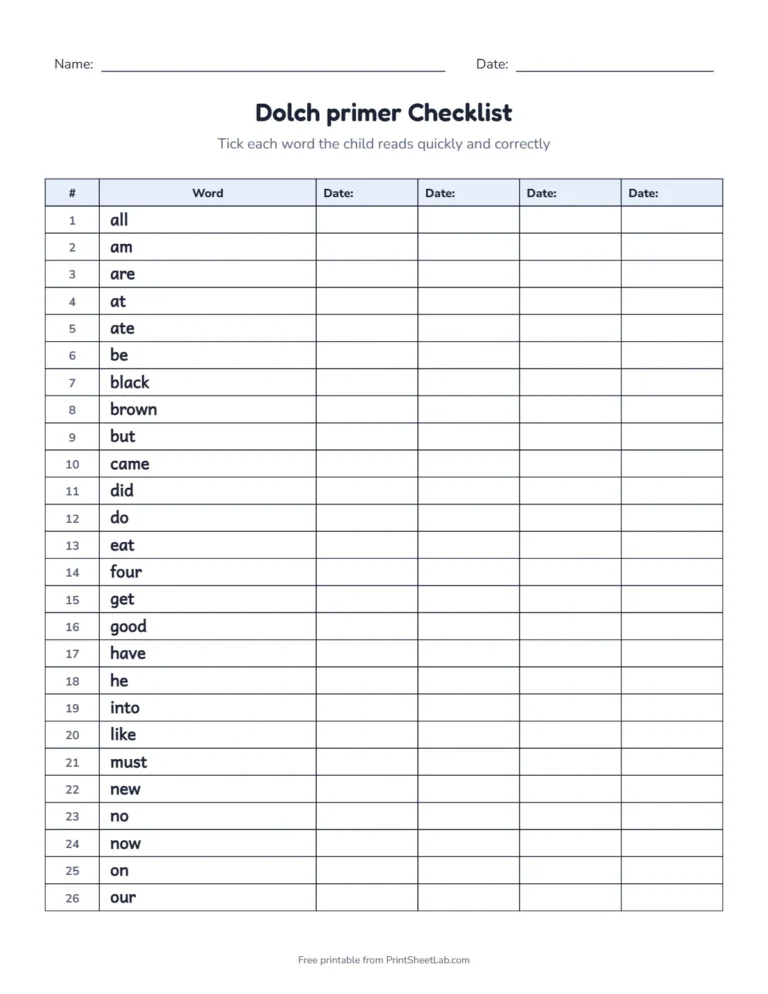
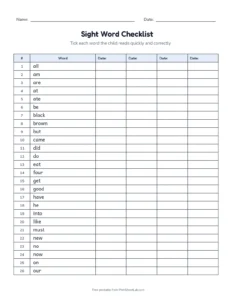
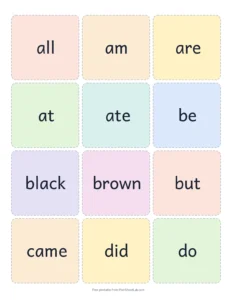
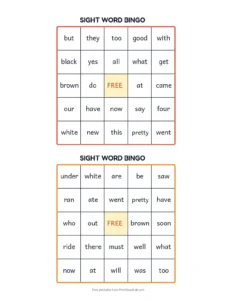
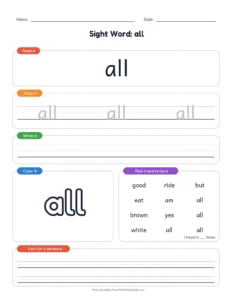
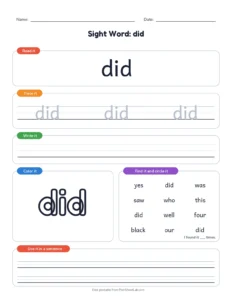
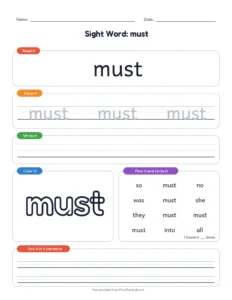
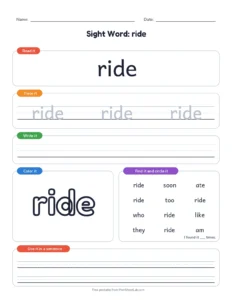
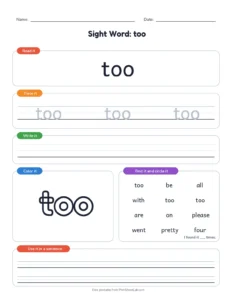
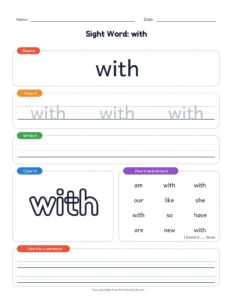
These four pages are the printables for the primer sight words: a word of the day page for “pretty”, flash cards, a bingo card and the checklist. Click a picture for the PDF.
Word of the day“pretty”, with six boxes.PDFFlash cards12 cards on a page.PDFBingo cardsWith a caller list.PDFChecklistTick each word known.PDF
The Dolch primer sight words list
The Dolch primer sight words list has 52 words. The primer sight words are:
all
am
are
at
ate
be
black
brown
but
came
did
do
eat
four
get
good
have
he
into
like
must
new
no
now
on
our
out
please
pretty
ran
ride
saw
say
she
so
soon
that
there
they
this
too
under
want
was
well
went
what
white
who
will
with
yes
For the history of the lists, see Wikipedia’s Dolch word list article. Most of these words are “service words” that do work in a sentence, such as all, out and yes, and not names of things, so a child cannot learn them from a picture.
Primer sight word worksheets: what is in the PDF
The generator prints four kinds of primer sight words worksheets. This table shows the number of pages for this list, counted from the real PDFs:
What you print
Pages in the PDF
Details
Sight word of the day
52 pages (one for each word)
Six boxes: read it, trace it, write it, color it, find it and circle it, use it in a sentence
Flash cards
5 pages
12 cards on a page, in 3 columns and 4 rows, with dashed cut lines
Bingo cards and caller list
3 pages for 4 cards
2 cards on a page, with a caller page to cut apart. Each card is 5 by 5 with a free space
Assessment checklist
2 pages
26 words on a page, with four date columns to tick when a child reads the word right
Primer sight words by length and first letter
The shortest primer sight words have 2 letters, such as am, at, be, do, he, and the longest is please with 6 letters. The average length is 3.5 letters. Here is how the 52 words divide by length:
Letters in the word
Words
Examples
2
8
am, at, be, do, he, no
3
19
all, are, ate, but, did, eat
4
18
came, four, good, have, into, like
5
5
black, brown, there, under, white
6
2
please, pretty
The most common first letters are w (9), a (5), s (5), t (5), b (4), n (3).
Dolch primer sight words that do not follow the rules
Many of the primer sight words can be sounded out, but some break the usual rules. These are the ones to teach by sight, with attention to the tricky part:
Word
What is tricky
was
The a says “u”
are
The silent e does not make the a long
what
The a says “u”
who
The w is silent and the o says “oo”
want
The a says “o”
they
The ey says “ay”
there
The ere says “air”
pretty
The e says “i” and the y says “ee”
Start with “was”: the a says “u”. Ask the child to write it three times, saying it aloud, then find it in a sentence.
The primer sight words sorted by job
Sorting the 52 words by what they do in a sentence turns a long list into 9 small groups. The biggest group is the action words, with 12 words, so most of the primer sight words can be acted out or used in a sentence the child already says.
Job
Count
Words
How to teach them
Colors
3
black, brown, white
Three more colors to add to the pre-primer set: sort objects by color.
Twelve verbs: act them out, and use past tense pairs such as eat and ate.
Helper words (be and do)
8
am, are, be, was, did, do, will, must
These carry the tense: was and are mean “then” and “now”.
Describing words
4
good, new, pretty, well
Hold up a good, new or pretty object while saying the sentence.
Words for people
4
he, she, they, our
Replace the name in a sentence with he or she.
Question and pointing words
5
what, who, there, this, that
Ask a question that starts with what or who.
Time and place words
7
now, soon, under, into, on, out, at
Use a box and a toy: on, under, into, out.
Small connecting words
8
all, but, so, too, no, yes, with, please
Teach these inside sentences, not on their own.
Sight word flash cards: a 16-week plan for the primer sight words
Four new cards a week, with a review week after every fourth, teach all 52 words in 16 weeks. Look-alike words never share a week, and the sight word flash cards print from the generator above.
Week
New cards
Words known by the end of the week
1
am, at, be, do
4
2
he, no, so, all
8
3
on, ate, but, did
12
4
eat, get, new, our
16
5
Review week: read all 16 cards, two piles
16
6
now, out, ran, saw
20
7
say, she, too, yes
24
8
came, four, good, have
28
9
into, like, must, ride
32
10
Review week: read all 32 cards, two piles
32
11
soon, that, well, went
36
12
this, will, with, black
40
13
brown, under, white, please
44
14
are, was, who, they
48
15
Review week: read all 48 cards, two piles
48
16
want, what, there, pretty
52
Sight word bingo: look-alike words in the primer sight words list
These are the 9 groups in the primer sight words list that cause the most mix-ups at the bingo table.
Look-alike words
What to notice
was, saw, say
Was and saw use the same three letters in opposite order. Say was, then check it begins with w.
ate, eat
The same three letters in a different order. Ate is the past tense: “I eat now, I ate before”.
now, no, on
Three short words made of n and o. Read them in the sentence, not alone.
out, our
They differ in only the last letter: “out of the box” and “our box”.
this, that
Both start with th. Point near for this and far for that.
they, there
They sound close in a sentence but differ in meaning: “they” is people, “there” is a place.
so, soon, too
So and soon start alike; soon and too both have a double o.
did, do
Did is the past of do. Put “I do it” and “I did it” side by side.
new, now
Both are three letters and end in w. New has the e; now has the o.
These ten sentences use 41 different words from the 52 on the list, shown in bold. Read them aloud, then write a sentence of your own for any word that was hard.
Sheateall of the goodbrown bread.
We want to rideournew bikes.
Didheget the black cat into the box?
Therearefourprettywhite ducks.
Theycameout and sawwhatwasunder the tree.
Pleasesayyes. I willbegood.
Soon we must go. It is now time for bed.
Whoate the pie? I did not eat it.
Heranout, and sheran in.
I likethisnew red coat, but it is too big.
How long does it take to teach the primer sight words?
Three to five new words a week works well for most children. For the 52 words on this list, that means the following time, with or without a review week after every fourth week:
New words each week
Weeks to teach the list
With a review week after every 4 weeks
3
18
22
4
13
16
5
11
13
It follows the Pre-Primer list of 40 words. The five lists together hold 220 words. With this one a child has met 92 of them. After this list, the first grade list adds 41 words, including verbs such as ask, give, know, take and think, and time words such as after, again and when.
Primer sight words worksheets: frequently asked questions
How many words are on the primer list?
There are 52 words, from “all” to “yes”. The longest are “please” and “pretty”, with 6 letters each.
Which primer sight words should I teach first?
Start with short, regular words such as am, at, be, do. Leave the trickier ones (was, are, what, who) until the child is reading the easy words with confidence.
Which primer sight words do children mix up?
The groups that cause most mistakes are was/saw/say; ate/eat; now/no/on.
What comes after the primer list?
After this list, the first grade list adds 41 words, including verbs such as ask, give, know, take and think, and time words such as after, again and when.
How do I print a sheet for just the hard words?
Open the generator at the top of the page, choose “My own words” and type the words you want, for example was, are, what, who, want.